
Viktor is a young Koryo-saram student living in Songdo, South Korea. He currently attends a local public school where all classes are taught in Korean. Koryoin is Koryo-saram, which refers to Koryo people in Korean, and they are ethnic Koreans whose ancestors moved to parts of the former Soviet Union, including countries like Uzbekistan, Kazakhstan, and Russia. In recent years, many Koryo-saram families have immigrated to South Korea, often settling in neighborhoods like Hanbak Village due to improving visa options and seeking better educational and economic opportunities. However, young children like Viktor face challenges adjusting to life in Korea. Many speak Russian or Central Asian languages at home and often enter Korean schools without strong Korean or English skills.
I have known Viktor through an Initiative in Lectio, a student-founded club at Chadwick International where we had the chance to assist Koryo-saram students in learning Korean and English. Despite these difficulties, students like Viktor continue to show effort and openness as they build a new life in a country that is both familiar and unfamiliar to them.
Can you introduce yourself and tell me where you currently live? What do you do?
Viktor: I am Viktor. I live in Hanbak Village in Songdo, South Korea. I go to Sorae Elementary School and I am in Grade 2. I came to Korea with my family before I started school. At home we speak Russian. My mom and dad try to speak Korean to me but I still speak Russian most of the time.
What is your connection to Korea and Korean culture?
Viktor: My mom and dad are Korean. I am Korean too. But I do not speak Korean very well. I’m learning, but it is still hard for me.
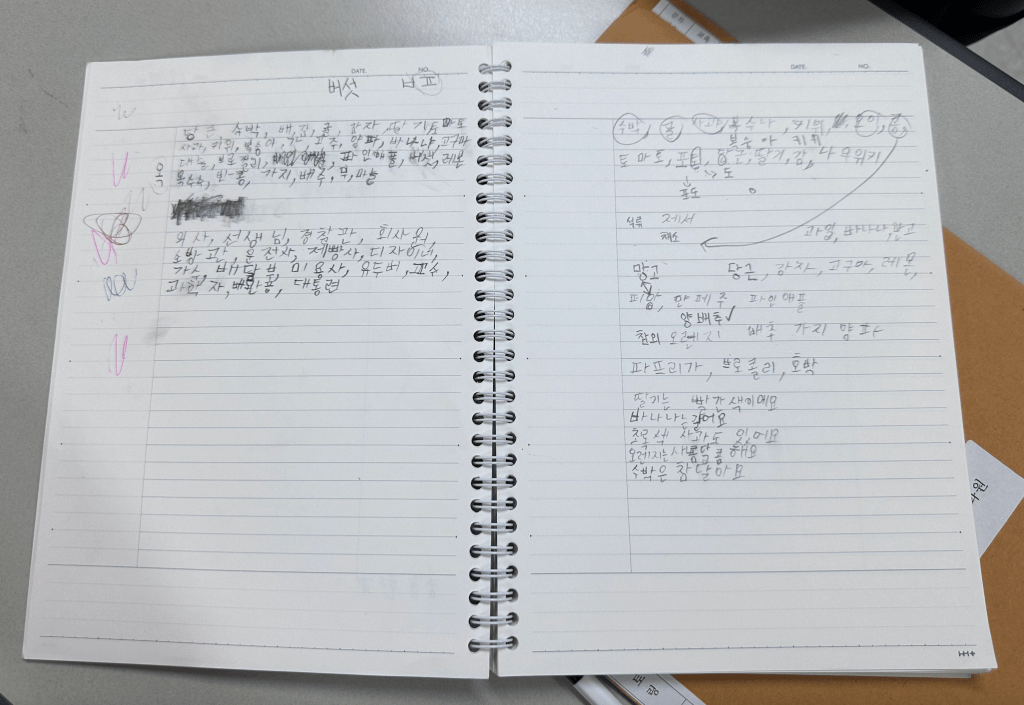
This is my notebook that I use when the volunteers come to teach me.
What challenges have you faced while living in Korea related to culture or language?
Viktor: I do not speak Korean or English well so it is hard to talk to other kids. I want to play and be friends but I do not always understand. Sometimes I feel shy or nervous.
How have you adapted to your current environment? Was it difficult?
Viktor: Yes it was hard at first. I go to a Korean support class that helps me with language in this center. But still it is sometimes hard because I feel different from the Korean kids. Some kids do not talk to me and I feel a little sad. But this cultural center helps me. The teachers and volunteers play with me and talk to me. They make me feel happy. I like coming here.
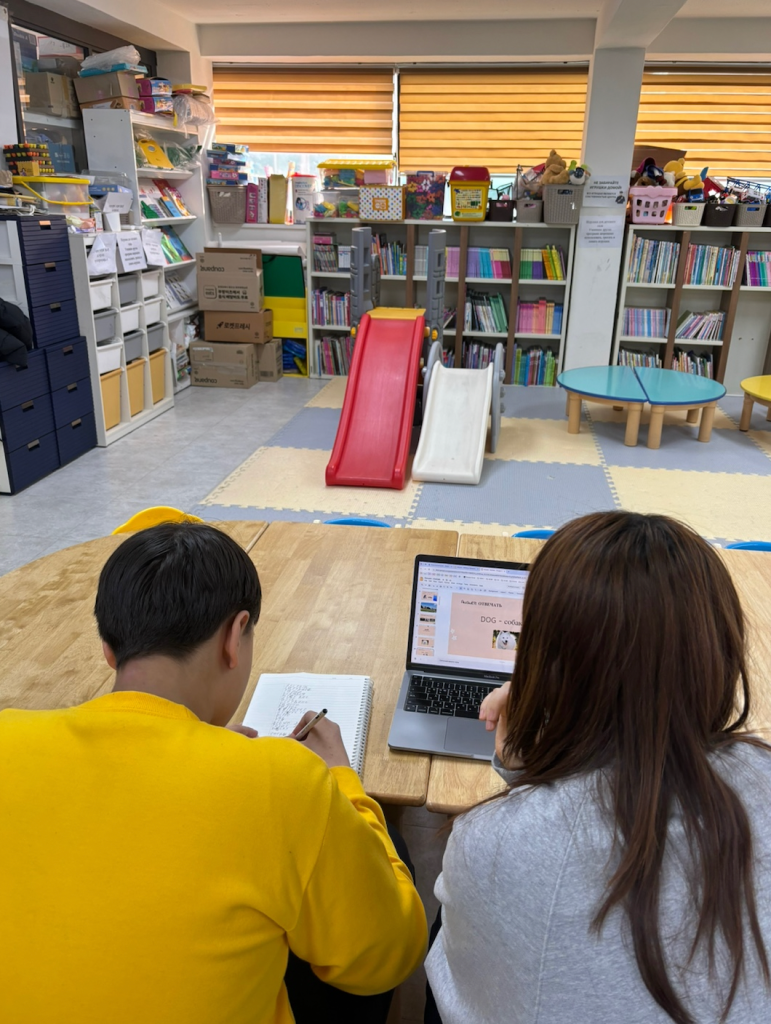
Viktor’s interview offers a glimpse into the everyday life of a Koryo-saram child navigating life in South Korea. Though young, Viktor’s words show the real challenges that many immigrant children face when entering a new school system without the language skills needed to communicate easily. As someone who speaks Russian at home and only started learning Korean recently, Viktor finds it hard to make friends or fully understand what happens in class. Despite these difficulties, he expresses his desire to connect and adapt. Programs like Korean support classes and the Neomeo Incheon Koryoin Cultural Center (너머인천고려인문화원) have played an important role in helping children like Viktor feel seen and supported. His experience reminds us that adjusting to a new culture takes time and that even small acts of kindness can make a big difference in a child’s life. I aim to contest the single story that all minorities in Korea face similar experiences. Since Korea is often considered a homogeneous society, people may assume that all Koryo children assimilate easily, especially when compared to Chinese immigrants, also known as Joseonkon, who are more visible and generally more fluent in Korean. Viktor’s story challenges this assumption by showing that each minority group encounters unique difficulties and experiences.
Read the blog about Kim Woo Hyun, the organizer of the Neomeo Incheon Koryoin Cultural Center!
 Humans of Korea
Leave a comment