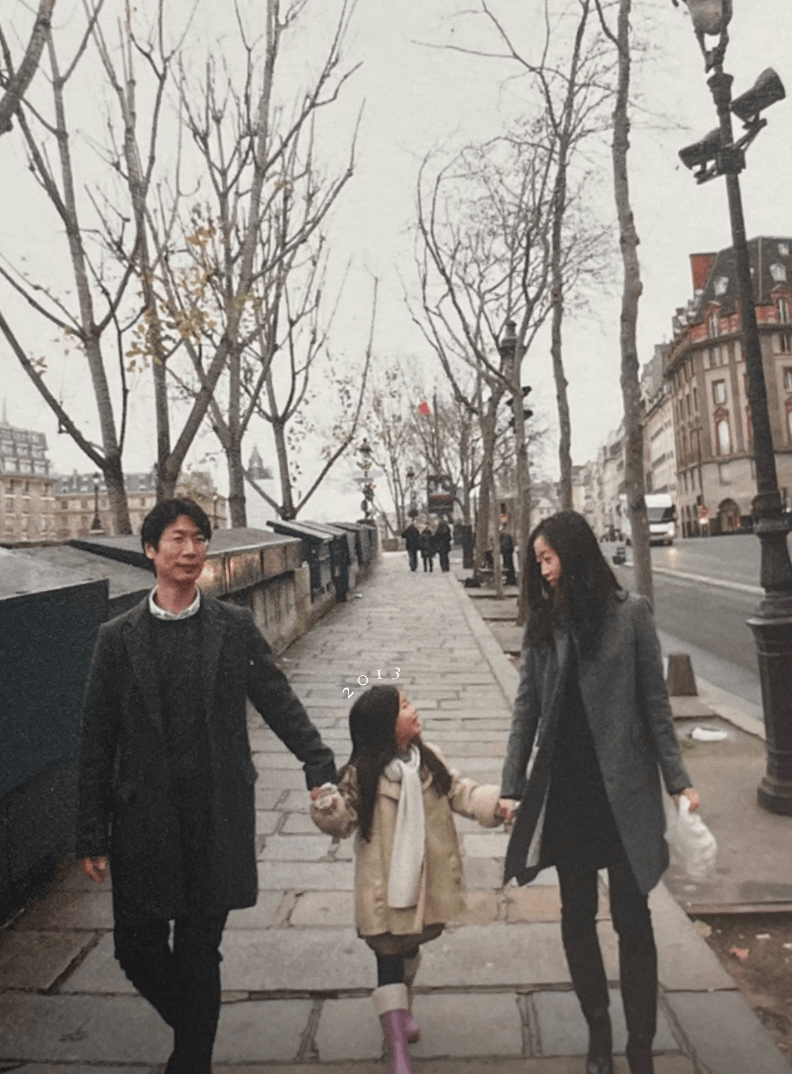
In today’s 21st-century global society, an increasing number of young students are growing up with diverse cultural experiences from an early age. Jeongin Kim is one such student. Born in 2007, she has spent her life moving between Korea and France, allowing her to develop a deep understanding of both cultures. Now a senior at an international school in France, Jeongin is known for her cheerful personality and open-minded perspective. As she prepares for university in France, her experiences offer valuable insight into what it means to grow up between cultures and how identity is shaped through cross-cultural living.
Could you please introduce yourself? What are your future plans after graduation?
Jeongin: My name is Jeongin, I am a 17 years old student studying at a bilingual international school located near Paris. I lived in my home country, South Korea until I graduated middle school there. After graduation I plan to study medicine and either work at a company with my doctor’s license or become a full time doctor. I hope to be able to explore different opportunities for my career path within the medical field.
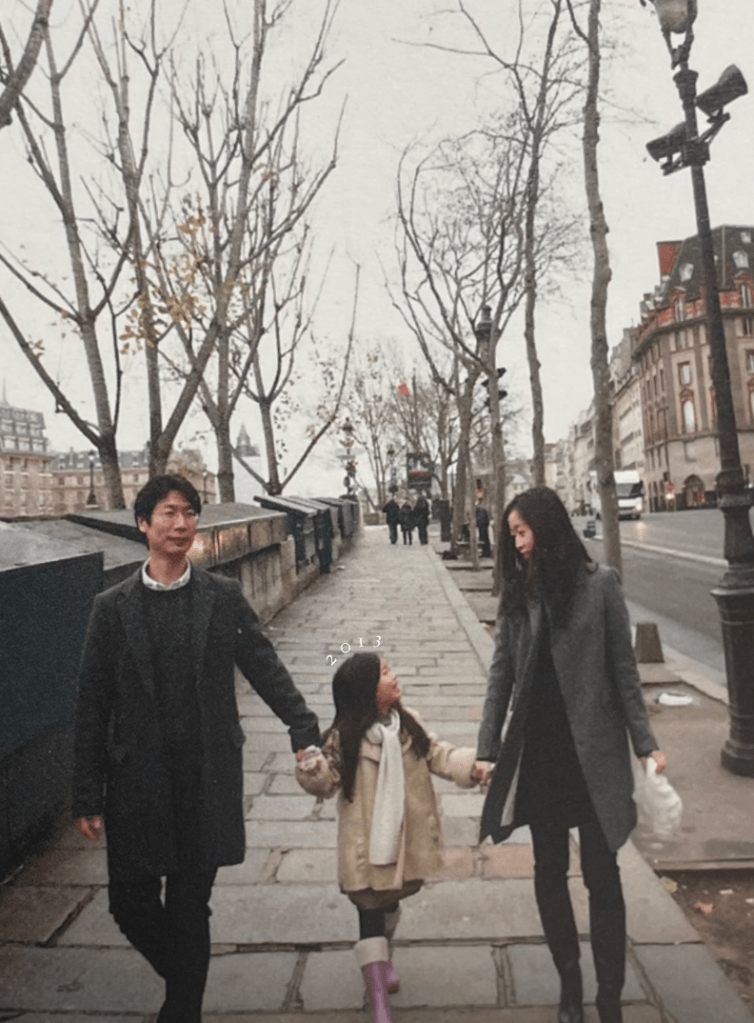
This is a photo of young Jeongin, when she lived in France.
Having lived in both France and Korea, what are some of the most interesting or culturally surprising experiences you’ve had while adjusting to different cultures?
Jeongin: After living in France for two years, I started to really notice the cultural differences, but never in a bad way. For example, in France, individual choices are really respected. Things like coming from a divorced family aren’t seen as strange, just personal. In Korea, people might feel more pressure to fit into social norms. I also noticed that French people express their opinions very directly, and it’s totally okay to disagree. In Korea, we usually try to keep the peace and read the room, which can sometimes mean hiding what we really think. But that also creates a kind of harmony that I appreciate. And when it comes to self-expression, France feels more free. People dress however they want and don’t care much about what others think. In Korea, we do care more about appearances and social expectations, but again, that also makes people more considerate of others. Honestly, I think both cultures have their strengths. I’ve learned a lot from France about being true to myself, but I also still value the sense of community and warmth in Korea.
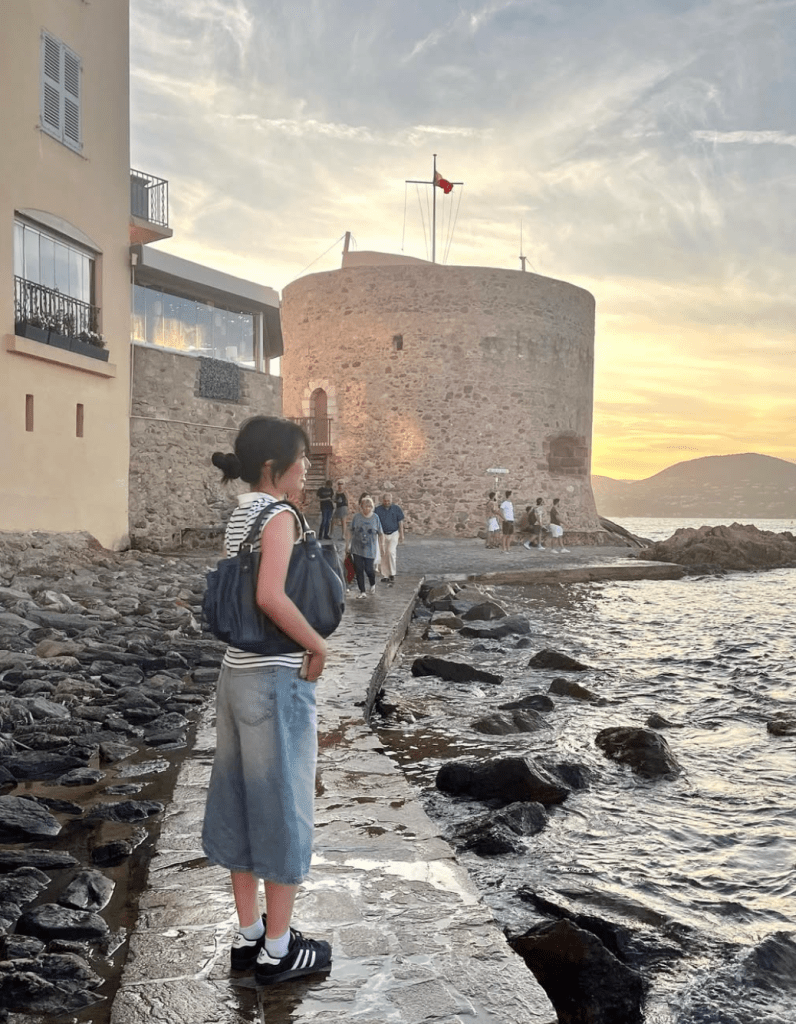
This is a photo of Jeongin, taken in Saint Tropez, France.
In your experience living abroad, how have you seen Korea and Korean culture being viewed or understood by people from other countries?
Jeongin: Evidently, I’ve noticed that people from other countries both appreciate and criticize different aspects of Korea. For example, some criticize the intense work culture, saying it often overlooks work-life balance and doesn’t always value personal fulfillment as much as effort itself. On the other hand, many appreciate Korea’s vibrant entertainment options, cleanliness, and the fun social activities available. Interestingly, much of this positive energy seems to stem from the very strong competition that some see as a downside.
If you were to give one piece of advice to a student preparing to live abroad for the first time, what would it be?
Jeongin: I would for sure advise the student to try to keep a positive and open mindset. About the differences that she or he might face, though it could be surprising and overwhelming sometimes. Also, I would like to clarify that such a mindset doesn’t mean to fully understand or embrace those. Just being open and positive will guide you to take what you like and coexist with the ones you can’t. It’s the most common one, but it is because it is the most essential and fundamental thing needed for survival. Enjoying the experience abroad would never be possible without this.
Jeongin’s interview reminds us that cultural understanding is not about choosing one identity over another, but about learning to hold multiple perspectives with care. Her experiences in both Korea and France show that cultural contrast can be a source of growth, not division. As she reflects on self-expression, social expectations, and mutual respect, she offers a powerful reminder that empathy begins with openness. Whether navigating directness in France or harmony in Korea, her story reveals that being between cultures is not a weakness, it is a strength. And in a world where more young people are growing up across borders, Jeongin’s voice is part of a generation redefining what it means to belong.
 Humans of Korea
Leave a comment