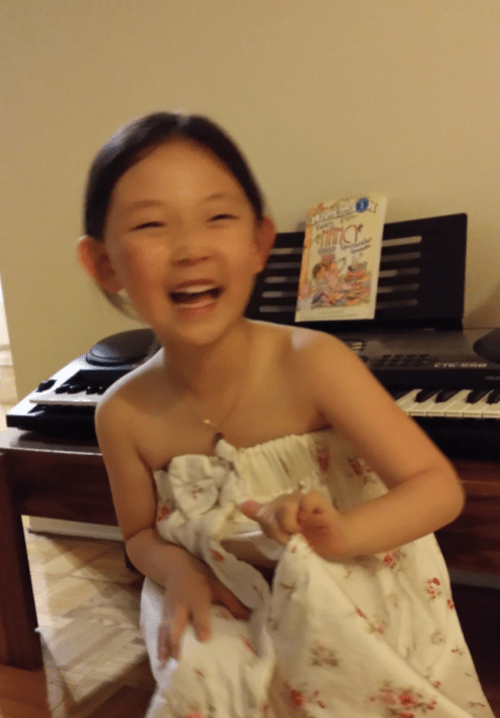
In today’s 21st-century global society, an increasing number of young students are growing up with diverse cultural experiences from an early age. Sua Park is one such student. Born and raised in Korea, she has followed an international education pathway since kindergarten, allowing her to develop a global mindset while staying rooted in her home country.
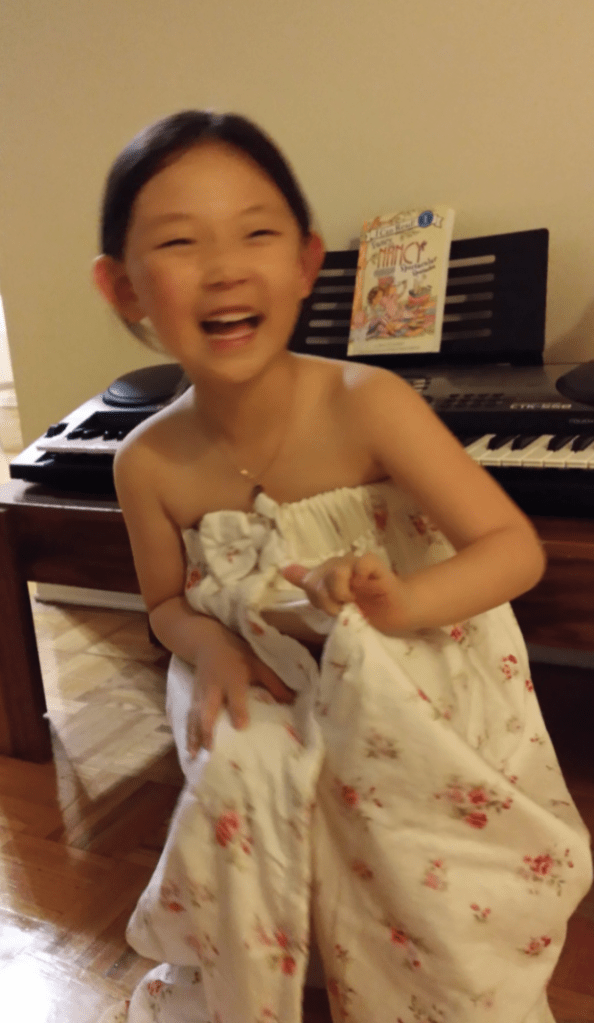
This is a photo of Sua, when she lived in Canada.
Could you please introduce yourself? What are your future plans after graduation?
Sua: My name is Sua Pak, and I’m currently a senior at Branksome Hall Asia. After graduation, I plan to move to the United States and major in graphic design. My goal is to gain experience in the industry, hopefully working in a company to build my career. I’m particularly interested in branding and may specialize in that area. Eventually, I hope to start my own business in the creative field.
Although you were raised in Korea, you attended international schools from kindergarten onward and followed a global curriculum. What are some advantages and challenges of having been educated in an international system, particularly the IB?
Sua: Since I’ve never experienced the Korean national curriculum directly, I can’t fully compare the two. But from what I know, international curricula like IB give students more space to explore topics independently and take initiative in learning. In contrast, the Korean system seems more rigid and structured—almost like working in a machine. I think that difference also reflects deeper cultural values, like tradition and emotional restraint. Because I’ve been learning in this independent way for a long time, I’ve developed stronger problem-solving skills than many of my peers, and I’ve been able to improve my English naturally without needing separate language study. That said, being in Korea while following an international curriculum can be tricky. Many Korean students still go to after-school academies (hakwons), which is a big part of student life here. Since I don’t attend hakwons, I’ve had to work two to three times harder on my own to keep up—which can be physically and mentally exhausting.
You lived in Canada for a short time—did you ever experience any culture shock or moments that stood out to you while you were there?
Sua: Outside of school, I didn’t feel much culture shock because I was usually with adults. But in school, I did face racism. Even though I was in the same class as an older Korean friend and I studied hard, both white and Black students made fun of me. One time, I brought a packed lunch with Yubu Sushi (Cone Sushi), and they teased me about the vinegar smell. And I could easily figure out that their stereotypical thoughts were exactly from the famous TV show that they watched at that time, which was very ridiculous. But honestly, I have a pretty tough mindset. I told myself, “I’m better than them,” and just moved on. That kind of mental control really helped me not to let it affect me too much.
Sua’s story highlights the quiet strength it takes to grow up between systems, cultures, and expectations. From learning to rely on herself without the extra support many of her peers receive, to facing moments of cultural bias abroad, she has developed a resilient mindset grounded in self-belief. Her journey shows that global education is not just about speaking English or attending international schools, it’s about learning to adapt, to think independently, and to find confidence in who you are. As she looks ahead to a future in design and entrepreneurship, Sua reminds us that individuality shaped by cross-cultural experience is not only powerful, it’s essential in an increasingly connected world.
 Humans of Korea
Leave a comment