Author: csong2026

  • Chinese, Korean, or Canadian? What It’s Like Growing Up in Three Countries

    Chinese, Korean, or Canadian? What It’s Like Growing Up in Three Countries

    Eunseo Oh is a rising senior (class of 2026) who attends a Canadian public high school. After she was born, her family moved to China, and she attended a Chinese public school for kindergarten and elementary school. She uses Korean at home and visits Korea every summer break, but she is more comfortable using Chinese, and most people know her as a Chinese speaker. From Grade 6, she transferred to Shekou International School with an IB curriculum and located in Shenzhen city. After grade 9, she moved to Canada and attended a Canadian public high school located in Toronto. 

    Would you please introduce yourself and tell me where you currently live? 

    Eunseo: Hello, my name is Eunseo Oh, and my English name is Stella. I’ve been Claire’s friend since grade 6 in China. I’m living in Toronto, Canada. I’m attending a Canadian public high school, and I’m in grade 12, class of 2026. 

    What kind of countries have you lived in before? 

    Eunseo: I lived in China for most of my life. Since I was a baby, my family has moved to China, and I have attended a Chinese public kindergarten and elementary school, so I was surrounded by all Chinese people, and I was most comfortable with Chinese culture. Every summer break, I visited Korea and I used Korean at my home, but at that time, I was most comfortable with Chinese as I used it most in my daily life. After that, from grade 6 to grade 9, I attended Shekou International School with an IB curriculum, located in Shenzhen city. 

    I think you have diverse experience in different educational systems based on different countries. Can you share more about the different curricula that you have experienced till now? 

    Eunseo: I think when I was in Chinese public school, they had a lot of rules that I had to follow, it was kind of strict (laugh). Also, compared with an international school, there are a large number of people. Each class has an average of 30 people, and each grade has 10 to 12 classes. 

    However, when I transferred to Shekou International School, we only had 3 different classes and about 20 people for each class. This environment was able to create more connections with teachers, students, and get more attention from teachers, which was beneficial for getting extra help from teachers. Furthermore, because there are few people, every student has many opportunities for leadership, competition, or sports. As Shekou International School was an IB curriculum school, as I’m getting older, I realized that there are a lot of things that I have to prepare, and there is a lot of studying. 

    So, I moved to Canada, and the public school was of combination of a Chinese public school and an international school. The atmosphere of the school is free, but it also has a large number of students, which is similar to a Chinese public school. The school curriculum and class method are the same of an international school. Also, as a public school, the focus was different; if international schools felt like they provided one-on-one intensive care, here, there aren’t many opportunities, as one counselor is responsible for an average of 400 students. 

    As you have experienced different education in different countries, I believe there will be some challenges in different cultures. Would you please share some challenges and how you overcame them? 

    Eunseo: The first challenge was in elementary school. My nationality was Korean, but I grew up in China. I was more familiar with Chinese culture, which led to identity confusion. I felt like I didn’t belong anywhere. Then I moved to an International school where it requires English skills but I was not that fluent in the beginning compared with other students who use English daily. So I had very low confidence, and belonged to Chinese friends, about as humans are animals of adaptation (laugh), I was getting closer with Korean friends and other students from outside of Asia. 

    After that, in Canada, as it’s a public school, I was almost the only international student, so it was hard to find common ground with other students, which made it hard to make friends. The path of college was different as I’m thinking of colleges outside of Canada, the teachers are not familiar with my situation, so I have to research my own, and hard time to get advice. But I made new friends and based on different experiences that I had in China, I’m surviving now (laugh). 

    It seems like you’ve had a lot of experience as an international student. Are there any takeaways that you’ve gained from these experiences? 

    Eunseo: I would say adaptability, self-reliance, and diversity were the main takeaways. Going through various educational systems allows me to learn about perspectives I wasn’t aware of, helps me adapt more quickly based on the experience of friends I met at various schools, and gives me the opportunity to reflect on myself. I feel like I’m maturing through this ongoing journey of discovering my identity. It’s very fun that life is like a roller coaster, with its ups and downs (laugh).

    Eunseo’s journey illustrates the complexity and resilience of growing up across borders, where identity is constantly shaped by language, culture, and education. From navigating the strict structure of Chinese public schools to embracing the inquiry-based learning of the IB curriculum and the openness of Canadian education, she has gained a rare adaptability and independence. Her experiences highlight that being an international student is not only about adjusting to new systems, but also about building confidence, finding belonging, and learning to stand on one’s own. Eunseo’s reflections remind us that global citizenship is less about where you live and more about how you grow through differences: turning challenges into strength, and uncertainty into maturity. As she prepares for her future, she carries with her the adaptability, perspective, and self-reliance of someone ready to thrive in an interconnected world.


  • What It’s Really Like at a Foreign Language High School in Korea?

    What It’s Really Like at a Foreign Language High School in Korea?

    Alice Kim is a senior at Gwacheon Foreign Language High School in Korea, and before that, she attended Branksome Hall Asia in Jeju for 3 years. 

    Can you introduce yourself? 

    Alice: Hello, my name is Alice Kim, and I’m a senior at Gwacheon Foreign Language High School. Before that, I attended Branksome Hall Asia, which is one of the international schools in Jeju with an IB curriculum. 

    As you have experience in an international school and a Foreign Language High school in Korea, would you please share some differences in school life? 

    Alice: First of all, attending an international school provided a wealth of activities and diverse experiences. There were numerous after-school activities, and sports-related experiences and physical education were important subjects, so it felt like being good at sports was crucial. There was also a lot of communication with teachers and group activities, so there were a lot of things to do together. There were also a lot of field trips, a bit like university. On the other hand, foreign language high schools rarely had field trips and seemed to have less interaction with teachers. Furthermore, since most students worked on their own projects, there were no group activities and the variety of activities was somewhat limited.

    What differences have you personally felt in your studies between these two schools? 

    Alice: International schools definitely felt like they demanded a wide range of skills. Rather than memorizing, I felt like I needed to start from within and showcase who I am. This increased self-reflection helped me identify areas where I needed to improve. Furthermore, assessments weren’t limited to a set period of time; they were conducted consistently throughout the year. Furthermore, there were numerous presentations where students had to share their thoughts. In contrast, foreign language high schools seemed to prioritize doing well on exams. Rather than focusing on individual strengths or interests, the study schedule was clearly defined, based on textbooks and workbooks. Because the assessment was based on a single exam, there seemed to be little time for self-reflection. Furthermore, memorization and mastery of the school’s prescribed subjects seemed to be paramount.

    How would you compare and contrast the two types of schools based on the experiences above?

    Alice: I think international schools offer more to do. While I’m expected to think independently, foreign language high schools don’t require me to express my own thoughts beyond diligently solving workbooks and reading textbooks. Coming to foreign language high schools was a bit challenging because, unlike international schools, my own opinions weren’t allowed to enter the equation. If I diligently read and practiced a lot, my grades improved. However, there were some things at international schools that I couldn’t achieve no matter how hard I tried, so I often wondered if I could do it. However, there were far more opportunities to interact with people than at foreign language high schools, which really helped my conversational skills. However, foreign language high schools focused more on theory than memorizing grammar and content from books.

    Alice’s journey across two very different educational systems highlights the ways in which school environments can shape not only academic habits, but also personal growth and perspectives. At Branksome Hall Asia, the international school’s emphasis on self-reflection, presentations, and diverse activities encouraged her to develop independence and confidence in expressing her ideas. In contrast, Gwacheon Foreign Language High School demanded discipline, focus, and mastery of structured academic content, leaving little room for individual voice but sharpening her ability to work rigorously toward clear goals. Together, these experiences have given Alice a unique vantage point: she understands both the freedom and challenges of inquiry-based learning and the precision and intensity of exam-centered study. Her reflections remind us that education is not one-size-fits-all, and by navigating both systems, she has gained resilience and adaptability that will serve her well beyond the classroom.

  • ‘From City Rush to Ocean Calm’ An IB Journey Between Pressure and Peace

    ‘From City Rush to Ocean Calm’ An IB Journey Between Pressure and Peace

    Seoyeon Woo is currently in grade 12 (class of 2026) and attends school in Canada, and her nationality is Korean. Before Canada, she lived in China for 8 years in Suzhou, Chongqing, and Shenzhen. She has attended an IB curriculum school in Shenzhen and Vancouver Island. She has almost 12 years of experience living outside of Korea.

    Would you please introduce yourself? 

    Seoyeon Hello, my name is Seoyeon Woo. I’m currently in grade 12, living on Vancouver Island in Canada, and have been here for almost three years now. I attend St. John’s Academy in Chanaigan Lake. I’ve spent about eight years living in China and during that time I moved between several cities like Suzhou, Chongqing and Shenzhen.

    Can you share more about the different environments of the countries or cities that you lived in? 

    Seoyeon I’ve studied at Shekou International School in Shenzhen, which is a very modern and urban area. Life there was very fast paced and high pressure like especially when it came to academics. The school environment was very competitive and I was constantly focused on studying and trying to keep up there. The city was very busy, full of tall buildings, crowded streets, and a strong sense of motion. And it almost felt like the whole city was always constantly moving. Then I moved to Vancouver Island, and I think a lot of things changed in my life. My current school is located in Shanaigan Lake, a very, very small, quiet town surrounded by nature. And I’m literally like surrounded by trees, lakes, and animals. It’s not unusual to see deer walking across the road on my way to class. Compared to the dense city life in China, Vancouver Island has a much more relaxed and spacious atmosphere. There aren’t many people, and everything moves at a slower, more peaceful rhythm.

    Then this different atmosphere of China and Vancouver, and how impact you personally? 

    Seoyeon At first, this contrast was quite surprising to me. Like I wasn’t used to this kind of quiet or having so much open space and time. But over time, that environment started to influence me in ways I actually didn’t expect in China. I was very academically driven. I still am, but like it was more intense and narrow. And after coming here, I started to discover other parts of my life that I hadn’t really experienced before. I joined more competitive sports teams, explored outdoor activities, and spent more time connecting with nature and people. I realized that academic success doesn’t have to always come at the cost of personal balance. 

    I know that you currently attending IB curricular school, and Shekou International School that you have attended in China, also IB curricular school. Have you found any differences? 

    Seoyeon IB curriculum is still challenging no matter like where you are. It’s just my personal commentary on IB. But living on Vancouver island taught me how to manage it better. I think I learned how to plan my time more effectively and to take care of myself both physically and mentally. I became more independent and started focusing more on building a well rounded lifestyle and not just like chasing grades. Maybe that came from my own lifestyle where I currently live in the dorms. So maybe that’s a big difference. But looking back, I think moving between such different environments helped me shape who I am today. And I’ve become much more balanced, more reflective and more in tune with my life. And I think that’s one of the most valuable things I’ve gained from this international experience.

    Seoyeon’s story shows how place and environment can profoundly shape not only education, but also personal growth and identity. From the fast-paced, high-pressure atmosphere of Shenzhen to the calm, spacious rhythm of Vancouver Island, she has learned to adapt to extremes and discover balance in her own life. While the IB curriculum remained a constant challenge, her surroundings taught her how to approach it with resilience, independence, and perspective. Her reflections remind us that international experiences are not just about academics, but about discovering new ways of living, finding harmony between ambition and well-being, and learning to embrace change. As Seoyeon continues her journey, she carries with her the adaptability and insight of someone prepared to thrive in both the bustling energy of global cities and the quiet strength of nature.

  • Quarantine and Connection: Experience of the Pandemic Abroad

    Quarantine and Connection: Experience of the Pandemic Abroad

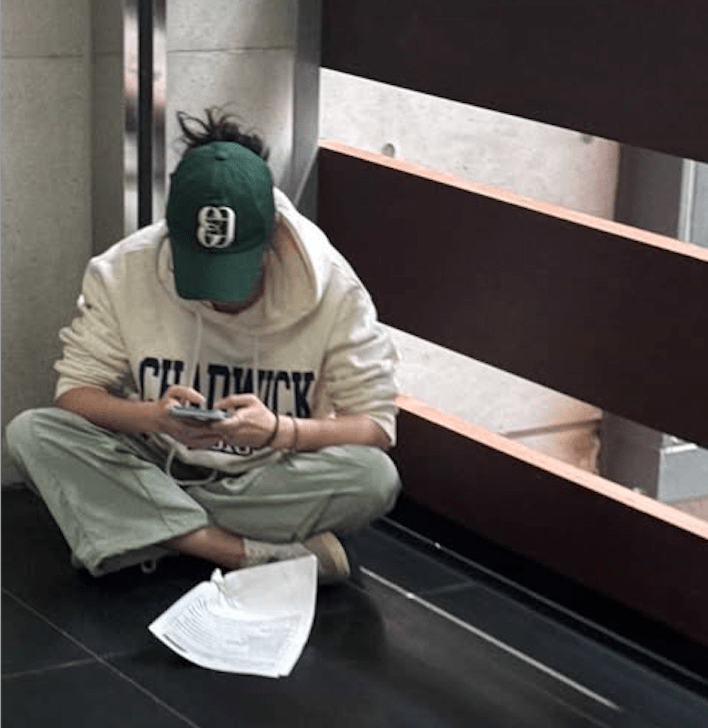
    Yoonseo Lee is currently in grade 12 and attends Chadwick International School in Songdo City in Korea. Before Korea, she lived in Shanghai City in China from grade 3 to grade 8, and it was during the COVID-19 pandemic. 

    Can you introduce yourself? 

    Yoonseo Hello, my name is Yoonseo Lee, I’m currently in grade 12, living in Songdo City, and have attended Chadwick International School since grade 9. Before that, I lived in Shanghai, one of the biggest cities in China, it was the COVID-19 pandemic. 

    I think it was a special and unusual experience living abroad during the COVID-19 pandemic. How was your quarantine? 

    Yoonseo At be beginning, we were able to travel back and forth between Korea and China. Since I was quarantined for two weeks after returning from Korea, I spent a total of four weeks in quarantine after my summer vacation. Later, the quarantine in China was changed to three weeks, making it five weeks, and it felt like my vacation was gone. I took a bus from the airport to a small hotel far away, and they kept spraying disinfectant on everyone, and I think they also continued to spray the hallways while I was in my quarantine room.

    How has your daily life changed due to COVID-19 in China? 

    Yoonseo At first, the lockdown was planned to last about three days, but it suddenly expanded to several months without notice, and people only had three days’ worth of water and food, so everyone seemed to be in a state of panic. The doors to the first floor were blocked by something like a police line, the stairs were locked, and there was only one elevator per building, so it seems they couldn’t use it properly. Also, COVID-19 testing was changed from once a week to once every two days, and each building was called over the air, and we had to line up and get tested in a tent inside the complex. Also, I heard that if a confirmed case was found in one house, the upstairs, downstairs, and next door neighbors were also quarantined separately to prevent the spread, usually in shipping containers. 

    Then, how was your school life? 

    Yoonseo Classes were conducted online, like in other countries. I don’t remember anything special, but I do remember enjoying group calls and games with the kids. Later, we even had a weekly schedule where each person would walk around a designated area and meet friends who lived there. Thanks to the increasing number of online classes, I have more options when it comes to taking classes, and I think I’ve also become more accustomed to group phone calls with friends.

    So, looking at the experiences above, the COVID-19 pandemic has been an unforgettable time for people around the world, but as an international student, it must have been even more special. What do you think?

    Yoonseo Living abroad during a global pandemic was certainly a unique and unfamiliar experience. Wearing masks and quarantining to prevent the spread made me feel increasingly isolated and disconnected from society. However, through this process, the use of an online meeting system, shared experiences with friends, and built a bond of connection. Living in a place far from my birthplace, I think I was able to cultivate a sense of independence.

    Yoonseo’s reflections capture the extraordinary challenges of living abroad during a global pandemic, where isolation, uncertainty, and strict restrictions shaped daily life in unexpected ways. Yet, within those limitations, she also found new forms of connection—through online calls, shared routines, and the resilience built from adapting to sudden change. Her story reveals how the pandemic, though deeply disruptive, also became a moment of growth, cultivating independence and strengthening bonds with friends who shared the same struggles. As she looks back, Yoonseo’s experience stands as a reminder that even in times of separation, human connection and adaptability can bridge the distance, leaving lasting lessons for the future.

  • Journey from Hong Kong to Korea: Diane’s International School Experience

    Journey from Hong Kong to Korea: Diane’s International School Experience

    Diane is currently in grade 12, attending Chadwick International School in Songdo City in Korea. I have attended the British International School with a 13-year schooling, and she came back to Korea and attends Chadwick International School. 

    Would you please introduce yourself? 

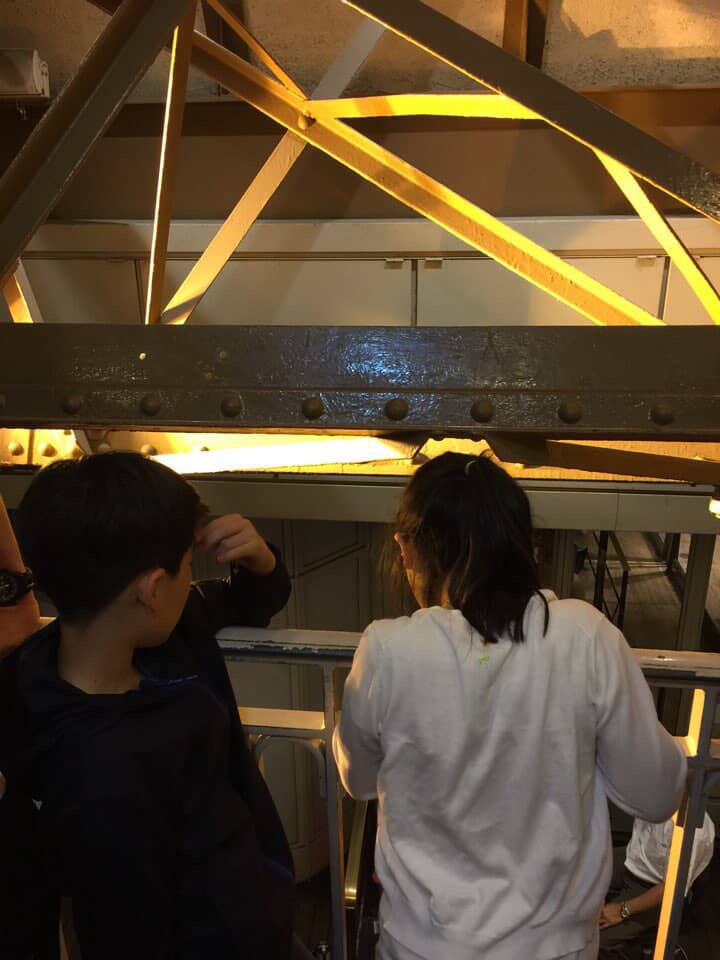
    This is me and my brother inside the Eiffel Tower in 2016!

    Diane: Hello, my name is Diane, and a senior at Chadwick International School. I lived in Hong Kong for 2 years, and in grade 7 semester 2, I came back to Korea to attend Chadwick International. 

    How was your life in Hong Kong different from your life in Korea?

    Diane: As a Korean, language was definitely a major difference. Hong Kong’s Chinese, Cantonese in particular, was a bit challenging. However, since English was also an official language, I didn’t have any major difficulties getting by. However, the fact that Cantonese, rather than Standard Chinese, was used was the biggest difference, and it clearly showed the differences in my surroundings.

    How about the atmosphere of the school in Hong Kong and Korea? Was it different or similar?

    Diane: In Hong Kong, I attended Discovery Bay International School in an island called Discovery Bay. Here, there weren’t a lot of academic competition; stress among my peers; and there were many rules to follow, especially the requirement to wear the proper uniform. On the other hand, after coming to Korea, while there’s still academic competition and stress with my friends, the pressure seems to have eased somewhat. Furthermore, compared to when I attended school in Hong Kong, there were fewer rules, and Chadwick, in particular, didn’t have a uniform, so I felt a significant difference in those areas.

    Then, what kinds of things have changed in your life after you had the experience of living abroad?

    Diane: I would say my English skills, especially in communication skills. It’s not that I can’t speak English, but I didn’t have much conversational experience. Usually I was way comfortable with Korean, so there were times when I didn’t get my point across well during communication. But now that I’ve lived abroad and interacted with various foreigners, I feel like I can communicate more smoothly and convey my intended meaning well.

    Diane’s experiences reveal how living abroad can shape both language and perspective, offering lessons that extend beyond the classroom. From navigating Cantonese in daily life to adapting to the strict rules of a British International School, she learned resilience in the face of challenge. Returning to Korea, she found a different rhythm at Chadwick International, less rigid, yet still academically demanding, allowing her to grow in confidence and independence. Most importantly, her time abroad strengthened her communication skills and gave her the ability to connect across cultures with greater ease. Diane’s journey reminds us that the value of international experiences lies not only in academics, but also in the adaptability and openness they nurture, preparing students to thrive in diverse and changing environments.