Author: parkhyohyo035

  • Korea’s Creative Engine with Veteran Broadcast Writer Hyunhee Lee

    Korea’s Creative Engine with Veteran Broadcast Writer Hyunhee Lee

    In today’s rapidly evolving media landscape, young creatives around the world are looking to understand how stories are made, and who makes them. Hyunhee Lee is one of the leading figures shaping Korean entertainment. As a veteran broadcast writer with more than two decades of experience across major talk shows and music programs, she has helped build many of the formats that define Korea’s vibrant media culture. Now working as a freelance creator whose concepts are sold both domestically and abroad, Lee offers a unique perspective on how Korean writers think, collaborate, and innovate. Her journey reveals how creativity, cultural adaptability, and relentless curiosity form the foundation of successful storytelling in a global era.

    What exactly does a broadcast writer do? What kind of work are you currently engaged in?

    Hyunhee: A broadcast writer’s role is incredibly wide in scope. We participate in nearly every step of the production process, from the moment a program is conceived to the moment it is completed. I often compare it to building a house. We start by creating the framework, the program concept, and then move on to designing the inside: deciding how many rooms there should be, how the bathrooms should be arranged, and so on. In the same way, writers determine the cast, secure guests, develop rules and formats for the show, and later take part in shaping the “interior design,” such as how the final edit should feel. In short, writers and producers work together to build something from nothing and turn it into a beautiful, fully realized program. I currently work as a freelancer, participating in various production processes, but my main focus is creating Korean entertainment show formats. I develop new concepts not only for domestic networks but also in response to requests from foreign broadcasters and format companies. Some of the shows I create are even sold overseas.
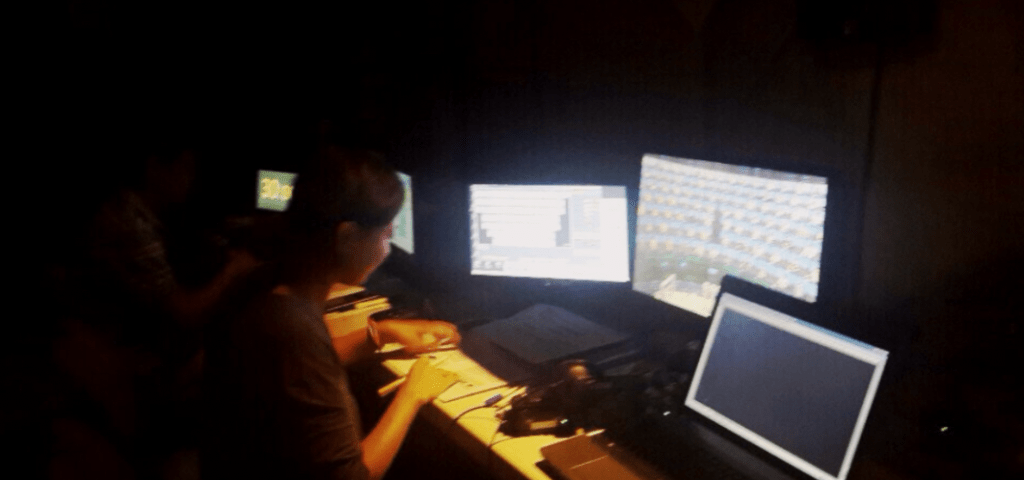
    This is a photo of Hyunhee, working in broadcasting system.

    You’ve worked for a long time as a writer across a wide range of TV programs, from talk shows to music shows. Has that work changed any of your daily habits or lifestyle?

    Hyunhee: Yes, definitely. Since my main field has included talk shows and music programs such as KBS Sangsang Plus, Hello Counselor, JTBC Hidden Singer, and KBS LET’S BTS, I’ve been involved in entertainment production for nearly 25 years. Naturally, I’ve developed certain habits without even realizing it. For example, I can’t simply enjoy TV as a regular viewer anymore. While watching, I find myself thinking, “That scene must have been so difficult for the PD and writers,” or “That set must have cost a fortune.” I evaluate programs from a staff member’s viewpoint rather than just enjoying them as entertainment. I suppose that’s what you would call an occupational habit. And honestly, I think it’ll stay with me for a long time — maybe even after I retire.

    Have you ever experienced cultural differences or challenges while working with international partners?

    Hyunhee: Yes, very much so. About four years ago, I worked for more than two months with a team from Israel to develop a new entertainment show format. That experience made one thing clear: Korea truly lives up to its “ppalli-ppalli” (“hurry-hurry”) culture. In Korea, writers and producers usually develop an entire program concept within roughly three months — an extremely fast pace. We work intensely, shaping the idea, creating the format, producing, and broadcasting it. Meanwhile, the Israeli team found even two to three Zoom meetings per week overwhelming. I still remember them asking me, “Why do you work so much?” During brainstorming sessions, they were also surprised by how many ideas I brought each time. My experience with a British team was similar; they repeatedly told us, “Korean staff work unbelievably fast. You never run out of ideas.” It really showed me how the Korean “ppalli-ppalli” mindset shapes the DNA of Korean broadcast writers. Because of this, Korean writers are highly valued in the global market today. Overseas networks actively want to collaborate with Korean creators, saying Korean writers are exceptionally fast and full of ideas. I believe this presents great opportunities for Korean PDs and writers in global media collaborations.
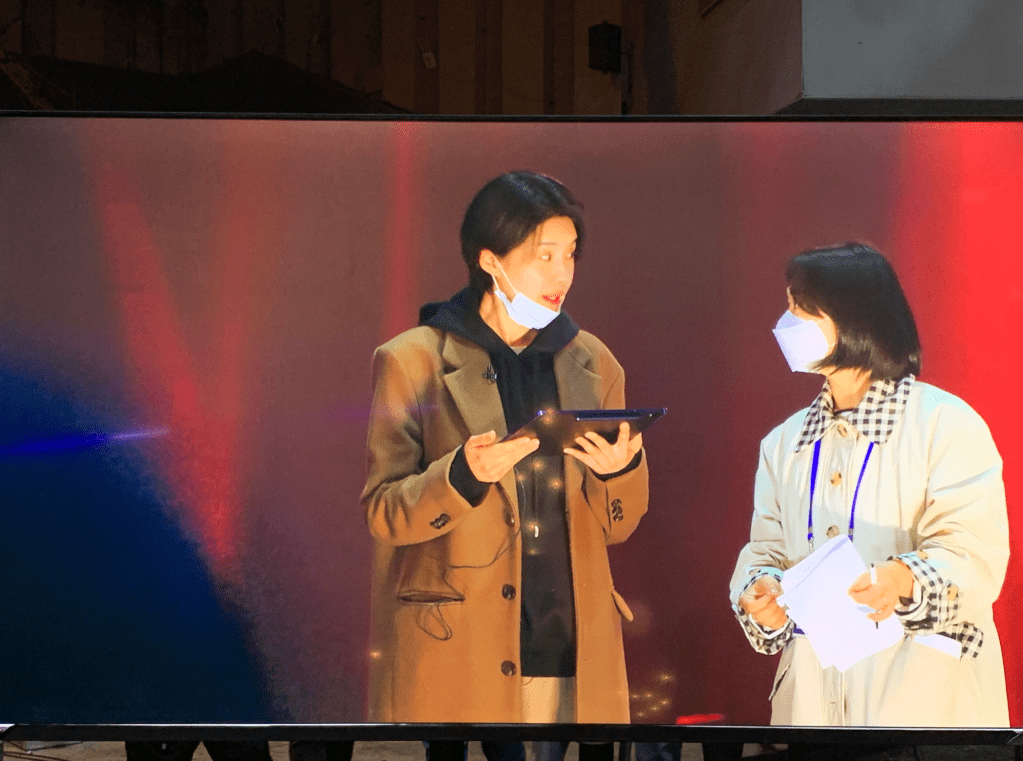
    This is a photo of Hyunhee, working in broadcasting system.

    Do you have any advice for students who hope to work in broadcasting or other creative media fields?

    Hyunhee: My biggest advice is: see as much as you can. Anything: films, media, books, exhibitions, even people on the street. No form of learning beats the power of seeing and experiencing widely. I became a “hobby collector” myself, I watch films, read books, explore art exhibitions, and lately I’ve developed a love for dance performances. Because of that, my mind is now full of countless sources and references. When I need a new idea, those accumulated experiences become invaluable. So don’t say, “Art museums are boring.” Just go. While walking around, you might unexpectedly discover a painting you love. If you think you don’t enjoy movies, go anyway– buy your favorite drink, watch something to the end, and you might find an actor you love. As you build these habits, you’ll gain the ability to truly enjoy content created by experts from around the world. So whatever it is, just start by looking and watching.

    Her reflections illuminate the often unseen artistry and discipline behind Korean entertainment, revealing how creativity is shaped not only by talent but by culture, pace, and relentless curiosity. Her experiences demonstrate that storytelling is a craft built from accumulated observations, from the shows she analyzes instinctively to the global collaborations that challenge her assumptions about how ideas are made. At the heart of her journey is a belief that creativity grows when we open ourselves to the world: its art, its people, and its countless moments of inspiration. For students aspiring to enter broadcasting or any creative field, her story offers a clear message: pay attention, look widely, and let what you see become the foundation of what you create. As the media landscape continues to expand across borders, the mindset she embodies, fast, imaginative, and deeply open to experience, represents the future of global storytelling.
  • How International Learning Shaped Siyoon Kim’s Pharmacy Dream

    How International Learning Shaped Siyoon Kim’s Pharmacy Dream

    In today’s increasingly interconnected world, many students grow up navigating multiple cultures, languages, and educational systems. Siyoon Kim is one such student. Now a Grade 12 student at Branksome Hall Asia, she has spent her entire academic life in international schools, developing a global outlook shaped by diverse experiences both inside and outside the classroom. With a clear ambition to pursue pharmacy in university, she is preparing to enter a field that blends scientific inquiry with real-world impact. Her journey shows how international education and cross-cultural exposure can build adaptability, independence, and a deeper understanding of the world. As Siyoon looks ahead to her future studies and career, she represents a generation of students ready to learn, connect, and contribute across borders.

    Could you please introduce yourself? What are your future plans after graduation?

    Siyoon: My name is Siyoon Kim, and I am currently a Grade 12 student at Branksome Hall Asia. I hope to major in pharmacy at university because I have always been interested in the scientific and practical aspects of medicine. After completing my undergraduate studies, my plan is to continue on to graduate school and eventually take the national pharmacist licensure exam. My long-term goal is to become a licensed pharmacist and contribute to improving people’s health through safe and effective medication management.

    What are some advantages and challenges of having been educated in an international system, particularly the IB?

    Siyoon: One major advantage of the international and IB education system is the global perspective it offers. I was exposed to diverse cultures, ideas, and ways of thinking from a young age, which helped me become more open-minded and comfortable communicating in English. The IB curriculum also emphasizes critical thinking, research skills, and independent learning, which I believe will help me adapt well to university-level academics. However, there are also challenges. Assessment in the IB often depends heavily on teacher interpretation and subjective grading, which sometimes makes it difficult to understand exactly what is expected. Additionally, IB classes and exams tend to be long and intensive, requiring strong time management and endurance. While challenging, these experiences ultimately pushed me to become more disciplined and resilient.

    Since your mother works as a flight attendant, I heard you’ve also traveled to many countries while accompanying her. Is there any experience from those trips, something surprising, eye-opening, or culturally different, that left a strong impression on you or made you realize how their lifestyle differs from ours?

    Siyoon: Traveling with my mother gave me many meaningful experiences. One memorable place was Brisbane, in Queensland, Australia, where my aunt lives. It’s a rural area, and I was surprised by how beautiful and untouched the natural environment was. Seeing such open landscapes and wildlife made me realize how differently people live in countries with vast natural spaces compared to Korea. Another impression came from Barcelona, a city known for its unique architecture. Walking through the city, I was amazed by the artistic buildings and cultural atmosphere. However, I also noticed lifestyle differences– especially in food. Many meals were centered around hamburgers, pizza, fish and chips, and other Western dishes, and I found some seafood pastas with unfamiliar ingredients quite surprising. Even the structures of residential buildings felt completely different from what I was used to in Korea. These experiences helped me understand how lifestyle, environment, and culture shape daily living in different parts of the world.

    Siyoon’s reflections reveal how international education and global travel can shape a student’s identity far beyond academics. Through the IB curriculum, she learned to think critically, work independently, and navigate demanding assessments with resilience. Through her travels, she encountered different lifestyles, landscapes, and cultures that broadened her understanding of how people live around the world. Together, these experiences helped her develop openness, adaptability, and the confidence to pursue her goals with clarity. Her story demonstrates that growing up between systems and cultures is not merely about exposure—it is about learning to see differences as opportunities for insight and connection. As she moves forward toward her future studies in pharmacy, she carries with her a worldview shaped by curiosity and a readiness to contribute meaningfully in an increasingly global society.

  • “I’m Better Than Them” Standing Tall Against Racism

    “I’m Better Than Them” Standing Tall Against Racism

    In today’s 21st-century global society, an increasing number of young students are growing up with diverse cultural experiences from an early age. Sua Park is one such student. Born and raised in Korea, she has followed an international education pathway since kindergarten, allowing her to develop a global mindset while staying rooted in her home country. 

    This is a photo of Sua, when she lived in Canada.

    Could you please introduce yourself? What are your future plans after graduation?

    Sua: My name is Sua Pak, and I’m currently a senior at Branksome Hall Asia. After graduation, I plan to move to the United States and major in graphic design. My goal is to gain experience in the industry, hopefully working in a company to build my career. I’m particularly interested in branding and may specialize in that area. Eventually, I hope to start my own business in the creative field.

    Although you were raised in Korea, you attended international schools from kindergarten onward and followed a global curriculum. What are some advantages and challenges of having been educated in an international system, particularly the IB?

    Sua: Since I’ve never experienced the Korean national curriculum directly, I can’t fully compare the two. But from what I know, international curricula like IB give students more space to explore topics independently and take initiative in learning. In contrast, the Korean system seems more rigid and structured—almost like working in a machine. I think that difference also reflects deeper cultural values, like tradition and emotional restraint. Because I’ve been learning in this independent way for a long time, I’ve developed stronger problem-solving skills than many of my peers, and I’ve been able to improve my English naturally without needing separate language study. That said, being in Korea while following an international curriculum can be tricky. Many Korean students still go to after-school academies (hakwons), which is a big part of student life here. Since I don’t attend hakwons, I’ve had to work two to three times harder on my own to keep up—which can be physically and mentally exhausting.

    You lived in Canada for a short time—did you ever experience any culture shock or moments that stood out to you while you were there?

    Sua: Outside of school, I didn’t feel much culture shock because I was usually with adults. But in school, I did face racism. Even though I was in the same class as an older Korean friend and I studied hard, both white and Black students made fun of me. One time, I brought a packed lunch with Yubu Sushi (Cone Sushi), and they teased me about the vinegar smell. And I could easily figure out that their stereotypical thoughts were exactly from the famous TV show that they watched at that time, which was very ridiculous. But honestly, I have a pretty tough mindset. I told myself, “I’m better than them,” and just moved on. That kind of mental control really helped me not to let it affect me too much.

    Sua’s story highlights the quiet strength it takes to grow up between systems, cultures, and expectations. From learning to rely on herself without the extra support many of her peers receive, to facing moments of cultural bias abroad, she has developed a resilient mindset grounded in self-belief. Her journey shows that global education is not just about speaking English or attending international schools, it’s about learning to adapt, to think independently, and to find confidence in who you are. As she looks ahead to a future in design and entrepreneurship, Sua reminds us that individuality shaped by cross-cultural experience is not only powerful, it’s essential in an increasingly connected world.

  • Studying in IB, Dreaming in ER

    Studying in IB, Dreaming in ER

    In today’s increasingly interconnected world, many students are growing up with influences from multiple cultures and educational systems. Sungeun Kim is one such student. Now a senior at Branksome Hall Asia, Sungeun is known for her strong sense of purpose and global outlook. With a clear goal of becoming a doctor, she is preparing to study medicine in the UK. Her journey reflects how a multicultural upbringing and international education can foster adaptability, empathy, and a sense of belonging across borders.

    Could you please introduce yourself? What are your future plans after graduation?

    Sungeun: My name is Sungeun Kim, and I am a senior at Branksome Hall Asia. I have dreamt of being a doctor passionately since Grade 8, so after graduation, I can picture myself finishing 6 years of studying at a medical school and then working at hospitals as a doctor, hopefully in the ER or the Trauma Center.

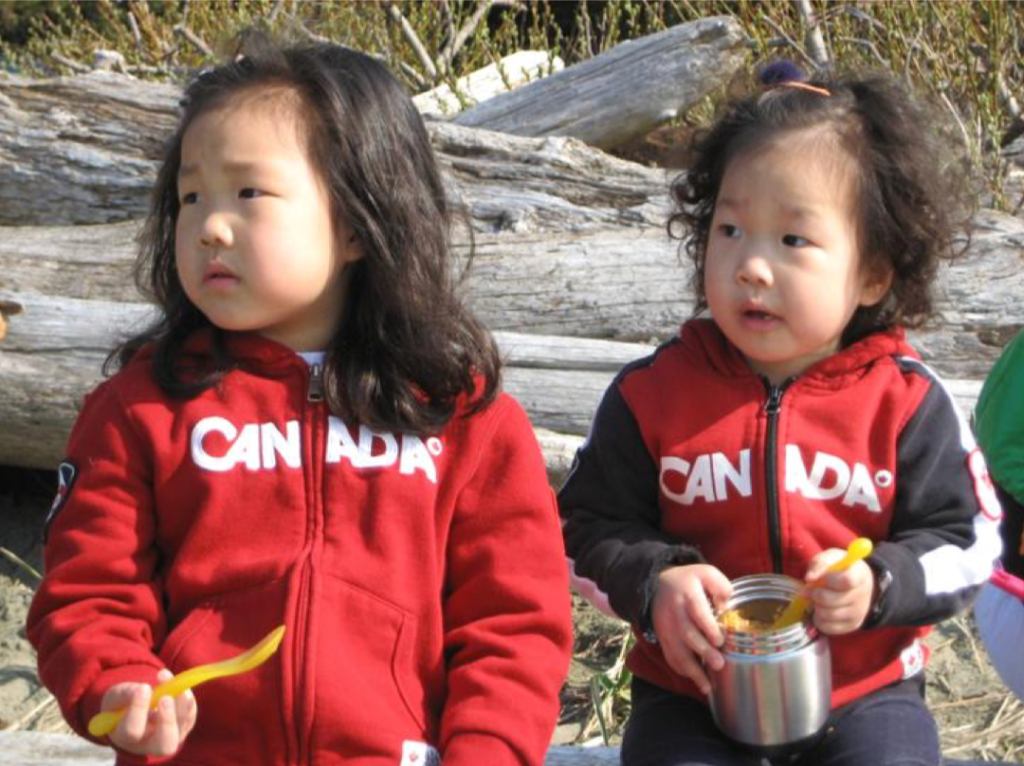
    This is a photo of Sungeun and her sister, when they lived in Canada.

    You grew up with a multicultural background—your mother is of mixed heritage, and your sister is currently studying in the UK. Have you had any memorable or culturally eye-opening experiences while navigating different cultures?

    Sungeun: My life was full of new cultures. Apart from my mom and sister, my aunt and uncle are Canadians, and my cousins are Chinese. Therefore, whenever our family would plan family trips, they were all memorable and culturally eye-opening. I encountered not only Asian culture, but also other ones while talking with them or even while eating food. One thing that I learnt as a person who grew up with a multicultural background was that every culture is amazing and beautiful, and there is no such culture that should be treated unequally. 

    This is funny, but also one of my absolute most memorable experiences. Most of my family is from Korea, Japan, and China, which are all Asian countries. However, only my aunt and uncle are from Canada, and they have a very different lifestyle compared to us. My aunt was still raised in Korea, but my uncle is half Canadian and half Hong Kongese. When I first met him, I was worried that he might feel pressured in getting used to our culture and how our family lives, and when he first arrived, he looked confused, especially when sharing food. Over time, he was used to Asian culture and he was just like one of us. From this experience, I learned that adapting to one’s culture depends on your mindset, and there is no such excuse that could stop one from assimilating into a new culture.

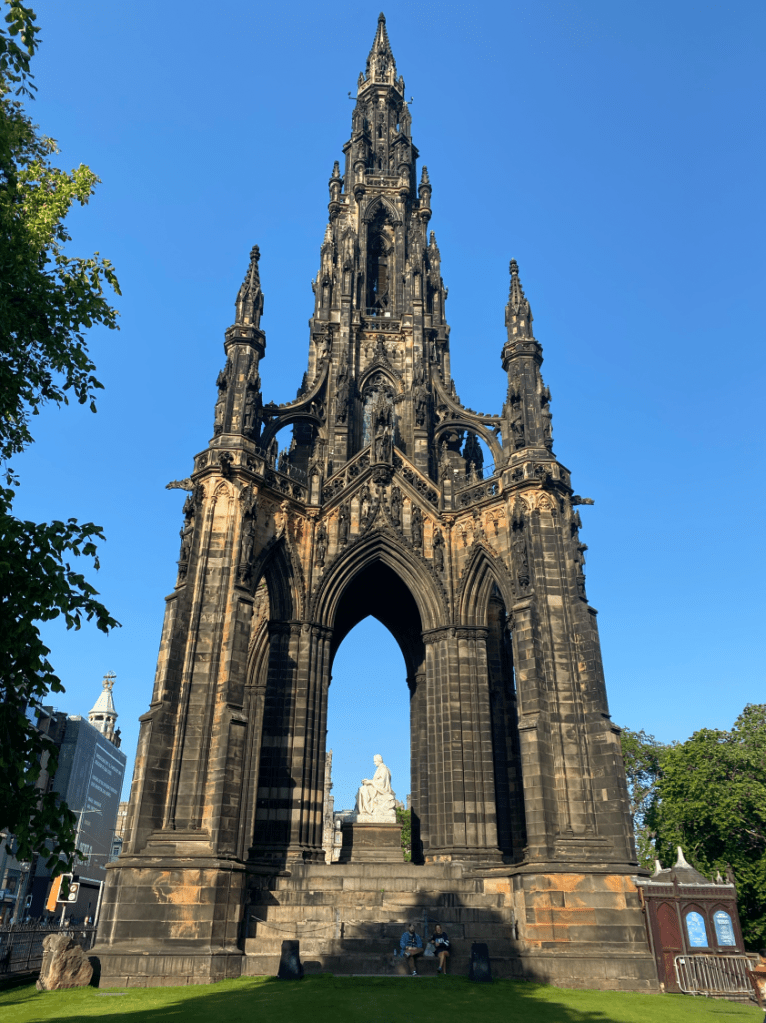
    This is a photo of the building in the UK, taken by Sungeun.

    We heard you recently visited your sister in the UK. Were there any noticeable cultural differences between Korea and the UK that stood out to you during your time there?

    Sungeun: My sister is currently studying at Edinburgh, UK, and since I am planning to apply to UK universities, our family thought it would be nice to visit the UK before applying. There were two noticeable cultural differences while I was there for almost a month. I have always heard that people living outside of Asia, and especially Korea, don’t tend to care about others, in a good way, such as minding one’s body shape, skin tone, or even their personality. Differently, in Korea, it is all about being pretty and skinny, which decides if someone is attractive or not. I thought that the UK culture, and probably a lot of others too, prioritized myself more than others. Also, this is kind of a bad experience that I encountered, but maybe because people prioritize themselves, they weren’t really thinking about basic etiquette. A lot of people blew cigarette smoke in front of my face, even though they knew that I was going to walk in front of them. This is not imaginable in Korea, where cigarettes are treated kind of negatively and where drugs are illegal.

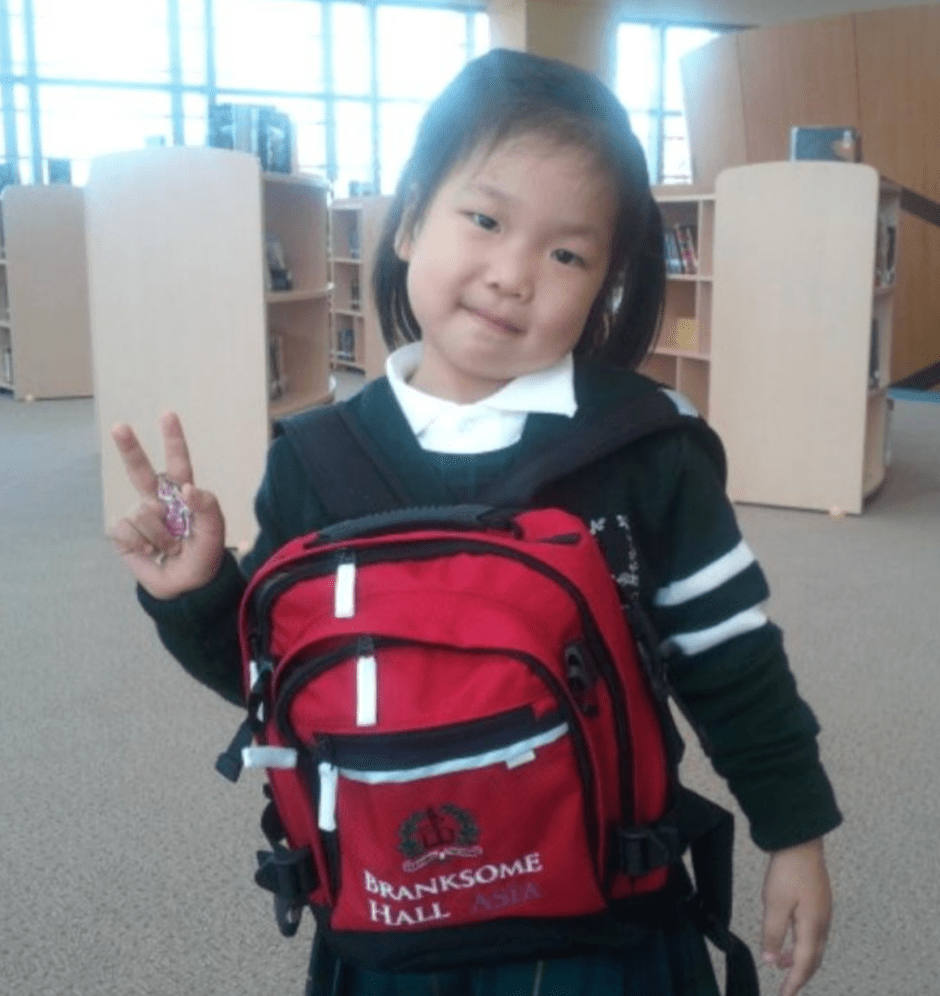
    This is a photo of young Sungeun in Branksome Hall Asia Library

    Although you were raised in Korea, you attended international schools from kindergarten onward and followed a global curriculum. What are some advantages and challenges of having been educated in an international system, particularly the IB?

    Sungeun: As I graduate this year, I am completing fourteen years of being a student at an international school. The biggest takeaway from following a global curriculum, in general and not specific to the IB, is that there is no boundary between me and any other foreign country. I have encountered many foreigners in my life, including teachers and friends, and my very first friend was from Belgium. The open mindset helped me to adapt quickly to unacquainted situations, such as never feeling left out even though there aren’t any Koreans. Another advantage would be that English feels like my second mother tongue. Unlike people who learn their second language after being fluent in their mother tongue, I learnt English along with Korean, and basically I have developed them to the same level. English is now one of the most comfortable languages I have a good command of, and considering the fact that I will be working abroad in the future, this would be the biggest advantage I have gained from being educated in an international system. 

    Particularly for the IB program, it focuses on the independence of individuals through critical thinking and a holistic approach to education. Not only critical thinking skills, but IB has shaped me as an individual who can seek help when needed, but also know how to find solutions on my ability. There were, of course, challenges in between these learning situations, such as dealing with stress; however, all of the challenges were one learning opportunity that could not be wasted.

    Sungeun’s reflections reveal the depth and complexity of growing up between cultures, not just in daily habits, but in values, perspectives, and relationships. Whether learning resilience through cultural adaptation, or embracing the independence and inquiry-driven mindset of an international curriculum, she has developed the tools to navigate a global society with confidence and purpose. Her story reminds us that cultural openness is not only about travel or language, it’s about being willing to learn from differences, to connect across unfamiliar lines, and to carry those lessons into the future. As Sungeun steps into the next chapter of her journey toward becoming a doctor, she embodies the mindset of a new generation ready to heal and lead in a borderless world.

  • Baguette for Breakfast, Kimchi for Dinner

    Baguette for Breakfast, Kimchi for Dinner

    In today’s 21st-century global society, an increasing number of young students are growing up with diverse cultural experiences from an early age. Jeongin Kim is one such student. Born in 2007, she has spent her life moving between Korea and France, allowing her to develop a deep understanding of both cultures. Now a senior at an international school in France, Jeongin is known for her cheerful personality and open-minded perspective. As she prepares for university in France, her experiences offer valuable insight into what it means to grow up between cultures and how identity is shaped through cross-cultural living.

    Could you please introduce yourself? What are your future plans after graduation?

    Jeongin: My name is Jeongin, I am a 17 years old student studying at a bilingual international school located near Paris. I lived in my home country, South Korea until I graduated middle school there. After graduation I plan to study medicine and either work at a company with my doctor’s license or become a full time doctor. I hope to be able to explore different opportunities for my career path within the medical field.

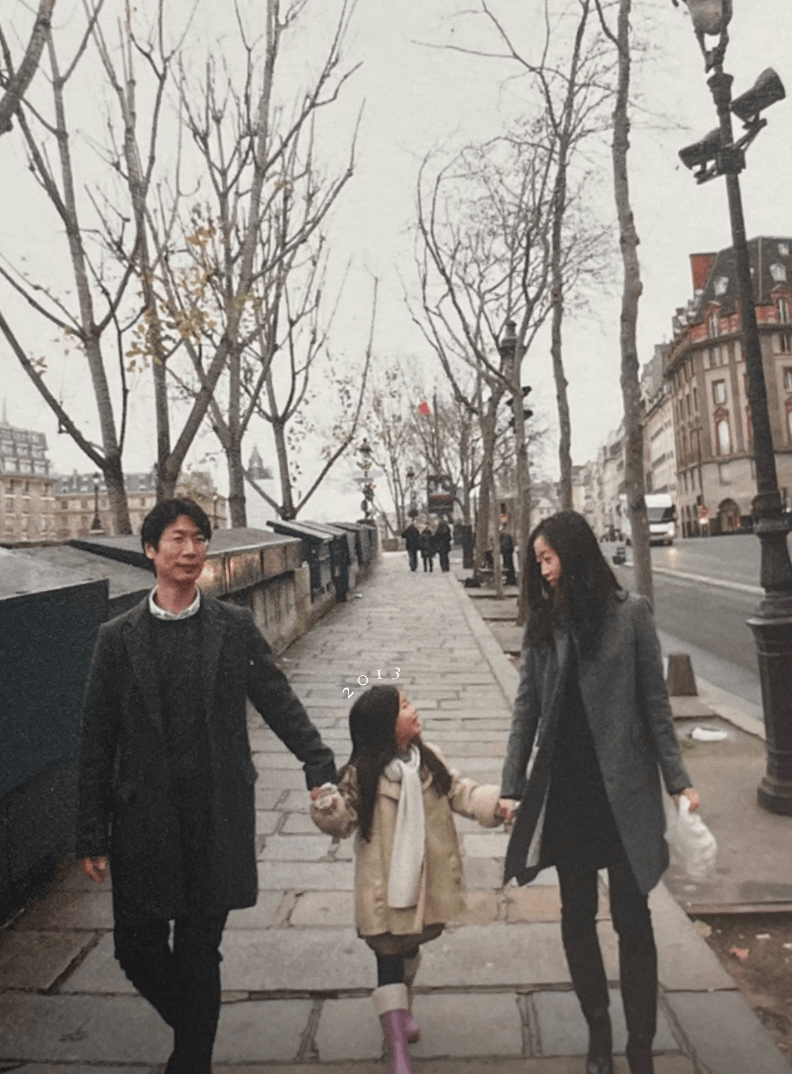
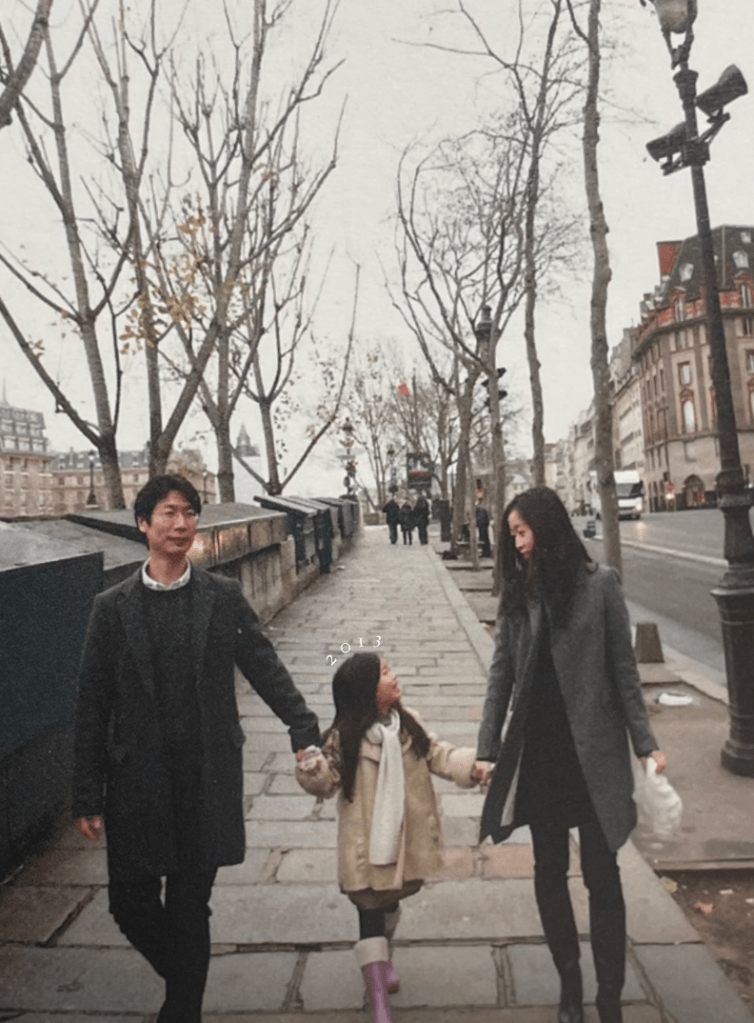
    This is a photo of young Jeongin, when she lived in France.

    Having lived in both France and Korea, what are some of the most interesting or culturally surprising experiences you’ve had while adjusting to different cultures?

    Jeongin: After living in France for two years, I started to really notice the cultural differences, but never in a bad way. For example, in France, individual choices are really respected. Things like coming from a divorced family aren’t seen as strange, just personal. In Korea, people might feel more pressure to fit into social norms. I also noticed that French people express their opinions very directly, and it’s totally okay to disagree. In Korea, we usually try to keep the peace and read the room, which can sometimes mean hiding what we really think. But that also creates a kind of harmony that I appreciate. And when it comes to self-expression, France feels more free. People dress however they want and don’t care much about what others think. In Korea, we do care more about appearances and social expectations, but again, that also makes people more considerate of others. Honestly, I think both cultures have their strengths. I’ve learned a lot from France about being true to myself, but I also still value the sense of community and warmth in Korea.

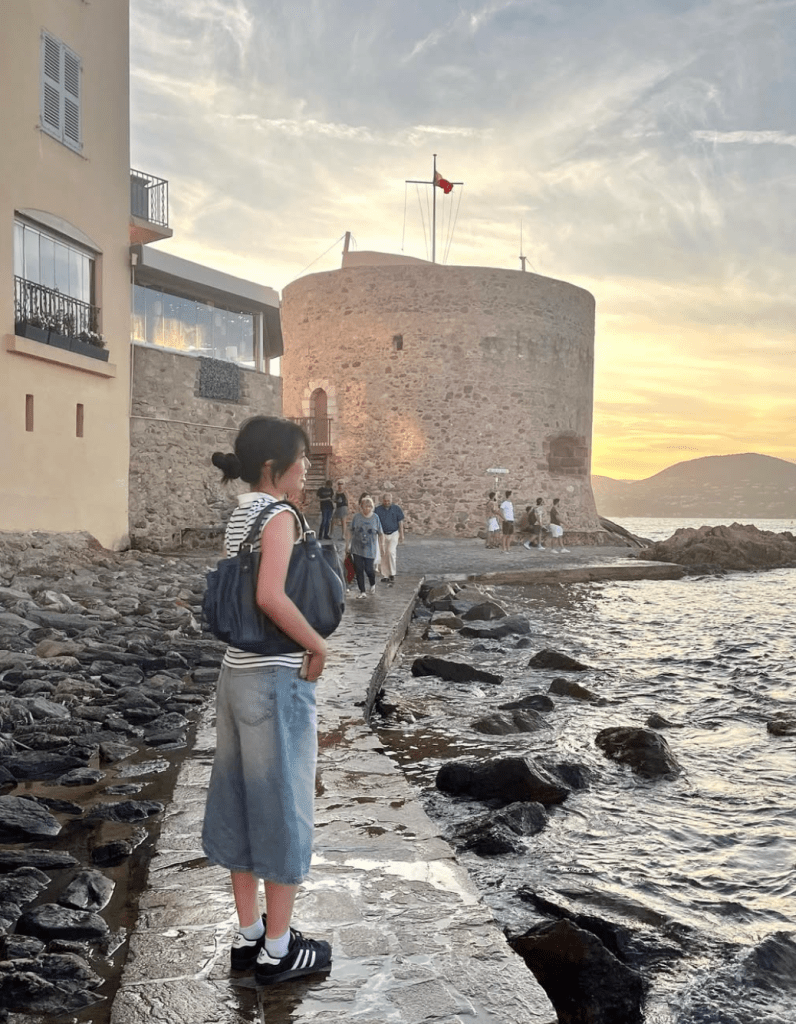
    This is a photo of Jeongin, taken in Saint Tropez, France.

    In your experience living abroad, how have you seen Korea and Korean culture being viewed or understood by people from other countries?

    Jeongin: Evidently, I’ve noticed that people from other countries both appreciate and criticize different aspects of Korea. For example, some criticize the intense work culture, saying it often overlooks work-life balance and doesn’t always value personal fulfillment as much as effort itself. On the other hand, many appreciate Korea’s vibrant entertainment options, cleanliness, and the fun social activities available. Interestingly, much of this positive energy seems to stem from the very strong competition that some see as a downside.

    If you were to give one piece of advice to a student preparing to live abroad for the first time, what would it be?

    Jeongin: I would for sure advise the student to try to keep a positive and open mindset. About the differences that she or he might face, though it could be surprising and overwhelming sometimes. Also, I would like to clarify that such a mindset doesn’t mean to fully understand or embrace those. Just being open and positive will guide you to take what you like and coexist with the ones you can’t. It’s the most common one, but it is because it is the most essential and fundamental thing needed for survival. Enjoying the experience abroad would never be possible without this.

    Jeongin’s interview reminds us that cultural understanding is not about choosing one identity over another, but about learning to hold multiple perspectives with care. Her experiences in both Korea and France show that cultural contrast can be a source of growth, not division. As she reflects on self-expression, social expectations, and mutual respect, she offers a powerful reminder that empathy begins with openness. Whether navigating directness in France or harmony in Korea, her story reveals that being between cultures is not a weakness, it is a strength. And in a world where more young people are growing up across borders, Jeongin’s voice is part of a generation redefining what it means to belong.

  • Have You Heard of Boom? The Funniest Man in Korea (and the Wisest One, Too)

    Have You Heard of Boom? The Funniest Man in Korea (and the Wisest One, Too)

    Korea’s media and entertainment industry is rapidly expanding its influence on the global stage. From K-pop and K-dramas to variety shows and films, Korean content continues to captivate audiences around the world. As the industry evolves, it is not only exporting culture, but also reshaping the global entertainment landscape itself. 

    Known for his vibrant energy, quick wit, and ability to light up any stage, Boom (Lee Min-ho) is one of Korea’s most beloved television personalities. With a career spanning over two decades as a singer, MC, radio DJ, and entertainer, Boom has become a household name through his appearances on countless variety shows and live events. Behind the laughter and dynamic performances is a seasoned professional with a deep understanding of people, culture, and the ever-evolving world of Korean entertainment. In this interview, Boom shares his insights on the global reach of Korean content, the lessons he’s learned from working with people of all kinds, and the cultural experiences that have shaped his worldview.

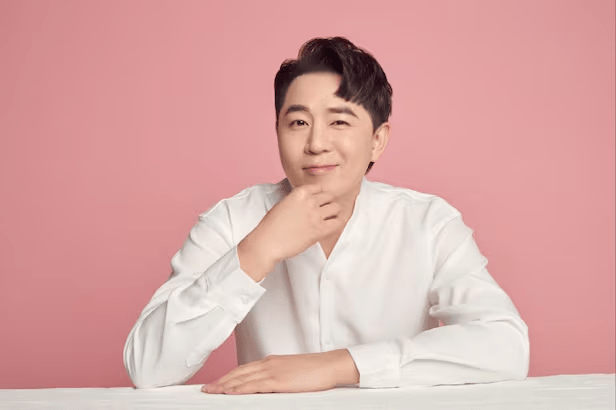
    This is a photo of entertainer, Boom (Minho Lee).

    (Photo credit: JG STAR)

    You’ve worked with people from many different backgrounds and personalities throughout your broadcasting career. What are some lessons you’ve learned or perspectives that have changed as a result of those experiences?

    Boom: Absolutely. When we are broadcasting, we really do meet all kinds of people. There were times when I thought, “Oh, this person is really quiet, will they be okay on camera?” And other times, someone had such a big personality that it took some balancing to make the show flow smoothly. But what I’ve learned over the years is that everyone has something special about them, something that shines. And depending on how I help bring that out on the show, the whole vibe can change completely. That’s why I try not to judge people at first glance anymore. Not just as Boom the entertainer, but as Minho Lee the person, I feel like I’ve grown a lot in how I see and connect with others. Moving forward, I hope I can continue to meet people without bias, recognize their unique light, and help them shine even brighter through what I do.

    You’ve had the chance to meet people from diverse cultures and travel to many countries for overseas schedules. Were there any moments of culture shock or particularly memorable cross-cultural experiences that stood out to you?

    Boom: Oh, there are so many! One that really sticks with me is from a trip to Sri Lanka. I was there for a shoot, and during meals, people barely spoke at all. At first, I honestly thought, “Do they not want to eat with me?” I almost took it personally. But later I learned that staying quiet during meals is actually part of their culture, it’s a way of showing respect. That really surprised me, especially because I’m such a chatterbox when I eat! Another memorable moment was during a stage rehearsal in Thailand. Before we started, all the staff gathered to meditate together. At first, I was like, “Wait, what’s going on?” But I soon realized it was their way of honoring the performance as something meaningful. I ended up joining in too. Experiences like those really taught me cultural humility. They reminded me that every culture has its own beauty, and sometimes, the best thing we can do is pause, observe, and respect it. 

    As someone working directly within the Korean media and broadcasting industry, how do you view the global impact of Korean content today?

    Boom: I really believe that Korean content is making a major impact on the global stage. “K” has almost become a brand of its own, starting with K-pop, and now expanding into K-dramas, K-films, K-food, and K-beauty. But I think our next challenge is to take this from just “K” to truly “World.” Rather than limiting ourselves to the label of “K,” we need to create content with a global mindset from the beginning and compete confidently in the international market. Korean content is already the heart of Asia. And now, it’s time to step fully into the global spotlight. The door is wide open. Let’s go! 

    Boom’s journey through broadcasting, travel, and cultural exchange reveals a deep respect for people and the stories they carry. His reflections remind us that entertainment is not just about energy and laughter, but about connection, understanding, and growth. As Korean content continues to expand globally, voices like Boom’s show us that true impact begins with empathy and a willingness to see the light in everyone. 

    Read the blog about Wonwoo Park, another creative worker as an broadcasting format writer in K-media industry!

  • From K to Global: The Hidden Hands Behind K-media Boom

    From K to Global: The Hidden Hands Behind K-media Boom

    In recent years, Korean content has traveled far beyond its borders, capturing the attention of global audiences with its music, dramas, and increasingly, its broadcast formats. But behind the scenes of this cultural export boom lies a lesser-known figure: the broadcast format producer. 

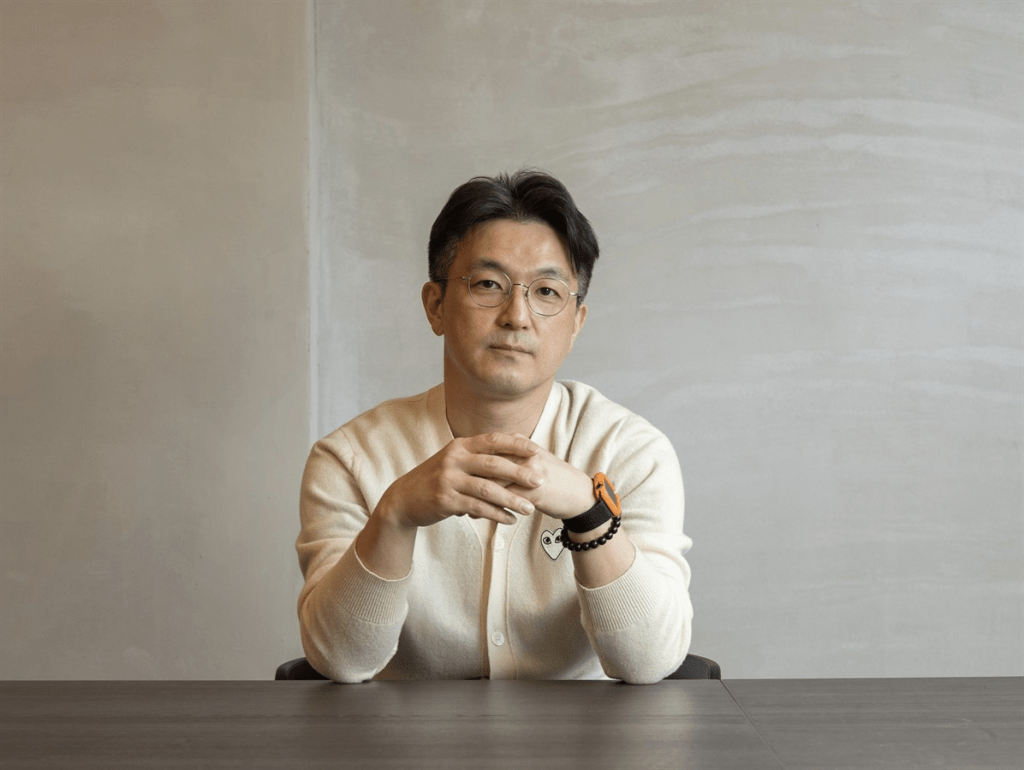
    This is a photo of Wonwoo Park, the CEO of diTurn.

    Wonwoo Park is the Founder, Show Director & CEO of Korean broadcast format company diTurn. Park is internationally recognized as the original creator and Korean producer behind global sensations like The Masked Singer and Lotto Singer. In Korea, he has also developed and produced a number of successful shows, including 300: United Voices, My Ranking, Dancing in the Box, and My Boyfriend is Better. Following the worldwide success of The Masked Singer, his company, diTurn, secured a first-look deal with FOX TV and is now collaborating with major global studios such as Sony Pictures and Banijay. In this interview, we explore with Park, how Korean cultural identity is packaged, adapted, and sometimes challenged when entering foreign markets, and what this process reveals about the contrasts between Korea and the rest of the world. 

    What exactly does a broadcast format producer do? What kind of work are you currently engaged in?

    Wonwoo: The role involves identifying and analyzing global media platforms and broadcaster needs, often detecting trends and assessing market flows. I work closely with domestic broadcasters and production companies to create customized formats. I also collaborate with overseas partners to co-develop formats tailored to international audiences and ensure these projects are successfully launched abroad. Once a format gains traction, I continue managing and evolving it, generating new ideas for future formats and adaptations.

    How do you see Korea’s culture and content industry being received overseas, especially when working as a format producer?

    Wonwoo: Korea’s cultural exports, once limited to stereotypical notions like “politeness” or “group harmony,” have now expanded into mainstream media through K-pop, K-drama, K-animation, and K-format. Major international buyers are increasingly interested in Korean creativity and originality. I can say how Korean-made formats are gaining attention for their innovative and structured storytelling. As evidence, exclusive format licensing deals with NBCU and FOX TV signal Korea’s elevated status in the global media market. I believe that the future holds even greater opportunities for Korean content to gain love from international audiences.

    Have you ever experienced cultural differences or challenges while working with international partners?

    Wonwoo: Absolutely. Cultural and workflow differences often present challenges. For example, international partners tend to plan with detailed schedules and emphasize business results, whereas Korean workflows are more flexible, relying heavily on trust and relationship-based collaboration. These differences sometimes caused confusion and miscommunication in the early stages. However, through hands-on experience and frequent local coordination, I learned how to bridge those cultural gaps. I’ll emphasize that understanding each other’s processes is crucial to building transparent and productive partnerships.

    What do you think are the key selling points or unique traits of K-formats for global buyers?

    Wonwoo: The distinctiveness of Korean formats lies in their balance of clear structure and emotional depth. These formats often reflect Korea’s cultural values, such as sincerity and resilience, which resonate with global audiences. Even when adapting similar themes, such as survival shows or romance, the Korean version tends to add a fresh perspective, often grounded in realism and emotional storytelling. For example, themes of regret, social class conflict, or generational tensions often appear in Korean formats, giving them universal relevance. This cultural richness, paired with competitive production quality, makes K-formats a strong contender in the global market.

    What becomes clear through this conversation is that Korean culture is not simply being exported—it is being negotiated. The broadcast format producer navigates differences in work style, creative values, and narrative expectations to ensure that Korean content can land meaningfully in other cultural contexts. At times, this means adapting or even compromising parts of Korea’s unique storytelling DNA. Yet, in that very process of cultural exchange, Korea also gains insight into how it is perceived globally, and where its values align—or clash—with others. These are not just stories of entertainment—they are reflections of identity, power, and cultural dialogue. And perhaps, in seeing which parts of Korean culture are embraced or misunderstood abroad, we also see the shifting landscape of what Korea represents to the world.

    Read the blog about Boom (Minho Lee), another creative worker as an entertainer in K-media industry!