Tag: english

  • The Pressure and Promise of the CSAT

    The Pressure and Promise of the CSAT

    Daeun is a senior in Korea who recently took the 2026 CSAT (수능). She has lived her whole life in Korea and attended only Korean public schools. As a 문과 (humanities) student, her university choice is extremely important, shaping both her academic path and future opportunities. Her experience reflects the pressures of Korean public school life, where success is often measured by test scores and admission to top universities. Daeun’s story gives insight into student life in Korea, the role of societal expectations in shaping educational paths, and how young people make decisions about their futures in a highly competitive environment.
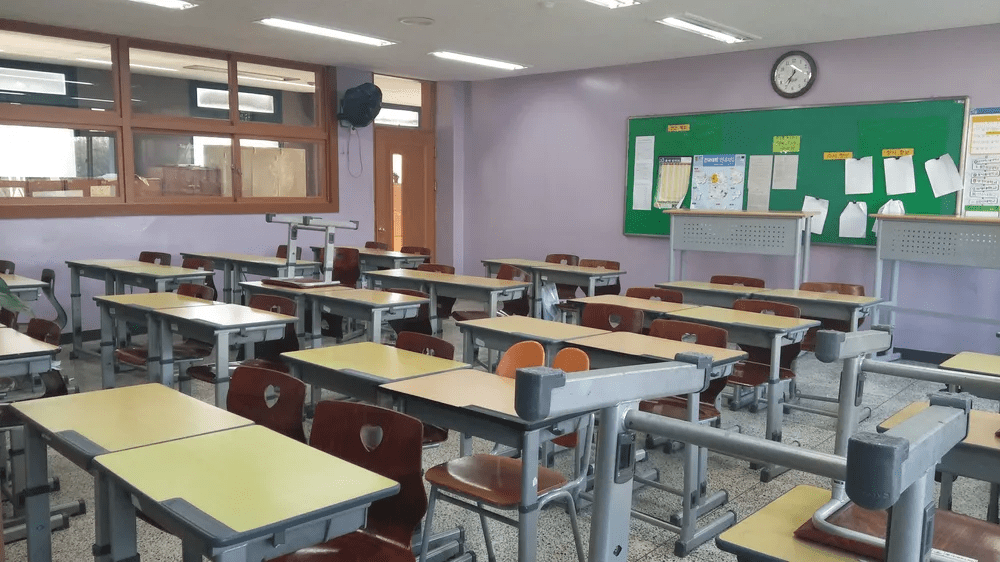

    Can you describe how you felt while preparing for the 2026 CSAT and on the day of the exam?

    Daeun: Preparing for the CSAT was exhausting but also intense in a way that taught me a lot about discipline and time management. I had to balance school classes, private academy sessions, and self-study, which sometimes felt overwhelming. On the day of the exam, I felt a mix of nervousness, anticipation, and relief because all the preparation led up to that moment. Even after finishing, there was still a lingering pressure to achieve a high score, since it plays such a big role in university admissions and in how society views success.

    What were some of the biggest challenges you faced as a humanities student in Korea’s education system?

    Daeun: One of the hardest things was feeling like the university name defined my entire future. For humanities students, especially, there is so much emphasis on entering a top school, and it often feels like our worth is measured by that. I also noticed how money can affect opportunities. Some students can afford extra academies or tutoring, which makes competition even more stressful. In addition, keeping up with both schoolwork and preparing for the CSAT while managing stress and sleep felt like a constant balancing act.

    Have you thought about retaking the exam or exploring other options to improve your chances for university?

    Daeun: Yes, it’s something I’ve seriously considered. A lot of students who want a more prestigious university think about retaking the CSAT. For me, I have to weigh the stress, time, and cost against the potential benefits. Being a humanities student, where top university names really matter, makes this decision even more difficult. I also had to think about whether I want to follow society’s expectations or find a path that feels right for me personally.
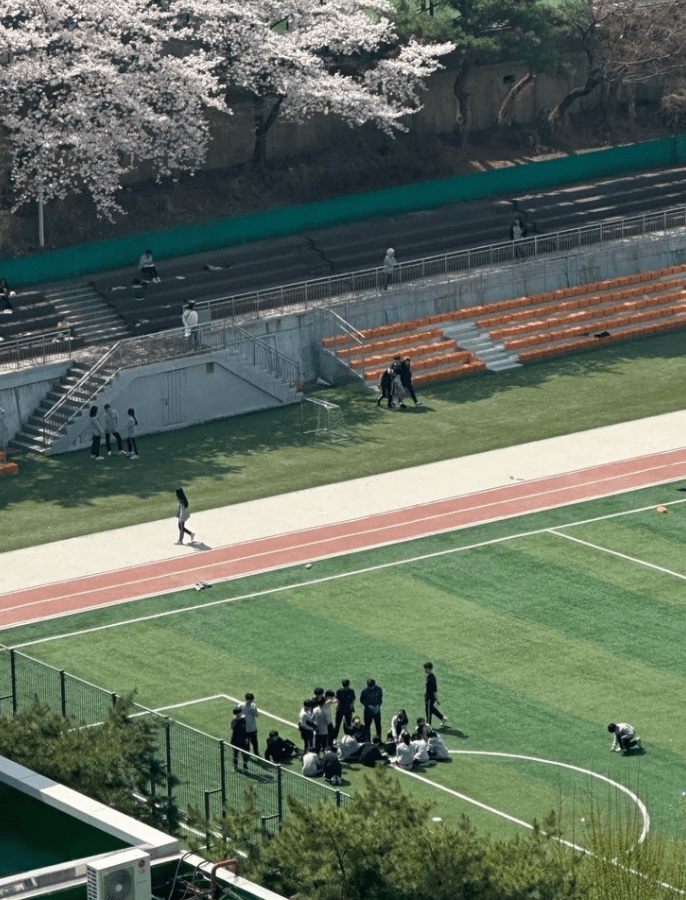
    This is our school in spring!

    How do societal and cultural pressures in Korea affect students’ experiences and choices?

    Daeun: It’s hard not to feel the pressure. In Korea, there is a strong cultural focus on academic achievement, and many people equate success with getting into a top university. This can make school life stressful because grades and exam scores are often prioritized over learning, creativity, or personal interests. At the same time, I’ve seen how this pressure motivates some students to work incredibly hard, but it can also lead to burnout or self-doubt. It made me realize how different education systems can shape the way students experience growing up.

    Looking back, what lessons or perspectives have you gained from preparing for the CSAT and experiencing student life in Korea?

    Daeun: I’ve realized that education is about more than just exams. Learning to manage stress, seek support from friends and family, and reflect on what matters to me personally has been just as important as studying. I’ve also understood that there are many ways to measure success and that following only what society expects doesn’t always lead to fulfillment. Even in a competitive system, moments like discussing ideas with classmates or sharing tips with friends reminded me that student life also includes learning from each other and building connections, not just focusing on the test.

    Daeun’s experience highlights the real experiences of student life in Korea, where education, culture, and societal expectations are tightly linked. For humanities students, the university name carries significant weight, shaping both personal and academic decisions. Her story reflects the pressures of preparing for the CSAT, balancing schoolwork, and making choices under a highly competitive system. At the same time, it shows that growth comes from learning to manage stress, reflect on personal goals, and value connections with peers. Daeun’s perspective offers a glimpse into how culture and education shape students’ lives and the ways young people adapt and make choices in modern Korean society.
  • ‘A Library That Listens’ Ms Lim’s Vision for Korea’s Youth

    ‘A Library That Listens’ Ms Lim’s Vision for Korea’s Youth

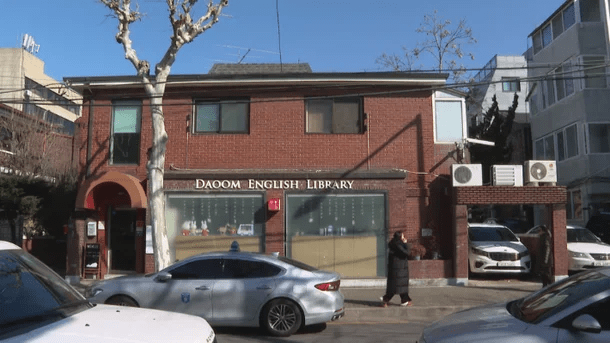
    Ms. Lim is the librarian at Daoom English Library, a community space designed to serve local elementary, middle, and high school students. The library provides a welcoming environment much like a neighborhood study room, offering a wide collection of English books, multimedia resources, and diverse programs for students seeking to strengthen their English skills or pursue their dreams through the language. Established by Daoom Church as a way to serve the community, the library has grown into a place of shared learning and joy for both students and volunteers alike. Ms. Lim plays a central role in organizing these programs, including the Newspaper in Education (NIE) sessions where volunteers from Lectio, including Kaiden and me, guide young students through interactive English activities. Through her dedication and care, Ms. Lim helps bridge language gaps and nurtures a space where curiosity and community come together.


    Daoom English Library welcomes students from different backgrounds and learning levels. How do you see cultural diversity influencing the way children learn and interact here?

    Ms. Lim: I think the diversity here helps students learn not only English but also about each other. Some children are more confident, while others are still shy with the language, but they naturally help one another. When they share ideas or stories from school or home, it creates a very open and kind atmosphere. It is not just studying; it is learning to understand different people. In Korean public schools, students usually focus more on grammar or exams, so they do not have much chance to speak freely. Because the world is becoming more globalized, I think spaces like Daoom are important for helping students build confidence in real communication.

    What do you think makes the NIE program helpful or special for the kids who come here?

    Ms. Lim: The NIE program connects English with real topics from newspapers. Instead of just memorizing words, the students think and talk about what is happening around them. It makes English feel more alive and useful. I can see their confidence growing as they express their thoughts in simple English sentences. Many Korean students learn English mainly through textbooks, so they often feel nervous using it in daily life. Here, they realize that English can be a tool for sharing their opinions, which fits the world they are growing into.

    How is ur experience with the ovlunteers from different schools? How did they help with the library?

    Ms. Lim: The volunteers bring a lot of energy and creativity. They make the lessons fun and help students feel more comfortable speaking. I also think the younger kids look up to them because they see that studying English can be enjoyable, not stressful. The volunteers also help organize activities and prepare materials, which really supports our small team here. Many volunteers also share stories from their own schools, showing students that English is used in many different ways. This kind of exposure helps children see English not as a test subject, but as a bridge to the wider world.

    A photo of our volunteers!

    This is a photo of our volunteers!

    Daoom feels like more than just a library; it’s like a community space. What do you think makes this place different for students?

    Ms. Lim: Daoom is a warm and welcoming space. We want it to feel like a second home where students can relax, read, and learn freely. There is no pressure here, only encouragement. I think that is what makes it special. Many of our students stay after class to talk or read more, which shows that they feel safe and cared for here. In most schools, there is little time to explore English naturally, but here they can take their time. Because English is becoming more essential in global society, I hope this space helps students gain confidence step by step.

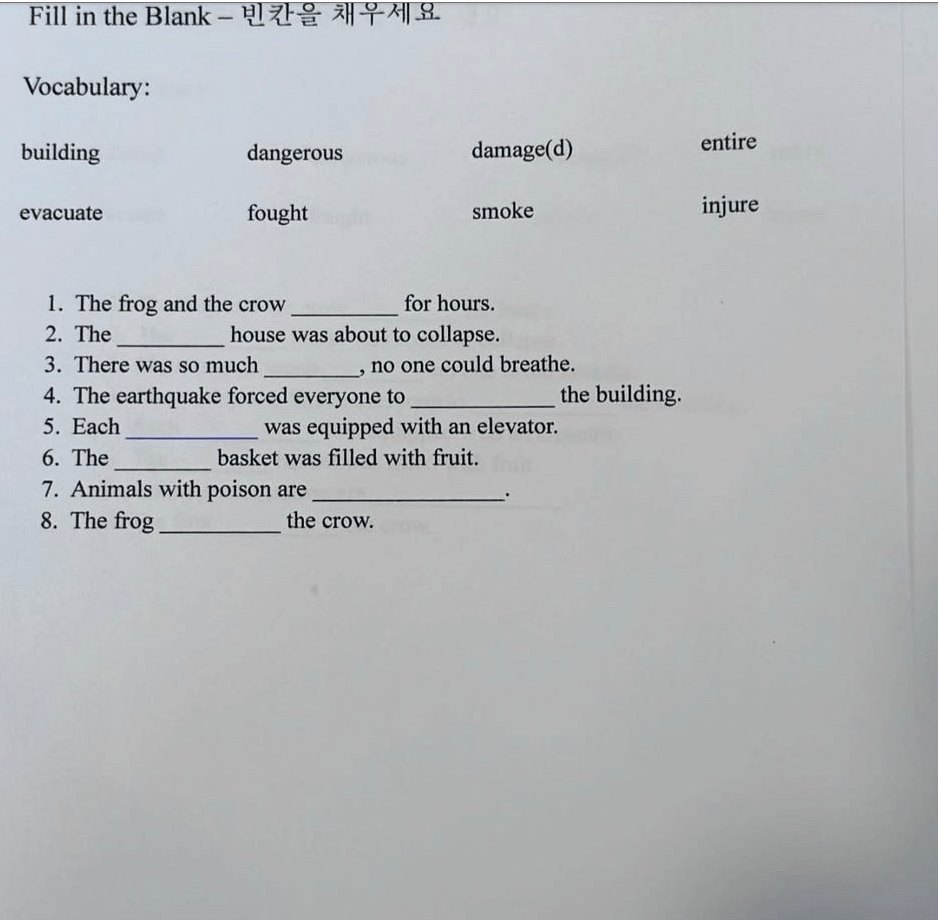
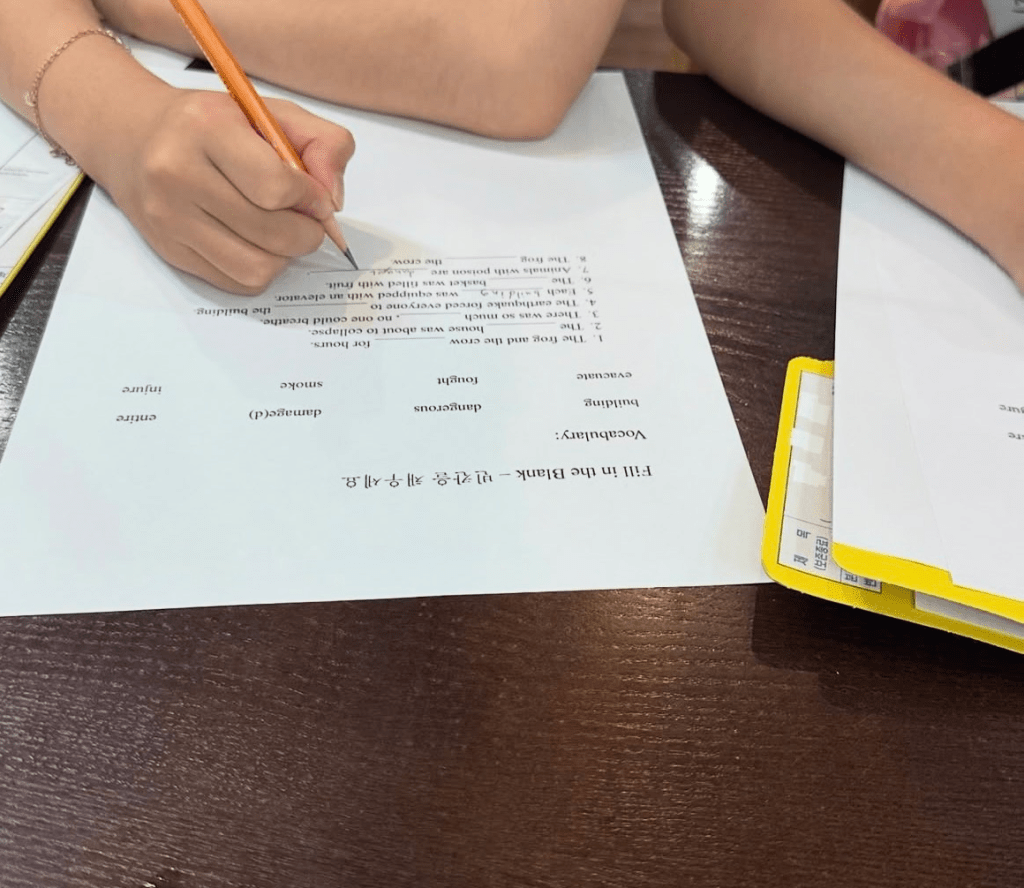
    This is a picture of one of the worksheets our volunteers bring!

    Ms. Lim’s interview shows how education can connect people from different cultures and experiences. At Daoom, learning English is not about getting every answer right but about gaining confidence and communicating with others. She reminds us that as Korea becomes more globalized, students need more opportunities to practice English in open and encouraging environments. Unlike the strict, exam-focused atmosphere in many schools, Daoom helps children discover that English can be part of daily life and friendships. Through Ms. Lim’s guidance, students learn that language is not just a subject but a tool to connect and grow together. Daoom represents how learning and community can come together through care and understanding.