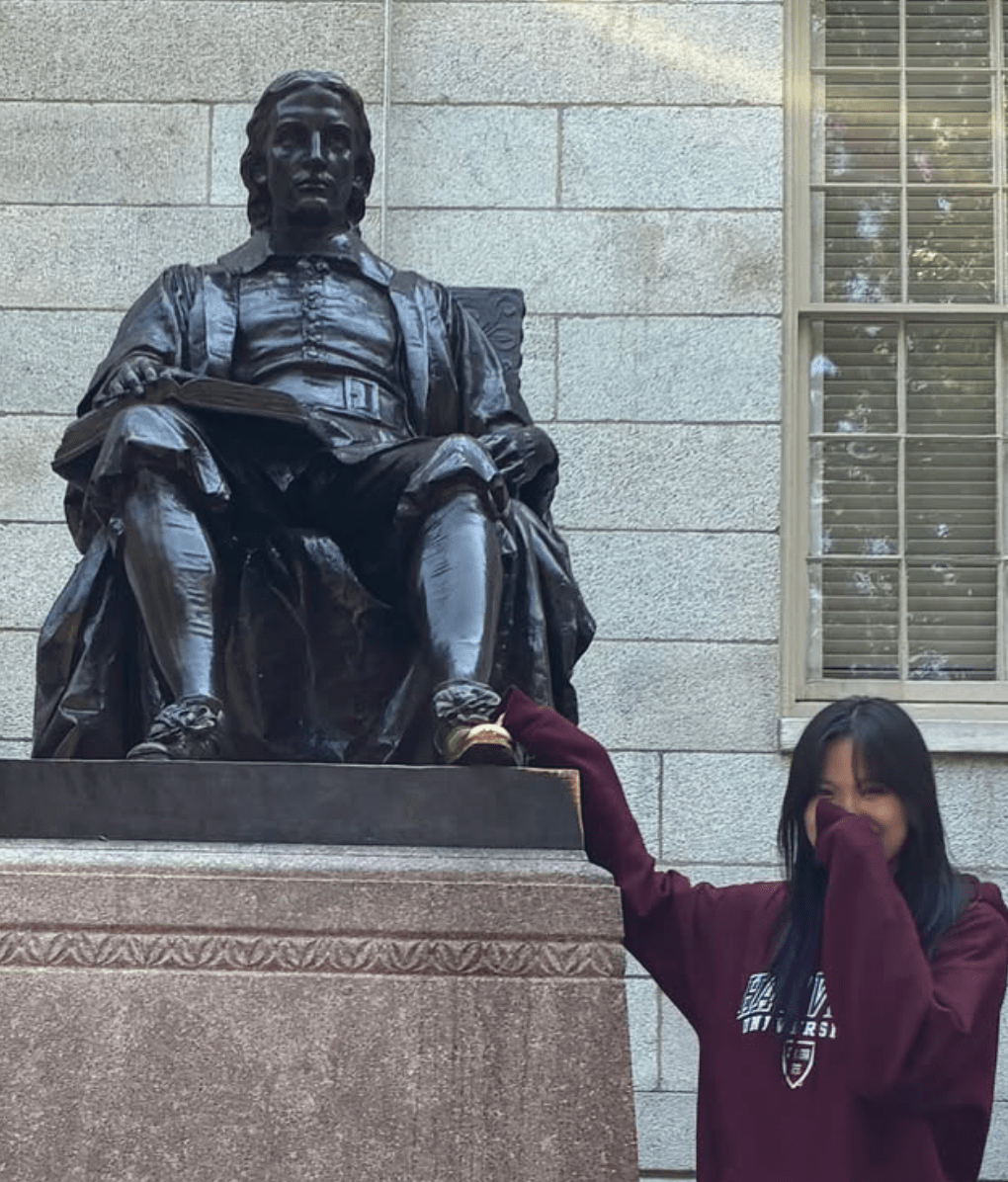
Serin Kim is a South Korean high school student who has transferred to a public school in Canada. She offers insight into the differences in the type and level of academic pressure between Canadian schools and Korean schools, especially since she has also experienced academics in one of the most prestigious Korean private schools, KMLA. Serin is highly driven and notices not only cultural barriers in casual daily interactions but also structural differences at school. She was allowed a relatively short period to adjust, as she is a rising senior and is occupied with preparations for college admissions in Canada, which is also a vastly different process compared to that of Korea.
Sieun: Can you introduce yourself and the area you live in?
Serin: My name is Serin Kim. I’m a rising senior, and I am currently attending public school in Vancouver, Canada. My school offers an international program (exchange students), so I have met people from various cultural backgrounds.
Sieun: How would you describe your daily life compared to your experience in South Korea?
Serin: There are a lot of differences compared to South Korea. In my opinion, the biggest difference was the school curriculum. First, school ends at 2:45pm. Considering my previous Korean high school ended around 5-6pm, I am able to get much more free time. Second, my Korean high school had mandatory study sessions (“야자”). Even though the regular schedule ended, I had to attend the study session. However, schools in Canada don’t really intervene with students’ individual schedules after school ends. This difference made me feel less academic pressure in my daily life. Lastly, schools in Canada use ‘absolute evaluation’, while high schools in Korea use ‘relative evaluation’ when it comes to grading. When I was in Korean high school, I should’ve cared about others’ grades a lot, because their grades determined my final grade. It was so stressful, and I had to lock myself in my study all the time and feel pressure. I had to go to cram schools (‘학원’) right after school, and it almost ended around midnight. It caused immoderate competition, increasing tension between friends.
On the other hand, in Canada, others’ grades have nothing to do with my grades. It makes much less pressure, and students are more collaborative when it comes to study (peer tutoring). I could spend more time on my hobbies or extracurriculars I’m interested in such as singing, public forum and teaching others.
Sieun: Have you faced any challenges making cultural adjustments?
Serin: When I first came to Canada, tip culture made me feel embarrassed. In Korea, tip is not mandatory, and it might be considered rude sometimes. I did not get used to giving tips. When I skipped giving tips one time in the restaurant, they asked me ‘No tip?’ in an angry tone. I was so embarrassed, so I gave the rest of my changes back to them. I thought it was weird at first, but I finally realized that that was understandable in terms that a tip is a kind of evaluation of their services and extra income they can get. After this experience, I give tips almost every single time to show my respect for them and their services.
Sieun: Which culture do you think you would identify more with in the past, present, and future?
Serin: I feel more comfortable with Korean culture. I identified myself in Korean culture before I came to Canada, because that was the only culture I had experienced. Also, both my mom and dad are Korean, so it is easy to think I am also Korean. I am identifying myself in Korean culture because I am still comfortable speaking Korean rather than English. I think it assures my accessibility to content from Korea and interaction with Korean culture even if I am staying in Canada.
On the other hand, I still haven’t gotten used to Canadian culture, as I’ve only been here for 2 years. Even in the future, I will identify myself with Korean culture. It is because I spent my childhood in Korea, and I’m pretty sure that the memories from my childhood have created my identity.
Serin touches on many various cultural differences that had practical effects on her daily life, from academic evaluation structures to tipping culture. She highlights how, while her experience as an international student has liberated her from some of the pressures of Korean culture, she doesn’t associate her new surroundings with her identity. Her reflections may offer valuable advice to the Korean diaspora on how empathetic understanding of the context behind certain cultural practices, such as tipping, has helped her live more cohesively.
 Humans of Korea
Leave a comment