Author: s2choi2027

  • “I Have No Flag to Hold” Dilemmas of the International Teen

    “I Have No Flag to Hold” Dilemmas of the International Teen

    Jiwoo Choi is my sister and a rising freshman who has recently been accepted into Saint Paul Preparatory School in the Seocho district. She has attended more than four different international schools in Seoul, all of which have either an English or American curriculum, despite never having lived abroad. Her perspective differs significantly from that of the majority of international students, as her only source of connection to her home language or culture comes from within her family, while she is neither a second-generation immigrant nor does she have permanent residency in any foreign country. Jiwoo provides insight into the challenges of having a strict social and cultural division, and is concerned with how she doesn’t have a single standard of living. This is amplified since her career, following her studies abroad, will most likely require her to reside overseas, and she is unsure about selecting a country when she has only ever experienced a mixed environment. 

    Sieun: Please introduce your personal and academic background.

    Jiwoo: I’m Sieun’s little sister, Jiwoo. Unlike Sieun, I’ve never attended Korean public school, and every one of my friends and acquaintances is an international school affiliate. I’ve studied according to American textbooks most of my life, and speak Korean only at home. I have moved frequently within Seoul, changing schools, and I’ve also traveled abroad a lot. 

    Sieun: How would you describe your school and social life compared to your life at home?

    Jiwoo: I think the simplest yet greatest difference is language. A social studies teacher once showed our class a TED talk about how language shapes cognition, not only in terms of grammar, range of expressions, and meanings, but also in the way people carry themselves. That was the most relatable thing I’ve ever heard. In school, where I speak English and also mostly follow North American social cues because there are foreign teachers and students, I act more sociable in some sense, but on the other hand, try to stay out of others’ and my boundaries more, like being extremely talkative and bubbly but at the same time only touching on surface-level conversational subjects.

    At home, not only with my direct family, but also during holidays when we travel to our grandparents’ house to meet relatives and random visitors, I sometimes feel a sense of discomfort around people, especially the elders, who ask more about my business. But I also think that I’m being cared for more. 

    Sieun: Were there any difficulties from this divide? 

    Jiwoo: I’m a student, so most of the time I’m occupied with homework, studies, clubs, and other school-related activities, even at home. Honestly, apart from that, I speak Korean at home, and just in the streets, and I notice little cultural differences in, like, the way people greet each other, I don’t really experience a totally “Korean” lifestyle. But if you think about it, I also can’t say that I identify with the American nationality. I’ve also been in English schools, and the range of an international school that I experienced is huge. So, the conversations I have and the media I consume just have a vaguely North American hint in a spatially Korean context. I know that not all International students are this unsure or even see this as a problem. Still, I sometimes feel anxious that I don’t have the strongest national pride or connection to Korea, apart from its geographical location, and neither to America, apart from what I have been exposed to through the international school system. It can feel like I’m not entitled to either, and sometimes like I don’t belong anywhere.

    Sieun: In the future, how do you think you can manage this discomfort, and decide where to either spatially or emotionally settle?

    Jiwoo: All the education I’ve ever had is in English, so I’m set on going abroad for my bachelor’s degree. I’m actually kind of excited, because at least then, I’ll have a few years to experience one nation fully. I’ll decide where to reside for the rest of my life after experimenting. I also always felt like I would need at least a short-term work experience in South Korea, because my family is here, and I’ll honestly just have to give everything a try. I would have to consider realistic factors, such as whether I can secure a visa elsewhere and if I’m ready to leave one of the safest countries, both literally and emotionally, for me. Because there is comfort in homogeneity, and I’m unsure whether studying abroad will make me miss it or disregard it. 


    Jiwoo’s interview reveals the effects of the lack of a single national identity or pride on a developing teenager. She shares the common experience of an international student or a second-generation immigrant, which is having to switch languages completely from their school and social life to their familial interactions. Apart from the way this language barrier sometimes creates cultural barriers, since language dictates thinking, as she mentioned, her anxiousness toward her national identity comes from having a school-centered life, almost without any Korean social influence, except that from her parents. Her willingness to take risks by experimenting with life in different countries to discover what shapes her mind and identity to their fullest potential is admirable. This kind of openness towards selecting one’s own culture or cultures, and ultimately their lifestyle, is increasingly needed as we move forward in globalization.

  • Bridging Identities in the IB Curriculum

    Bridging Identities in the IB Curriculum

    Ava Hill is a rising junior at Chadwick International. Her perspective highlights not only the spatial differences that stem from the distance between the US and South Korea, but also those within a multicultural family. Ava travels frequently to her home state, Idaho, which enables her to stay in touch with her American cultural heritage. Her experiences with a North American school curriculum, similar to that of the US, in a spatially Korean background provide meaningful takeaways regarding cohesion.

    Sieun: Please introduce yourself and your national background..

    Ava: Hi! My name is Ava Hill; I attend Chadwick International, and I am half Korean and half American. My mom is Korean, and my Dad is American! I lived in Idaho all of elementary school, then moved to Songdo in middle school. I am now 16 years old.

    Sieun: What are some cultural differences you felt between your state and Songdo?

    Ava: In Idaho, it was a very small town and open spaces to play with friends, compared to Songd,o which is more of a city and busier and faster paced. While living in Idaho, we lived in a standard 3-story suburban house with a backyard, a garden, and a baseball hoop. In Songdo, I live in a very small, cute apartment with lots of stuff around my apartment! We can walk to so many stores for anything you need, unlike in Idaho, where you usually need to drive!!

    Sieun: How does doing the IB curriculum and following mostly North American academic and cultural standards at school, while spatially residing in South Korea, affect your identity? 

    Ava: Doing IB in Korea has made my school experience very different from the North American high school experience. At CI my school follows some of the North America cultural influences, the academics standards are much much more intense and focused on the grades, compared to my friends school in Idaho where they want to emphasize more on enjoying high school life, sports, dating, etc. living in korea but learning in an international IB environment has made me into someone who works hard and pushes for academic success. Still, it also makes me aware of trying to balance achievement with enjoying school life.

    Sieun: Is there anything different in your ‘day in the life’ abroad (including traveling) and in Songdo?

    Ava: In Songdo I can walk to school in around 10 minutes, compared to Idaho, where you drive around 20 minutes to get to school!! I am able to travel around countries in Asia and for much cheaper!


    Ava’s interview highlights the many differences that are noticeable in daily life between Songdo and Idaho. She explains how the difference in the size of land, and the following changes in transportation or form of housing are one of the greatest adaptations her family made while moving to Korea. Ava also notes that she experienced more academic pressure and a focus on grades, which was a common trend noticeable from almost every interview including a change to, not always a Korean school system, but a spatially Korean setting.

  • ‘Free Afternoons and Tipping Culture’ Lessons from a Korean Teen in Vancouver

    ‘Free Afternoons and Tipping Culture’ Lessons from a Korean Teen in Vancouver

    Serin Kim is a South Korean high school student who has transferred to a public school in Canada. She offers insight into the differences in the type and level of academic pressure between Canadian schools and Korean schools, especially since she has also experienced academics in one of the most prestigious Korean private schools, KMLA. Serin is highly driven and notices not only cultural barriers in casual daily interactions but also structural differences at school. She was allowed a relatively short period to adjust, as she is a rising senior and is occupied with preparations for college admissions in Canada, which is also a vastly different process compared to that of Korea. 

    Sieun: Can you introduce yourself and the area you live in?

    Serin: My name is Serin Kim. I’m a rising senior, and I am currently attending public school in Vancouver, Canada. My school offers an international program (exchange students), so I have met people from various cultural backgrounds. 

    Sieun: How would you describe your daily life compared to your experience in South Korea?

    Serin: There are a lot of differences compared to South Korea. In my opinion, the biggest difference was the school curriculum. First, school ends at 2:45pm. Considering my previous Korean high school ended around 5-6pm, I am able to get much more free time. Second, my Korean high school had mandatory study sessions (“야자”). Even though the regular schedule ended, I had to attend the study session. However, schools in Canada don’t really intervene with students’ individual schedules after school ends. This difference made me feel less academic pressure in my daily life. Lastly, schools in Canada use ‘absolute evaluation’, while high schools in Korea use ‘relative evaluation’ when it comes to grading. When I was in Korean high school, I should’ve cared about others’ grades a lot, because their grades determined my final grade. It was so stressful, and I had to lock myself in my study all the time and feel pressure. I had to go to cram schools (‘학원’) right after school, and it almost ended around midnight. It caused immoderate competition, increasing tension between friends.

    On the other hand, in Canada, others’ grades have nothing to do with my grades. It makes much less pressure, and students are more collaborative when it comes to study (peer tutoring). I could spend more time on my hobbies or extracurriculars I’m interested in such as singing, public forum and teaching others.

    Sieun: Have you faced any challenges making cultural adjustments?

    Serin:
    When I first came to Canada, tip culture made me feel embarrassed. In Korea, tip is not mandatory, and it might be considered rude sometimes. I did not get used to giving tips. When I skipped giving tips one time in the restaurant, they asked me ‘No tip?’ in an angry tone. I was so embarrassed, so I gave the rest of my changes back to them. I thought it was weird at first, but I finally realized that that was understandable in terms that a tip is a kind of evaluation of their services and extra income they can get. After this experience, I give tips almost every single time to show my respect for them and their services.

    Sieun: Which culture do you think you would identify more with in the past, present, and future?

    Serin: I feel more comfortable with Korean culture. I identified myself in Korean culture before I came to Canada, because that was the only culture I had experienced. Also, both my mom and dad are Korean, so it is easy to think I am also Korean. I am identifying myself in Korean culture because I am still comfortable speaking Korean rather than English. I think it assures my accessibility to content from Korea and interaction with Korean culture even if I am staying in Canada.

    On the other hand, I still haven’t gotten used to Canadian culture, as I’ve only been here for 2 years. Even in the future, I will identify myself with Korean culture. It is because I spent my childhood in Korea, and I’m pretty sure that the memories from my childhood have created my identity. 

    Serin touches on many various cultural differences that had practical effects on her daily life, from academic evaluation structures to tipping culture. She highlights how, while her experience as an international student has liberated her from some of the pressures of Korean culture, she doesn’t associate her new surroundings with her identity. Her reflections may offer valuable advice to the Korean diaspora on how empathetic understanding of the context behind certain cultural practices, such as tipping, has helped her live more cohesively.

  • From Nunchi to Mianzi – A Korean Venture Capitalist’s View

    From Nunchi to Mianzi – A Korean Venture Capitalist’s View

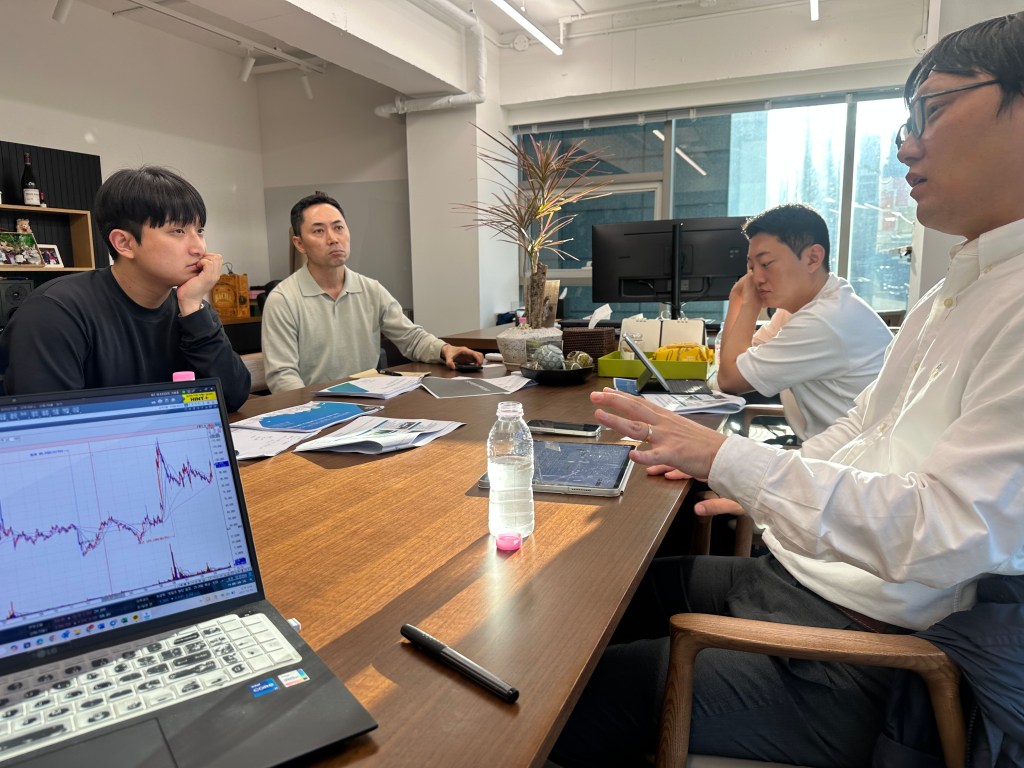
    Younghoan Choi is the CEO of BDC Labs, a venture capital firm based in Seoul. He is Korean, with a strictly Korean education and cultural background, but has become accustomed to attending foreign conferences and working abroad, particularly in countries such as the United States, China, Vietnam, and Indonesia. He has gotten used to switching styles of negotiation and basic communication according to where he’s working, and his experiences with hundreds of different startups provide insight into what is strategically demanded of emerging companies in various countries. 

    (This interview has been translated)

    Sieun: Can you introduce yourself and your work?

    Younghoan: My name is Younghoan Choi, the founder of BDC Labs. I’m a Korean venture capitalist, and have been working more and more with international clients and companies as globalization and specific industry trends demand it of us. I primarily invest in multiple companies at different stages of development simultaneously to sometimes minimize risk, or to take my risks efficiently. Considering companies from all over the world is part of this strategy. 

    Sieun: What are some key differences in the work culture of these foreign companies compared to domestic ones?

    Younghoan: The most significant cultural difference that affects my business decisions is that of China. You know, Korea is often considered a very Confucian country, and therefore, our communication can be less straightforward. I’ve traveled a lot personally also, and I realize that Korean conversations are actually rather blunt compared to some parts in England or Japan in general. However, China’s culture of ‘Mianzi’, which means face, in recognizing and respecting each other’s social status, similar to the concept ‘Nunchi’, or reading the room, as seen in Korea, was the most unclear, or you could say, polite, form of communication that affected negotiations. 

    When we talk to Chinese businessmen, they rarely say no in a straightforward manner. Even if they say yes right now, that doesn’t mean anything can be guaranteed, even orally, because they have so many layers of corporate and governmental approval before “sealing the deal.”

    I sometimes find it inefficient, but their specific processes also buy time for us to rethink as well. I can’t say which is better, but it’s just that these kinds of cultural clashes make me rethink my priorities in efficiency, accuracy, and more from other perspectives.

    Sieun: In what ways do you utilize these different foreign perspectives to gain more profit? Are they useful?

    Younghoan: Honestly, when we’re having one-to-one conversations with clients and representatives, those perspectives make it harder to negotiate most of the time. However, looking at the services these foreign companies, especially startups, differentiate themselves with, they’re handy. Our firm looks firstmost in the character of the founders and how they structure and manage their human resources when deciding to invest or not, so that kind of inherently different perspectives(for example, not trying to generalize but, the Chinese paying more attention to detail in their pitches, or the Americans being more clear in their prospects). I guess in that sense, I’m more personally compatible with an Indonesian culture. I found their business extremely efficient in a new way! 


    Younghoan’s interview reflects on how cultural differences shape business both within and outside South Korea. He notes that although he might not personally resonate with certain ways of working, recognizing such different work cultures itself helps him be more open and analyze in different perspectives, rearranging his priorities. He adds that this kind of self-doubt is often needed yet overlooked as a way to elevate a working method, and that following a domestic tradition with tunnel vision passion isn’t always the most efficient leadership approach.

  • ‘Two Schools, Same Pressure’ Transitions from Private to Public, International to Domestic

    ‘Two Schools, Same Pressure’ Transitions from Private to Public, International to Domestic

    Suhyeon is a 2nd grader in a Korean public high school. She attended international schools early in her life to learn English and potentially consider studying abroad, but now focuses on the Korean college admissions process. Suhyeon transferred first to a Korean elementary school in 5th grade, and has ever since lived in an extremely academically driven region, Banpo. Her perspective reveals how the most dominant cultural influence early in life lasts long into teenage years, even after being detached from it, and the difficulties in adjusting to the more strictly academic environment. 

    (This interview has been translated)

    Sieun: Please introduce yourself.

    Suhyeon: Hello, I’m Suhyeon. I’m in Grade 2 at Banpo High School. I don’t have to say much outside of that since I’m a ‘go-sam’, or senior in high school, just next year, and these days I study all day to prepare for that. I always had a focus on that, but the pressure has been added especially since we ’08s, or our age class, are the last class before the government changes the curriculum, so we can’t really afford to retake the KSATs. 

    Sieun: How has the transition been from an international school to a Korean public school? Do you still feel the influence?

    Suhyeon: I kind of still do, yes, in that I had to work harder at the start to catch up on my studies. I feel that Korean schools are much more academically rigorous, and there’s a lot more pressure to study ahead of what the class is currently teaching. But obviously, we have different priorities, like the kids that go to international school, whom I still keep in touch with, are driven in a different sense. They don’t sit at a desk for twelve hours, but they are more extracurricular-based and are required to do something crazily innovative to awe the admissions officers. I don’t know what’s worse for our mental health. Maybe I’m nostalgic because it’s a stressful season for me right now, but I did have the chance to experience something different and somewhat unique in Korea, so I sometimes miss the sports I used to play and that atmosphere in general. Especially recently.

    Sieun: What was the most significant cultural difference between those school environments? 

    Suhyeon: Culturally, like between friends, I think the biggest difference was the way we get to know each other. Although I was only there for elementary school, we still had a wide range of extracurricular activities, including forensics, robotics, the book club, sports, and more. I bonded with my friends back then through early shared interests. In Korean schools, because we stay in our homerooms all day and don’t move rooms between classes, we just get to know whoever’s in our advisory group. Honestly, in high school, we don’t put much time into those relationships at all since our grades are the priority. During exam seasons, we literally study during all breaks, and some even skip lunch. 

    Sieun: How do you think this transition has shaped your identity?

    Suhyeon: The concept of identity too, Korean students don’t really pursue their respective passions outside of our studies if you’re not entirely set on that career, as in, labeled as ‘yaechaeneng’, which has a whole another competitive admissions process. I don’t know, I think I’d have to be secure in a university before having the chance to explore my identity. I don’t know if it’s because I’ve experienced an international school, but I’m hoping to work abroad someday after graduation, though, in the short term. I want to experience as many diverse cultures as possible.

    Suhyeon’s interview highlights the differences in academic pressure between international, North American, and Korean schools. In either environment, most students struggle to meet the standards of college admissions officers and entrance exams. Although stressful, she understands that this experience of diligence is a necessary part of teenagers setting baseline expectations before freely experimenting with their identities as adults.