Tag: korea

  • “From Freedom to Full Schedule” Adjusting to Korean School

    “From Freedom to Full Schedule” Adjusting to Korean School

    Jayden Lee is a 14-year-old middle school student living in Seoul, South Korea. He lived in Ho Chi Minh City, Vietnam, for four years due to his father’s work and returned to Korea in 2023. During his time abroad, Jayden attended a British international school where he made friends from diverse backgrounds, including many Vietnamese students. Because English was the main language spoken at school and with his friends, he became more comfortable communicating in English than in Korean. Now back in Korea, Jayden reflects on adjusting to a new academic system and reconnecting with his cultural roots.

    Can you introduce yourself and tell me where you currently live? What do you do?

    Jayden: My name is Jayden Lee. I am 14 years old and I live in Seoul. Right now I go to a Korean public middle school. I used to live in Ho Chi Minh, Vietnam, for four years and went to a British international school there. It was a good time for me because I made a lot of friends from different countries, especially Vietnamese friends. We all spoke English, so I felt much more natural using English than Korean back then.
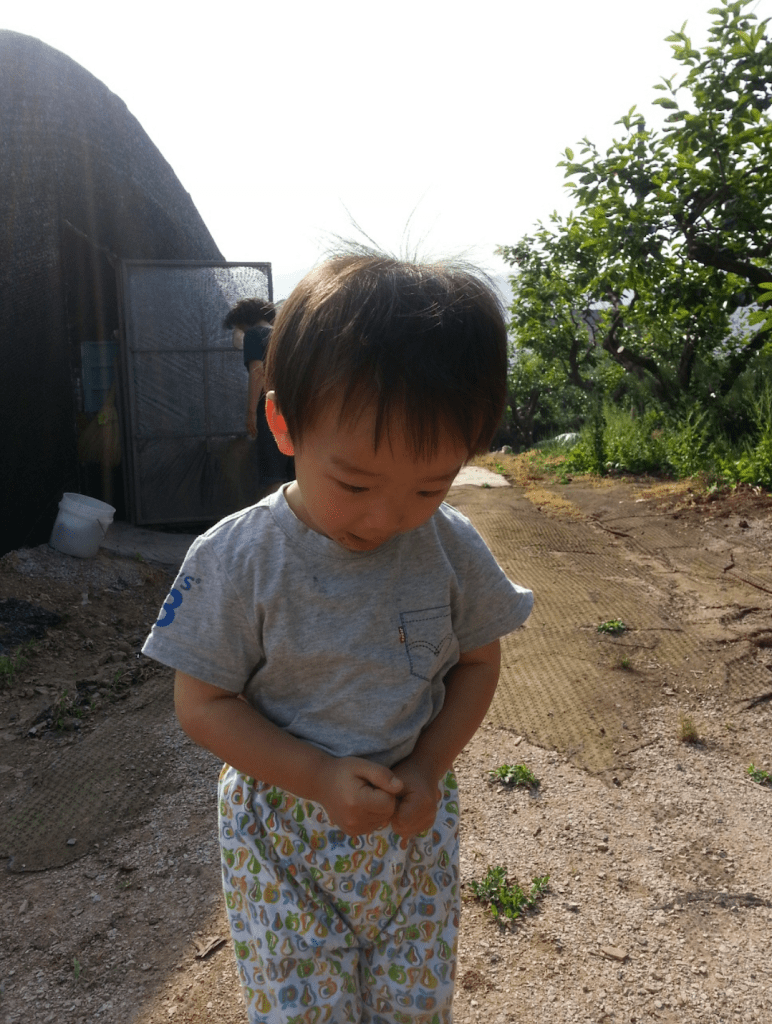
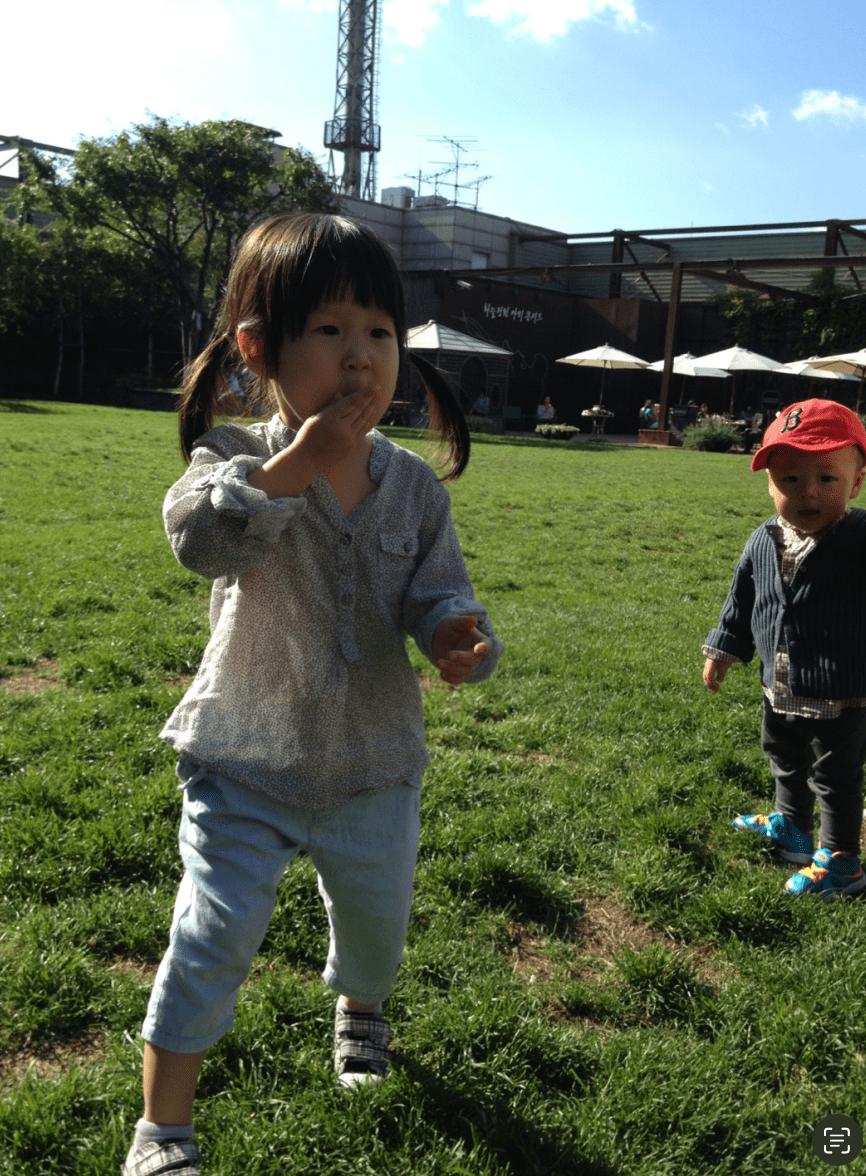
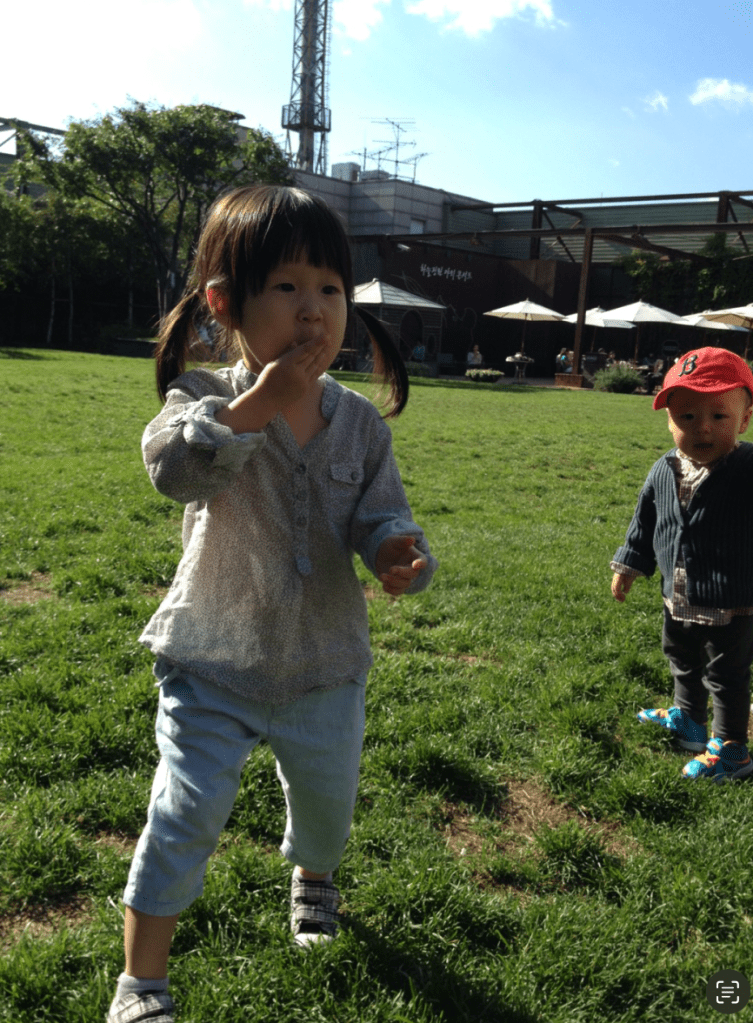
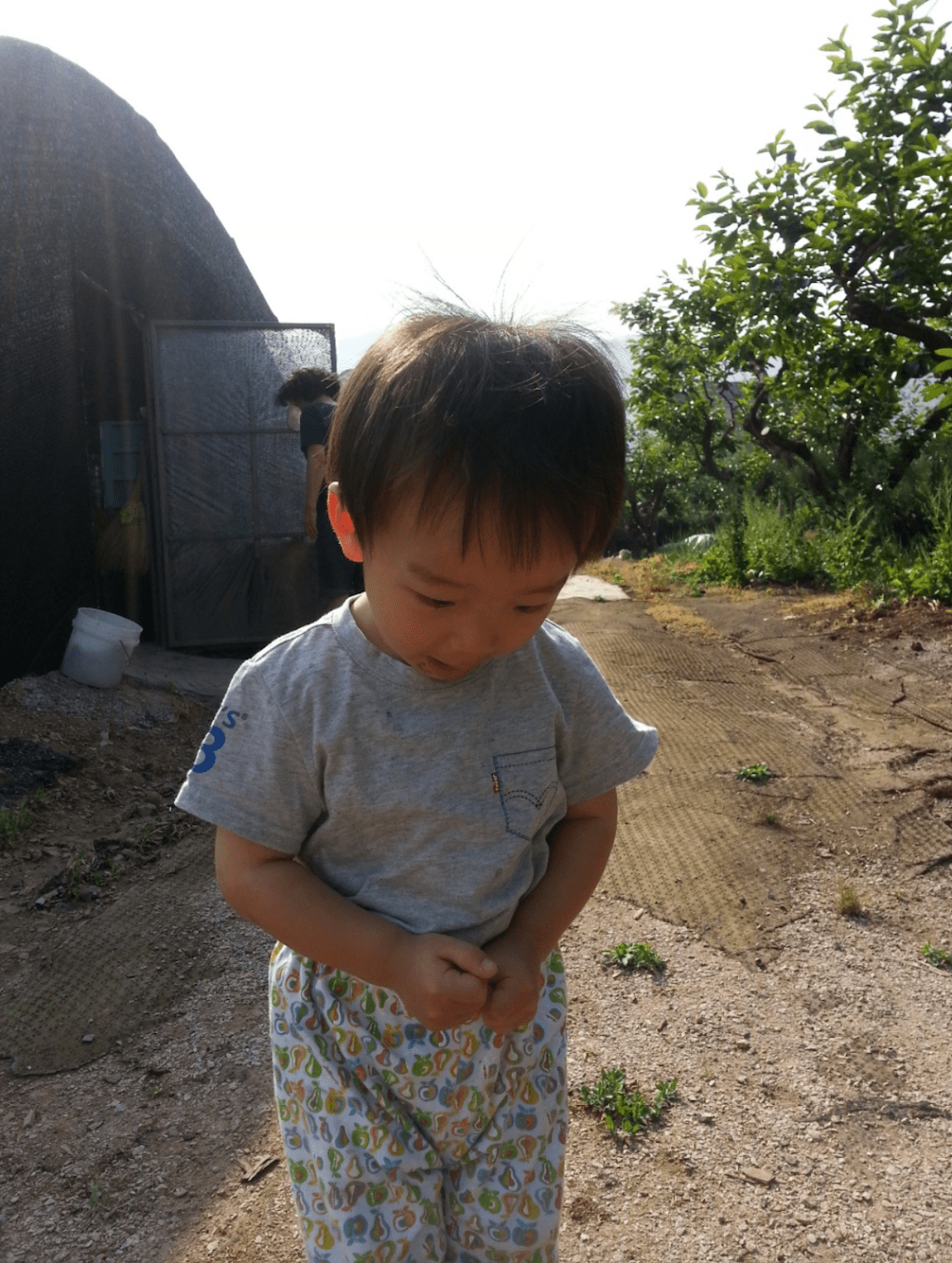
    This photo was when I was young in my Grandma’s house in Korea!

    How would you describe your daily life compared to your experience in Ho Chi Minh, Vietnam?

    Jayden: In Vietnam, the school days were shorter and I had more time to hang out or play football after class. Everything felt more relaxed. Here in Korea, school ends later and then there is extra study like 학원 (hagwon). I do not get as much time to play sports or just rest. Once I had freedom, and now, I have a full schedule! The whole routine is more intense here. Also, in Vietnam I was really used to speaking English all the time, even with my close friends. Coming back, I had to quickly adjust to using Korean more often, which was not easy.
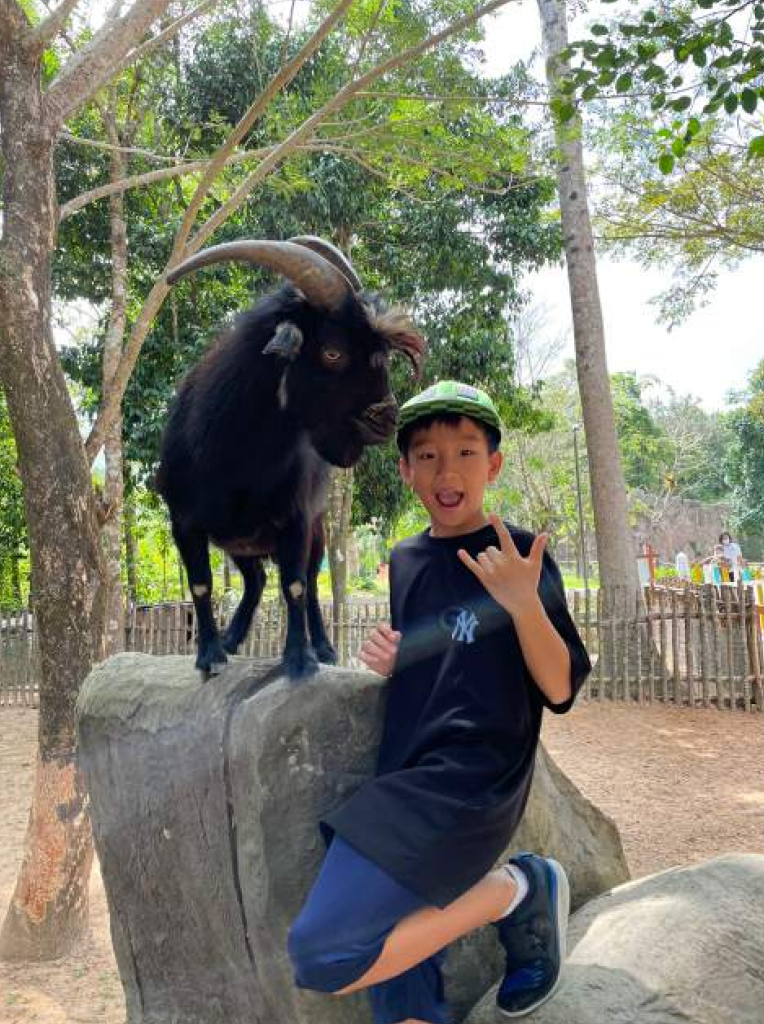
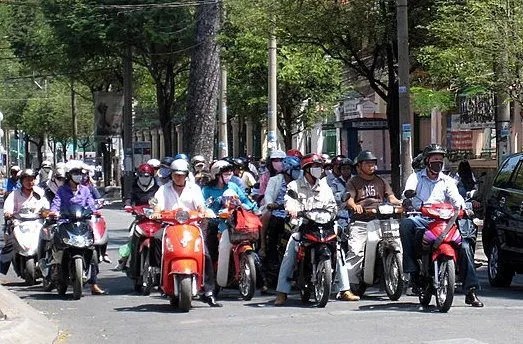
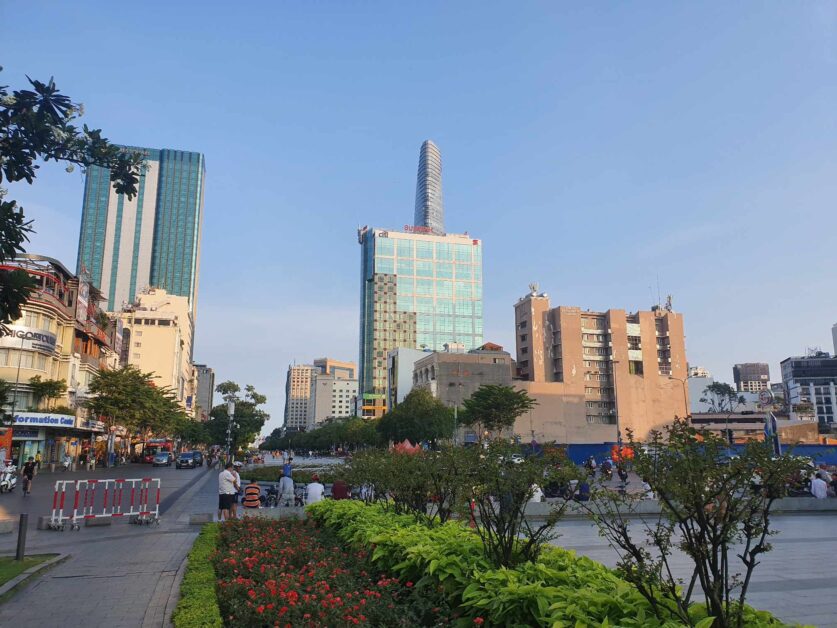
    And this photo was when I was in Vietnam!


    How has your experience with education differed in Korea versus the British system in Vietnam?

    Jayden: In Vietnam, we did a lot of group projects and open discussions. Teachers encouraged us to ask questions and share ideas. I enjoyed that a lot. But in Korea, it is more focused on memorizing and doing well on tests. I had to get used to that because it is a totally different way of learning. At first, I had trouble keeping up, especially with subjects taught in Korean. I had to work harder just to follow along.

    How have you adjusted socially and emotionally since moving back

    Jayden: Honestly, it was difficult at first. I was worried because I was not confident in my Korean and I did not know if I would fit in. But I joined the school football team and that helped me a lot. Playing sports made it easier to connect with people even if my Korean was not perfect. I also started making friends by just being myself and slowly got more comfortable. It still feels different from Vietnam, but now I feel like I belong more.

    Jayden’s interview gives insight into the life of a returnee student trying to adjust after spending several years abroad. He talks about the big transition from his relaxed, international school life in Vietnam to the more demanding school environment in Korea. From language differences to academic pressure, the adjustment has not been easy. However, through sports and a willingness to step outside his comfort zone, Jayden has found ways to reconnect with Korea. His story shows how returning to one’s home country can feel just as challenging as moving away and that personal growth often comes through everyday moments of effort and connection.
  • “I’m Better Than Them” Standing Tall Against Racism

    “I’m Better Than Them” Standing Tall Against Racism

    In today’s 21st-century global society, an increasing number of young students are growing up with diverse cultural experiences from an early age. Sua Park is one such student. Born and raised in Korea, she has followed an international education pathway since kindergarten, allowing her to develop a global mindset while staying rooted in her home country. 

    This is a photo of Sua, when she lived in Canada.

    Could you please introduce yourself? What are your future plans after graduation?

    Sua: My name is Sua Pak, and I’m currently a senior at Branksome Hall Asia. After graduation, I plan to move to the United States and major in graphic design. My goal is to gain experience in the industry, hopefully working in a company to build my career. I’m particularly interested in branding and may specialize in that area. Eventually, I hope to start my own business in the creative field.

    Although you were raised in Korea, you attended international schools from kindergarten onward and followed a global curriculum. What are some advantages and challenges of having been educated in an international system, particularly the IB?

    Sua: Since I’ve never experienced the Korean national curriculum directly, I can’t fully compare the two. But from what I know, international curricula like IB give students more space to explore topics independently and take initiative in learning. In contrast, the Korean system seems more rigid and structured—almost like working in a machine. I think that difference also reflects deeper cultural values, like tradition and emotional restraint. Because I’ve been learning in this independent way for a long time, I’ve developed stronger problem-solving skills than many of my peers, and I’ve been able to improve my English naturally without needing separate language study. That said, being in Korea while following an international curriculum can be tricky. Many Korean students still go to after-school academies (hakwons), which is a big part of student life here. Since I don’t attend hakwons, I’ve had to work two to three times harder on my own to keep up—which can be physically and mentally exhausting.

    You lived in Canada for a short time—did you ever experience any culture shock or moments that stood out to you while you were there?

    Sua: Outside of school, I didn’t feel much culture shock because I was usually with adults. But in school, I did face racism. Even though I was in the same class as an older Korean friend and I studied hard, both white and Black students made fun of me. One time, I brought a packed lunch with Yubu Sushi (Cone Sushi), and they teased me about the vinegar smell. And I could easily figure out that their stereotypical thoughts were exactly from the famous TV show that they watched at that time, which was very ridiculous. But honestly, I have a pretty tough mindset. I told myself, “I’m better than them,” and just moved on. That kind of mental control really helped me not to let it affect me too much.

    Sua’s story highlights the quiet strength it takes to grow up between systems, cultures, and expectations. From learning to rely on herself without the extra support many of her peers receive, to facing moments of cultural bias abroad, she has developed a resilient mindset grounded in self-belief. Her journey shows that global education is not just about speaking English or attending international schools, it’s about learning to adapt, to think independently, and to find confidence in who you are. As she looks ahead to a future in design and entrepreneurship, Sua reminds us that individuality shaped by cross-cultural experience is not only powerful, it’s essential in an increasingly connected world.

  • Twelve Years Away Can Bella Still Call Korea Home?

    Twelve Years Away Can Bella Still Call Korea Home?

    Bella Jeong is a 17-year-old Korean student who has lived in Ho Chi Minh City, Vietnam for the past 12 years. A close friend of Janice, Bella currently attends an international school and is preparing to return to Korea for college. Having spent most of her life abroad, she offers a valuable perspective on growing up between cultures, balancing Korean identity in a foreign setting, and maintaining connections to home. Her experience reflects the often unseen reality of Korean youth raised outside of Korea, navigating multiple cultural expectations.

    Can you introduce yourself and tell me where you currently live? What do you do?

    Bella: I’m Bella, Janice’s friend, and I’ve lived in Ho Chi Minh City, Vietnam, for most of my life. I moved here with my family when I was really young because of my dad’s job, and I currently go to an international school here. I’m in my last year of high school and getting ready to apply to colleges in Korea, which is exciting but also a little scary since I haven’t lived there in so long. This photo was me on the first day of secondary school in Vietnam.

    British International School Ho Chi Minh City على X: "Yesterday we welcomed  back our Year 11 & 13 students in person for the final week of Term 1. Our  Health & Safety

    How would you describe your daily life in Ho Chi Minh, Vietnam, compared to your life in Korea?

    Bella: My daily life in Vietnam feels really fast-paced and independent. Because it’s hot all year, people are out all the time, and the city has a very active rhythm. In school, I speak mostly in English, but outside, I hear Vietnamese everywhere. It feels very multicultural. Whenever I visit Korea, I notice how structured everything is…especially with school and social expectations. In Vietnam, I’ve gotten used to a bit more flexibility and freedom, which I know will be different when I go back.

    How has your experience with education differed in Korea versus Vietnam in an international school?

    Bella: When I was younger, I briefly attended school in Korea during one summer, and I remember how intense it was: lots of memorization, tests, and after-school academies. Here in Vietnam, my international school is much more project and discussion-based. We work in teams a lot and focus on applying ideas rather than just learning them. I think I’ve grown more confident in speaking and asking questions because of it, but I also worry about adjusting to the Korean college system, where things are more competitive and formal.

    How do you maintain your cultural identity while living outside your home country?

    Bella: That’s something I’ve thought about a lot. At home, we speak Korean and eat Korean food almost every day, and my parents have always reminded me of where I come from. But outside, I spend most of my time speaking English and interacting with friends from all over the world. Sometimes it feels like I’m caught between two worlds. I’ve tried to keep up with Korean news and music and even joined a Korean club at school. Still, there are moments when I feel a little distant from both cultures. I think I’m still figuring it out.

    Bella’s interview reflects the complexities of growing up abroad while holding on to one’s cultural identity. She sheds light on what it means to be a Korean student raised in a multicultural environment, learning to balance family values with daily life in Vietnam. From school differences to personal routines, her story reveals both the freedom and challenges of living between two cultures. As she prepares to return to Korea for college, Bella’s experience shows that identity is not fixed but constantly evolving. Her journey reminds us that living abroad can shape not just how we learn, but how we understand who we are.

    27 Pros and Cons of Living in Ho Chi Minh City - Pale Ale Travel
  • “I Have No Flag to Hold” Dilemmas of the International Teen

    “I Have No Flag to Hold” Dilemmas of the International Teen

    Jiwoo Choi is my sister and a rising freshman who has recently been accepted into Saint Paul Preparatory School in the Seocho district. She has attended more than four different international schools in Seoul, all of which have either an English or American curriculum, despite never having lived abroad. Her perspective differs significantly from that of the majority of international students, as her only source of connection to her home language or culture comes from within her family, while she is neither a second-generation immigrant nor does she have permanent residency in any foreign country. Jiwoo provides insight into the challenges of having a strict social and cultural division, and is concerned with how she doesn’t have a single standard of living. This is amplified since her career, following her studies abroad, will most likely require her to reside overseas, and she is unsure about selecting a country when she has only ever experienced a mixed environment. 

    Sieun: Please introduce your personal and academic background.

    Jiwoo: I’m Sieun’s little sister, Jiwoo. Unlike Sieun, I’ve never attended Korean public school, and every one of my friends and acquaintances is an international school affiliate. I’ve studied according to American textbooks most of my life, and speak Korean only at home. I have moved frequently within Seoul, changing schools, and I’ve also traveled abroad a lot. 

    Sieun: How would you describe your school and social life compared to your life at home?

    Jiwoo: I think the simplest yet greatest difference is language. A social studies teacher once showed our class a TED talk about how language shapes cognition, not only in terms of grammar, range of expressions, and meanings, but also in the way people carry themselves. That was the most relatable thing I’ve ever heard. In school, where I speak English and also mostly follow North American social cues because there are foreign teachers and students, I act more sociable in some sense, but on the other hand, try to stay out of others’ and my boundaries more, like being extremely talkative and bubbly but at the same time only touching on surface-level conversational subjects.

    At home, not only with my direct family, but also during holidays when we travel to our grandparents’ house to meet relatives and random visitors, I sometimes feel a sense of discomfort around people, especially the elders, who ask more about my business. But I also think that I’m being cared for more. 

    Sieun: Were there any difficulties from this divide? 

    Jiwoo: I’m a student, so most of the time I’m occupied with homework, studies, clubs, and other school-related activities, even at home. Honestly, apart from that, I speak Korean at home, and just in the streets, and I notice little cultural differences in, like, the way people greet each other, I don’t really experience a totally “Korean” lifestyle. But if you think about it, I also can’t say that I identify with the American nationality. I’ve also been in English schools, and the range of an international school that I experienced is huge. So, the conversations I have and the media I consume just have a vaguely North American hint in a spatially Korean context. I know that not all International students are this unsure or even see this as a problem. Still, I sometimes feel anxious that I don’t have the strongest national pride or connection to Korea, apart from its geographical location, and neither to America, apart from what I have been exposed to through the international school system. It can feel like I’m not entitled to either, and sometimes like I don’t belong anywhere.

    Sieun: In the future, how do you think you can manage this discomfort, and decide where to either spatially or emotionally settle?

    Jiwoo: All the education I’ve ever had is in English, so I’m set on going abroad for my bachelor’s degree. I’m actually kind of excited, because at least then, I’ll have a few years to experience one nation fully. I’ll decide where to reside for the rest of my life after experimenting. I also always felt like I would need at least a short-term work experience in South Korea, because my family is here, and I’ll honestly just have to give everything a try. I would have to consider realistic factors, such as whether I can secure a visa elsewhere and if I’m ready to leave one of the safest countries, both literally and emotionally, for me. Because there is comfort in homogeneity, and I’m unsure whether studying abroad will make me miss it or disregard it. 


    Jiwoo’s interview reveals the effects of the lack of a single national identity or pride on a developing teenager. She shares the common experience of an international student or a second-generation immigrant, which is having to switch languages completely from their school and social life to their familial interactions. Apart from the way this language barrier sometimes creates cultural barriers, since language dictates thinking, as she mentioned, her anxiousness toward her national identity comes from having a school-centered life, almost without any Korean social influence, except that from her parents. Her willingness to take risks by experimenting with life in different countries to discover what shapes her mind and identity to their fullest potential is admirable. This kind of openness towards selecting one’s own culture or cultures, and ultimately their lifestyle, is increasingly needed as we move forward in globalization.

  • Bridging Identities in the IB Curriculum

    Bridging Identities in the IB Curriculum

    Ava Hill is a rising junior at Chadwick International. Her perspective highlights not only the spatial differences that stem from the distance between the US and South Korea, but also those within a multicultural family. Ava travels frequently to her home state, Idaho, which enables her to stay in touch with her American cultural heritage. Her experiences with a North American school curriculum, similar to that of the US, in a spatially Korean background provide meaningful takeaways regarding cohesion.

    Sieun: Please introduce yourself and your national background..

    Ava: Hi! My name is Ava Hill; I attend Chadwick International, and I am half Korean and half American. My mom is Korean, and my Dad is American! I lived in Idaho all of elementary school, then moved to Songdo in middle school. I am now 16 years old.

    Sieun: What are some cultural differences you felt between your state and Songdo?

    Ava: In Idaho, it was a very small town and open spaces to play with friends, compared to Songd,o which is more of a city and busier and faster paced. While living in Idaho, we lived in a standard 3-story suburban house with a backyard, a garden, and a baseball hoop. In Songdo, I live in a very small, cute apartment with lots of stuff around my apartment! We can walk to so many stores for anything you need, unlike in Idaho, where you usually need to drive!!

    Sieun: How does doing the IB curriculum and following mostly North American academic and cultural standards at school, while spatially residing in South Korea, affect your identity? 

    Ava: Doing IB in Korea has made my school experience very different from the North American high school experience. At CI my school follows some of the North America cultural influences, the academics standards are much much more intense and focused on the grades, compared to my friends school in Idaho where they want to emphasize more on enjoying high school life, sports, dating, etc. living in korea but learning in an international IB environment has made me into someone who works hard and pushes for academic success. Still, it also makes me aware of trying to balance achievement with enjoying school life.

    Sieun: Is there anything different in your ‘day in the life’ abroad (including traveling) and in Songdo?

    Ava: In Songdo I can walk to school in around 10 minutes, compared to Idaho, where you drive around 20 minutes to get to school!! I am able to travel around countries in Asia and for much cheaper!


    Ava’s interview highlights the many differences that are noticeable in daily life between Songdo and Idaho. She explains how the difference in the size of land, and the following changes in transportation or form of housing are one of the greatest adaptations her family made while moving to Korea. Ava also notes that she experienced more academic pressure and a focus on grades, which was a common trend noticeable from almost every interview including a change to, not always a Korean school system, but a spatially Korean setting.

  • ‘Free Afternoons and Tipping Culture’ Lessons from a Korean Teen in Vancouver

    ‘Free Afternoons and Tipping Culture’ Lessons from a Korean Teen in Vancouver

    Serin Kim is a South Korean high school student who has transferred to a public school in Canada. She offers insight into the differences in the type and level of academic pressure between Canadian schools and Korean schools, especially since she has also experienced academics in one of the most prestigious Korean private schools, KMLA. Serin is highly driven and notices not only cultural barriers in casual daily interactions but also structural differences at school. She was allowed a relatively short period to adjust, as she is a rising senior and is occupied with preparations for college admissions in Canada, which is also a vastly different process compared to that of Korea. 

    Sieun: Can you introduce yourself and the area you live in?

    Serin: My name is Serin Kim. I’m a rising senior, and I am currently attending public school in Vancouver, Canada. My school offers an international program (exchange students), so I have met people from various cultural backgrounds. 

    Sieun: How would you describe your daily life compared to your experience in South Korea?

    Serin: There are a lot of differences compared to South Korea. In my opinion, the biggest difference was the school curriculum. First, school ends at 2:45pm. Considering my previous Korean high school ended around 5-6pm, I am able to get much more free time. Second, my Korean high school had mandatory study sessions (“야자”). Even though the regular schedule ended, I had to attend the study session. However, schools in Canada don’t really intervene with students’ individual schedules after school ends. This difference made me feel less academic pressure in my daily life. Lastly, schools in Canada use ‘absolute evaluation’, while high schools in Korea use ‘relative evaluation’ when it comes to grading. When I was in Korean high school, I should’ve cared about others’ grades a lot, because their grades determined my final grade. It was so stressful, and I had to lock myself in my study all the time and feel pressure. I had to go to cram schools (‘학원’) right after school, and it almost ended around midnight. It caused immoderate competition, increasing tension between friends.

    On the other hand, in Canada, others’ grades have nothing to do with my grades. It makes much less pressure, and students are more collaborative when it comes to study (peer tutoring). I could spend more time on my hobbies or extracurriculars I’m interested in such as singing, public forum and teaching others.

    Sieun: Have you faced any challenges making cultural adjustments?

    Serin:
    When I first came to Canada, tip culture made me feel embarrassed. In Korea, tip is not mandatory, and it might be considered rude sometimes. I did not get used to giving tips. When I skipped giving tips one time in the restaurant, they asked me ‘No tip?’ in an angry tone. I was so embarrassed, so I gave the rest of my changes back to them. I thought it was weird at first, but I finally realized that that was understandable in terms that a tip is a kind of evaluation of their services and extra income they can get. After this experience, I give tips almost every single time to show my respect for them and their services.

    Sieun: Which culture do you think you would identify more with in the past, present, and future?

    Serin: I feel more comfortable with Korean culture. I identified myself in Korean culture before I came to Canada, because that was the only culture I had experienced. Also, both my mom and dad are Korean, so it is easy to think I am also Korean. I am identifying myself in Korean culture because I am still comfortable speaking Korean rather than English. I think it assures my accessibility to content from Korea and interaction with Korean culture even if I am staying in Canada.

    On the other hand, I still haven’t gotten used to Canadian culture, as I’ve only been here for 2 years. Even in the future, I will identify myself with Korean culture. It is because I spent my childhood in Korea, and I’m pretty sure that the memories from my childhood have created my identity. 

    Serin touches on many various cultural differences that had practical effects on her daily life, from academic evaluation structures to tipping culture. She highlights how, while her experience as an international student has liberated her from some of the pressures of Korean culture, she doesn’t associate her new surroundings with her identity. Her reflections may offer valuable advice to the Korean diaspora on how empathetic understanding of the context behind certain cultural practices, such as tipping, has helped her live more cohesively.

  • From Nunchi to Mianzi – A Korean Venture Capitalist’s View

    From Nunchi to Mianzi – A Korean Venture Capitalist’s View

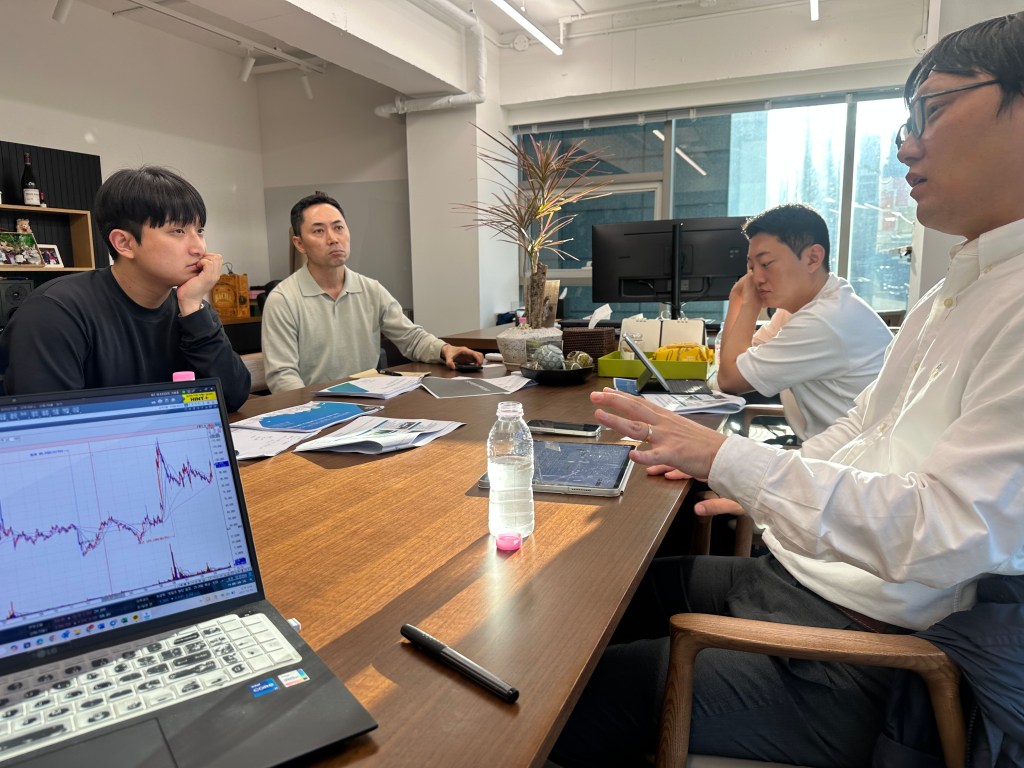
    Younghoan Choi is the CEO of BDC Labs, a venture capital firm based in Seoul. He is Korean, with a strictly Korean education and cultural background, but has become accustomed to attending foreign conferences and working abroad, particularly in countries such as the United States, China, Vietnam, and Indonesia. He has gotten used to switching styles of negotiation and basic communication according to where he’s working, and his experiences with hundreds of different startups provide insight into what is strategically demanded of emerging companies in various countries. 

    (This interview has been translated)

    Sieun: Can you introduce yourself and your work?

    Younghoan: My name is Younghoan Choi, the founder of BDC Labs. I’m a Korean venture capitalist, and have been working more and more with international clients and companies as globalization and specific industry trends demand it of us. I primarily invest in multiple companies at different stages of development simultaneously to sometimes minimize risk, or to take my risks efficiently. Considering companies from all over the world is part of this strategy. 

    Sieun: What are some key differences in the work culture of these foreign companies compared to domestic ones?

    Younghoan: The most significant cultural difference that affects my business decisions is that of China. You know, Korea is often considered a very Confucian country, and therefore, our communication can be less straightforward. I’ve traveled a lot personally also, and I realize that Korean conversations are actually rather blunt compared to some parts in England or Japan in general. However, China’s culture of ‘Mianzi’, which means face, in recognizing and respecting each other’s social status, similar to the concept ‘Nunchi’, or reading the room, as seen in Korea, was the most unclear, or you could say, polite, form of communication that affected negotiations. 

    When we talk to Chinese businessmen, they rarely say no in a straightforward manner. Even if they say yes right now, that doesn’t mean anything can be guaranteed, even orally, because they have so many layers of corporate and governmental approval before “sealing the deal.”

    I sometimes find it inefficient, but their specific processes also buy time for us to rethink as well. I can’t say which is better, but it’s just that these kinds of cultural clashes make me rethink my priorities in efficiency, accuracy, and more from other perspectives.

    Sieun: In what ways do you utilize these different foreign perspectives to gain more profit? Are they useful?

    Younghoan: Honestly, when we’re having one-to-one conversations with clients and representatives, those perspectives make it harder to negotiate most of the time. However, looking at the services these foreign companies, especially startups, differentiate themselves with, they’re handy. Our firm looks firstmost in the character of the founders and how they structure and manage their human resources when deciding to invest or not, so that kind of inherently different perspectives(for example, not trying to generalize but, the Chinese paying more attention to detail in their pitches, or the Americans being more clear in their prospects). I guess in that sense, I’m more personally compatible with an Indonesian culture. I found their business extremely efficient in a new way! 


    Younghoan’s interview reflects on how cultural differences shape business both within and outside South Korea. He notes that although he might not personally resonate with certain ways of working, recognizing such different work cultures itself helps him be more open and analyze in different perspectives, rearranging his priorities. He adds that this kind of self-doubt is often needed yet overlooked as a way to elevate a working method, and that following a domestic tradition with tunnel vision passion isn’t always the most efficient leadership approach.

  • Baguette for Breakfast, Kimchi for Dinner

    Baguette for Breakfast, Kimchi for Dinner

    In today’s 21st-century global society, an increasing number of young students are growing up with diverse cultural experiences from an early age. Jeongin Kim is one such student. Born in 2007, she has spent her life moving between Korea and France, allowing her to develop a deep understanding of both cultures. Now a senior at an international school in France, Jeongin is known for her cheerful personality and open-minded perspective. As she prepares for university in France, her experiences offer valuable insight into what it means to grow up between cultures and how identity is shaped through cross-cultural living.

    Could you please introduce yourself? What are your future plans after graduation?

    Jeongin: My name is Jeongin, I am a 17 years old student studying at a bilingual international school located near Paris. I lived in my home country, South Korea until I graduated middle school there. After graduation I plan to study medicine and either work at a company with my doctor’s license or become a full time doctor. I hope to be able to explore different opportunities for my career path within the medical field.

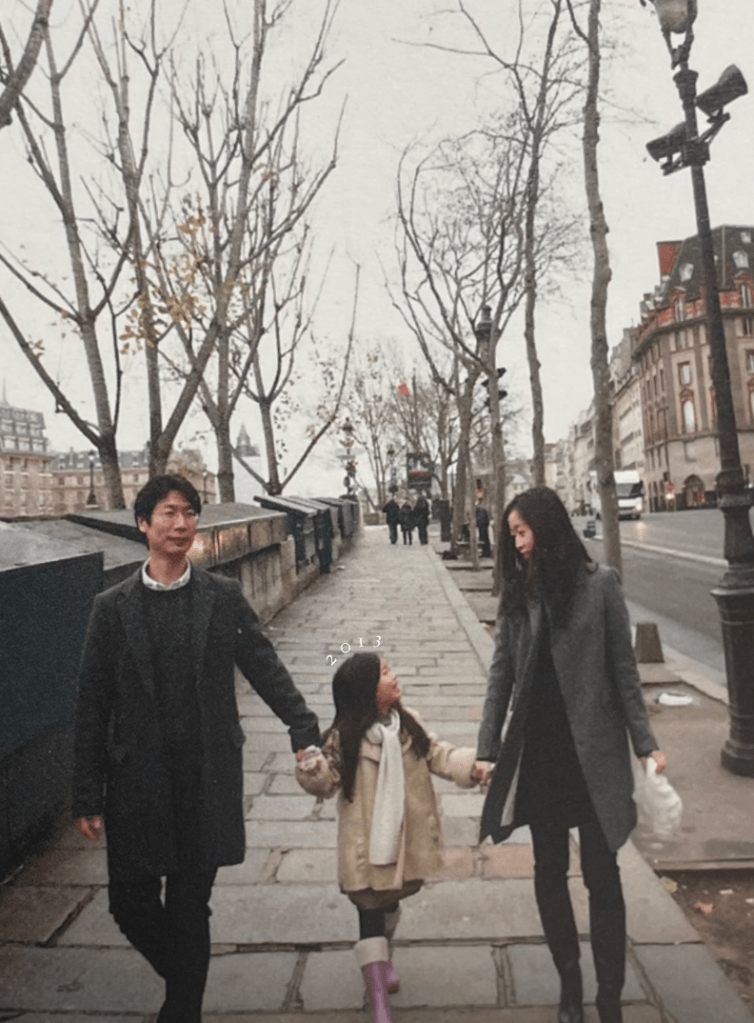
    This is a photo of young Jeongin, when she lived in France.

    Having lived in both France and Korea, what are some of the most interesting or culturally surprising experiences you’ve had while adjusting to different cultures?

    Jeongin: After living in France for two years, I started to really notice the cultural differences, but never in a bad way. For example, in France, individual choices are really respected. Things like coming from a divorced family aren’t seen as strange, just personal. In Korea, people might feel more pressure to fit into social norms. I also noticed that French people express their opinions very directly, and it’s totally okay to disagree. In Korea, we usually try to keep the peace and read the room, which can sometimes mean hiding what we really think. But that also creates a kind of harmony that I appreciate. And when it comes to self-expression, France feels more free. People dress however they want and don’t care much about what others think. In Korea, we do care more about appearances and social expectations, but again, that also makes people more considerate of others. Honestly, I think both cultures have their strengths. I’ve learned a lot from France about being true to myself, but I also still value the sense of community and warmth in Korea.

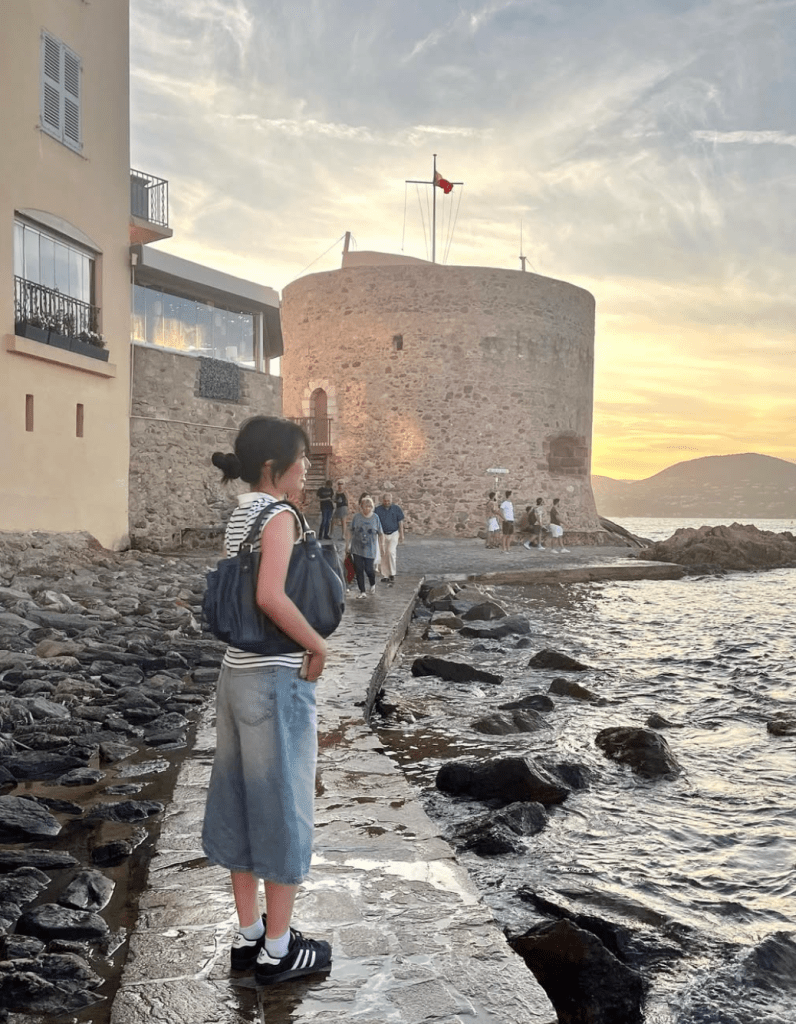
    This is a photo of Jeongin, taken in Saint Tropez, France.

    In your experience living abroad, how have you seen Korea and Korean culture being viewed or understood by people from other countries?

    Jeongin: Evidently, I’ve noticed that people from other countries both appreciate and criticize different aspects of Korea. For example, some criticize the intense work culture, saying it often overlooks work-life balance and doesn’t always value personal fulfillment as much as effort itself. On the other hand, many appreciate Korea’s vibrant entertainment options, cleanliness, and the fun social activities available. Interestingly, much of this positive energy seems to stem from the very strong competition that some see as a downside.

    If you were to give one piece of advice to a student preparing to live abroad for the first time, what would it be?

    Jeongin: I would for sure advise the student to try to keep a positive and open mindset. About the differences that she or he might face, though it could be surprising and overwhelming sometimes. Also, I would like to clarify that such a mindset doesn’t mean to fully understand or embrace those. Just being open and positive will guide you to take what you like and coexist with the ones you can’t. It’s the most common one, but it is because it is the most essential and fundamental thing needed for survival. Enjoying the experience abroad would never be possible without this.

    Jeongin’s interview reminds us that cultural understanding is not about choosing one identity over another, but about learning to hold multiple perspectives with care. Her experiences in both Korea and France show that cultural contrast can be a source of growth, not division. As she reflects on self-expression, social expectations, and mutual respect, she offers a powerful reminder that empathy begins with openness. Whether navigating directness in France or harmony in Korea, her story reveals that being between cultures is not a weakness, it is a strength. And in a world where more young people are growing up across borders, Jeongin’s voice is part of a generation redefining what it means to belong.

  • Bridgerton? Harry Potter? What Life in England Is Really Like

    Bridgerton? Harry Potter? What Life in England Is Really Like

    Minji Lee is a 17-year-old student who recently moved from Korea to England. She has been attending a boarding school in Bath, a small city in southwest England, for the past year. Minji shares her unique experience studying in a mostly Asian international school with very few Koreans, living alone in a quieter city unlike the bustling environment of Korea. Her perspective reveals the challenges of adjusting to a new cultural and educational system, as well as the differences between life in Korea and England. Unlike the common expectation that boarding school life in England is like something out of Bridgerton or Harry Potter, Minji’s experience shows a very different reality. Minji’s story highlights the real challenges international students face as they balance identity, culture, and education far from home.

    Can you introduce yourself and tell me where you currently live? What do you do?

    Minji: I’m Minji Lee and I’m a friend of Janice. I went to a Korean public school in Seoul for most of my life and moved to England last year. Since then, I have been attending a boarding school in Bath. I can share what it’s like to study in an environment with very few Koreans and to live alone in a quieter city like Bath. Most of the students at my school are from China and Hong Kong, and there are no local English students.

    This is a spot in front of my school in Bath. In the afternoons it feels calm and peaceful, and the sky looks beautiful.

    How would you describe your daily life compared to your home country?

    Minji: Honestly, people have certain expectations when they hear that I live in England. I also thought I would be living and studying with English students, but since I attend an international school, most of my classmates are from China, Hong Kong, and Taiwan. Almost everyone speaks Chinese, which makes it hard for me to communicate and sometimes creates cultural clashes. I often feel left out or uncomfortable.

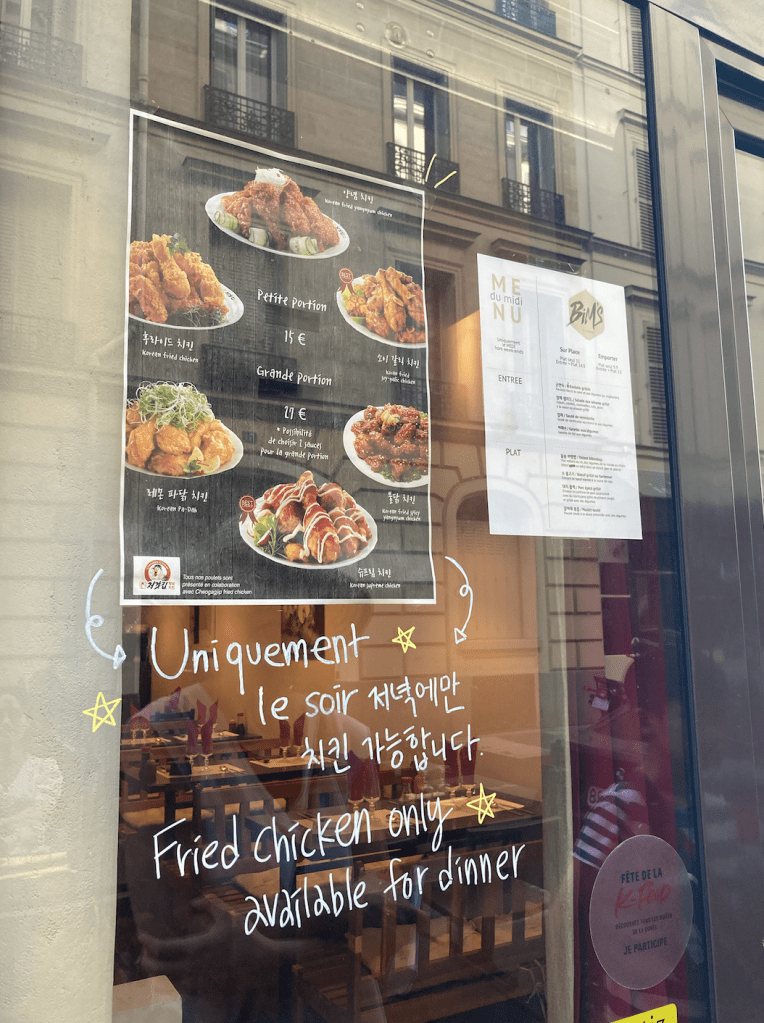
    Back in Korea, things feel very different. It’s my home country, and I lived there before moving to England, so I feel much safer and more comfortable using my language freely. But there are certain places here that remind me of Korea too, like this chicken place in front of my school in Bath. When I’m there, I feel like I’m back in my hometown!

    What are some cultural differences you have noticed between Korea and England? In your school?

    Minji: One of the biggest differences is how people interact and socialize. In Korea, students tend to stick with their close friend groups, and there’s a clear sense of hierarchy based on age. At my school in England, even though most students are also Asian, the atmosphere feels more individualistic. People are polite but not as group-oriented, and English people value personal time more. Also, I noticed that students are generally more private and reserved. It’s harder to become close right away.

    How has your experience with education differed in Korea versus England?

    Minji: In Korea, the focus was more on memorization and test scores. We had long school hours and extra classes after school. It felt very structured and intense. In England, the approach is more discussion-based. We spend a lot of time analyzing and debating ideas in class, which is new for me, especially in my psychology class. Also like there was no psychology class back in korean public school, so there’s more emphasis on critical thinking and expressing your opinion. I’ve learned a lot, but it was definitely hard at first to adjust.

    Minji’s interview reveals the multifaceted experience of living and studying abroad as a Korean student. She shares how expectations can differ from reality, especially when surrounded by classmates from other Asian countries rather than local English students. Her reflections on daily life highlight the challenges of dual cultural adjustment: adapting not only to life in England but also managing cultural differences within a predominantly Chinese-speaking school community. Educational differences further shape her experience, with England emphasizing critical thinking and discussion compared to Korea’s structured memorization approach. Minji’s story reminds us that adapting to a new culture involves managing both social and academic changes. Her journey shows the resilience of a teenager facing difficult adjustments and an openness to learning in unfamiliar environments.

  • Have You Heard of Boom? The Funniest Man in Korea (and the Wisest One, Too)

    Have You Heard of Boom? The Funniest Man in Korea (and the Wisest One, Too)

    Korea’s media and entertainment industry is rapidly expanding its influence on the global stage. From K-pop and K-dramas to variety shows and films, Korean content continues to captivate audiences around the world. As the industry evolves, it is not only exporting culture, but also reshaping the global entertainment landscape itself. 

    Known for his vibrant energy, quick wit, and ability to light up any stage, Boom (Lee Min-ho) is one of Korea’s most beloved television personalities. With a career spanning over two decades as a singer, MC, radio DJ, and entertainer, Boom has become a household name through his appearances on countless variety shows and live events. Behind the laughter and dynamic performances is a seasoned professional with a deep understanding of people, culture, and the ever-evolving world of Korean entertainment. In this interview, Boom shares his insights on the global reach of Korean content, the lessons he’s learned from working with people of all kinds, and the cultural experiences that have shaped his worldview.

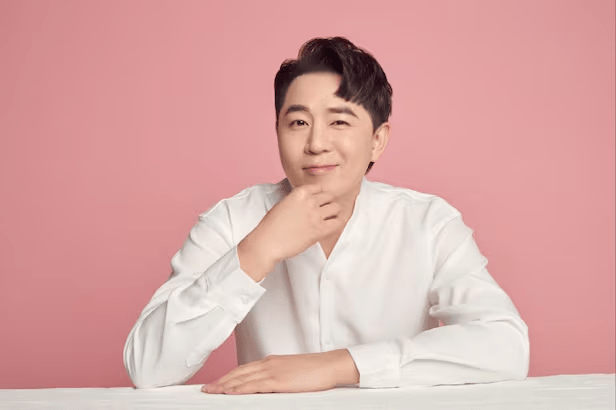
    This is a photo of entertainer, Boom (Minho Lee).

    (Photo credit: JG STAR)

    You’ve worked with people from many different backgrounds and personalities throughout your broadcasting career. What are some lessons you’ve learned or perspectives that have changed as a result of those experiences?

    Boom: Absolutely. When we are broadcasting, we really do meet all kinds of people. There were times when I thought, “Oh, this person is really quiet, will they be okay on camera?” And other times, someone had such a big personality that it took some balancing to make the show flow smoothly. But what I’ve learned over the years is that everyone has something special about them, something that shines. And depending on how I help bring that out on the show, the whole vibe can change completely. That’s why I try not to judge people at first glance anymore. Not just as Boom the entertainer, but as Minho Lee the person, I feel like I’ve grown a lot in how I see and connect with others. Moving forward, I hope I can continue to meet people without bias, recognize their unique light, and help them shine even brighter through what I do.

    You’ve had the chance to meet people from diverse cultures and travel to many countries for overseas schedules. Were there any moments of culture shock or particularly memorable cross-cultural experiences that stood out to you?

    Boom: Oh, there are so many! One that really sticks with me is from a trip to Sri Lanka. I was there for a shoot, and during meals, people barely spoke at all. At first, I honestly thought, “Do they not want to eat with me?” I almost took it personally. But later I learned that staying quiet during meals is actually part of their culture, it’s a way of showing respect. That really surprised me, especially because I’m such a chatterbox when I eat! Another memorable moment was during a stage rehearsal in Thailand. Before we started, all the staff gathered to meditate together. At first, I was like, “Wait, what’s going on?” But I soon realized it was their way of honoring the performance as something meaningful. I ended up joining in too. Experiences like those really taught me cultural humility. They reminded me that every culture has its own beauty, and sometimes, the best thing we can do is pause, observe, and respect it. 

    As someone working directly within the Korean media and broadcasting industry, how do you view the global impact of Korean content today?

    Boom: I really believe that Korean content is making a major impact on the global stage. “K” has almost become a brand of its own, starting with K-pop, and now expanding into K-dramas, K-films, K-food, and K-beauty. But I think our next challenge is to take this from just “K” to truly “World.” Rather than limiting ourselves to the label of “K,” we need to create content with a global mindset from the beginning and compete confidently in the international market. Korean content is already the heart of Asia. And now, it’s time to step fully into the global spotlight. The door is wide open. Let’s go! 

    Boom’s journey through broadcasting, travel, and cultural exchange reveals a deep respect for people and the stories they carry. His reflections remind us that entertainment is not just about energy and laughter, but about connection, understanding, and growth. As Korean content continues to expand globally, voices like Boom’s show us that true impact begins with empathy and a willingness to see the light in everyone. 

    Read the blog about Wonwoo Park, another creative worker as an broadcasting format writer in K-media industry!

  • “The Best Communication Needs No Words” The Life of Kim Woo Hyun with Koryo-saram

    “The Best Communication Needs No Words” The Life of Kim Woo Hyun with Koryo-saram

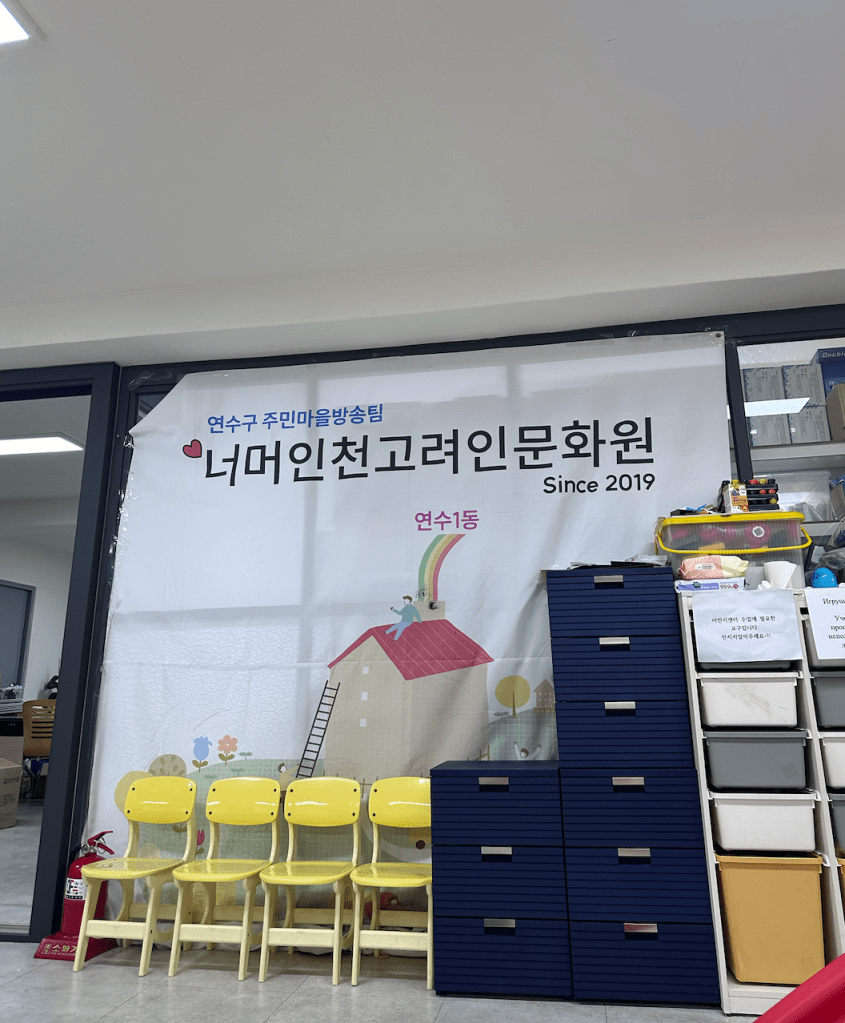
    Kim Woo Hyun is the team leader of Neomeo Incheon Koryoin Cultural Center (너머인천고려인문화원), located in Hanbak Village, Songdo. Koryoin is Koryo-saram, which refers to Koryo people in Korean, and this community space welcomes Koryo-saram youth every afternoon, offering them a place to feel connected and supported. With over 10 years of experience working with this community, Kim plays an important role in helping youth adjust to life in Korea. His work centers on bridging communication gaps through empathy, especially for children who struggle with Korean or English.

    Kim has partnered with Chadwick International’s student-founded club Lectio, giving students the opportunity to volunteer and learn directly from the Koryo-saram community. His words provide a rare glimpse into the lives of minorities in South Korea, particularly in a small village few people know about. The Koryo-saram highlight what daily life looks like for these children and remind us of the individuals who deserve recognition for their steady and meaningful work in support of others.

    Can you introduce yourself and tell me where you currently live?

    Kim: My name is Kim Woo Hyun, and I live in Hanbak Village, Songdo, South Korea. I serve as the team leader of the Neomeo Incheon Koryoin Cultural Center, a community space where young Koryo children gather after school. I have been working with the Koryo community for over 10 years and joined this center in 2018 when it was first established.

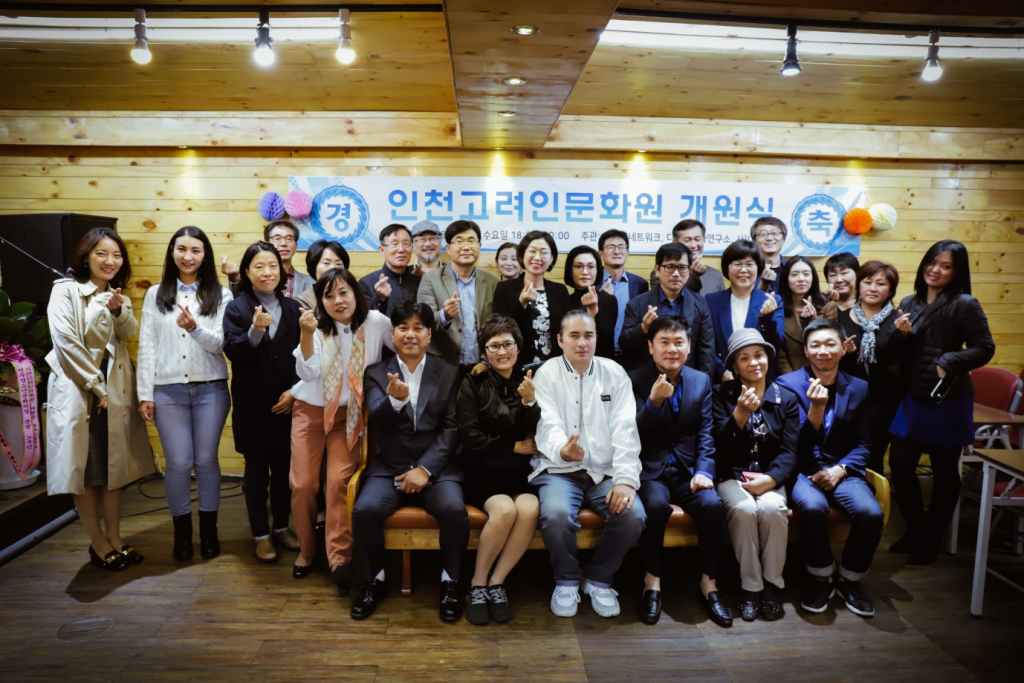
    This photo shows Kim Woohyun on the right at the opening of the Neomeo Incheon Koryoin Cultural Center in 2018.

    Koryo-saram refers to ethnic Koreans who once lived in the former Soviet Union, especially in Russia, Kazakhstan, and Uzbekistan. Many have moved to Korea but still hold on to their Korean roots. Unfortunately, most Koryo-saram children are not fluent in Korean or English, which creates a communication barrier not only with their peers but also with student volunteers and staff like Janice and her school.

    What is your connection to Korea and Korean culture?

    Kim: I am Korean, and I really care about helping others adjust to life in Korea. I want to support foreigners and people with Korean roots who are trying to build a life here, helping the Koryo-saram connect with Korean culture and find their place. Many of these kids have Korean heritage but still feel like outsiders. I want to help Koryo-saram feel accepted and included. Minorities want to be heard, but no one is listening.

    What are some cultural differences you have noticed between Korea and the people you work with? The Koryo-saram?

    Kim: Language is the biggest difference. Many of the children are not fluent in Korean, and most of the Koryo-saram do not speak English either. So even though we share the same heritage, it is difficult to communicate. I also cannot speak Russian, though I try learning, haha, so there is no real communication. That is why we rely heavily on nonverbal communication.

    The best communications are the ones where you do not need words. People often think that speaking the same language is the only way to connect, but that is not true. Things like empathy, gestures, facial expressions, and even eye contact can say more than words.

    What advice would you give to others who might face similar experiences living between cultures?

    Kim: Always stay open-minded and be willing to connect. Hand gestures and even eye contact can speak volumes. Everyone has their thoughts and ideas, so language should never be the reason to look down on someone.

    Engaging with someone who does not speak your language may be uncommon, but do not let that stop you from forming a bond. The best conversations often happen beyond words. You just have to be willing to try. A language barrier does not have to be a communication barrier. Learning to overcome these challenges is an essential skill, especially in today’s globalized world. As a starting point, try saying hello. When you greet the Koryo-saram with warmth, they tend to mirror that.

    Mr. Kim’s interview reminds us that empathy can speak louder than language. Although many Koryo-saram’s children struggle to speak Korean or English, they still seek connection and belonging. As Mr. Kim says, “The best communications are the ones where you do not need words.” Even when language fails, gestures, tone, and presence can open doors. Throughout the interview, he emphasized how he, his team, and the volunteers are doing their best to support minorities in South Korea and that others should do the same. No matter where we are, behind every success story, there are often overlooked communities. We should help one another and work to overcome the most common barrier, language. Through his work, Mr Kim shows that true understanding begins with patience, sincerity, and the courage to connect.

    Read the Blog About Viktor Kim a Koryo Student Living in Korea and Learning With Kim Woo Hyun!

  • Do You Know Who the Koryo-saram Are?

    Do You Know Who the Koryo-saram Are?

    Viktor is a young Koryo-saram student living in Songdo, South Korea. He currently attends a local public school where all classes are taught in Korean. Koryoin is Koryo-saram, which refers to Koryo people in Korean, and they are ethnic Koreans whose ancestors moved to parts of the former Soviet Union, including countries like Uzbekistan, Kazakhstan, and Russia. In recent years, many Koryo-saram families have immigrated to South Korea, often settling in neighborhoods like Hanbak Village due to improving visa options and seeking better educational and economic opportunities. However, young children like Viktor face challenges adjusting to life in Korea. Many speak Russian or Central Asian languages at home and often enter Korean schools without strong Korean or English skills.

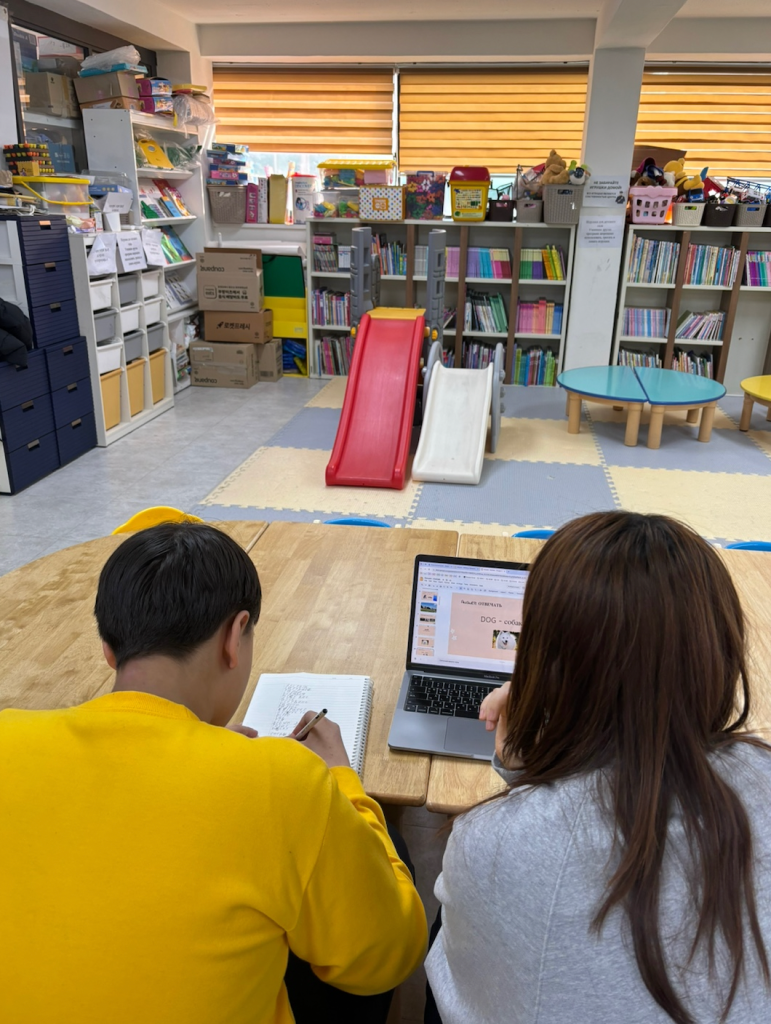
    I have known Viktor through an Initiative in Lectio, a student-founded club at Chadwick International where we had the chance to assist Koryo-saram students in learning Korean and English. Despite these difficulties, students like Viktor continue to show effort and openness as they build a new life in a country that is both familiar and unfamiliar to them.

    Can you introduce yourself and tell me where you currently live? What do you do?

    Viktor: I am Viktor. I live in Hanbak Village in Songdo, South Korea. I go to Sorae Elementary School and I am in Grade 2. I came to Korea with my family before I started school. At home we speak Russian. My mom and dad try to speak Korean to me but I still speak Russian most of the time.

    What is your connection to Korea and Korean culture?

    Viktor: My mom and dad are Korean. I am Korean too. But I do not speak Korean very well. I’m learning, but it is still hard for me.

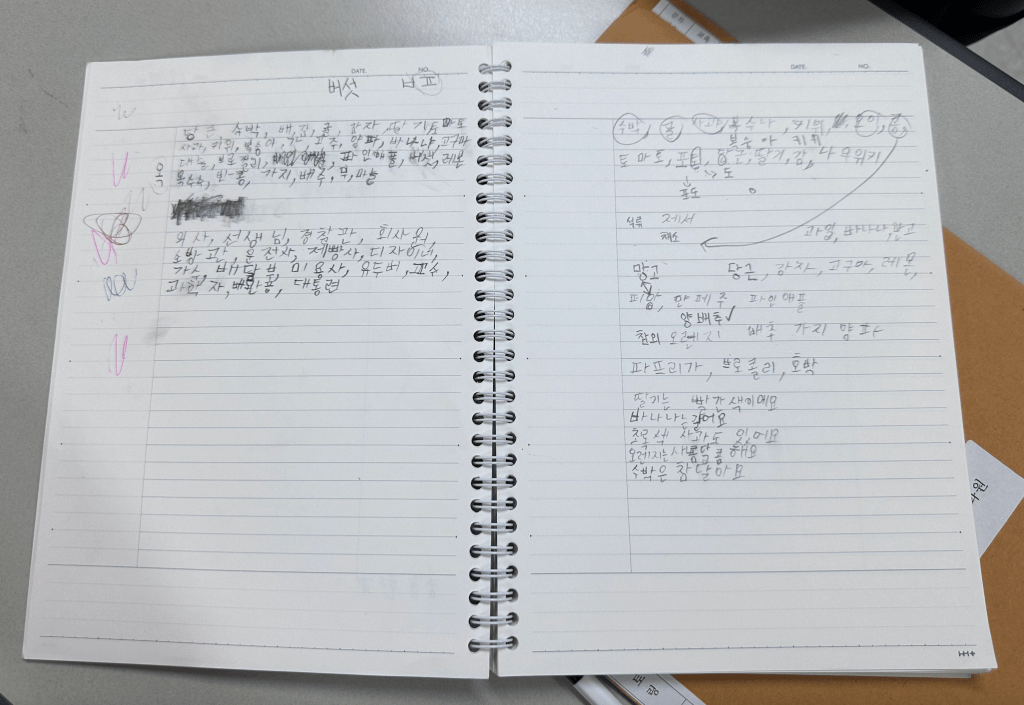
    Viktor’s Notebook Practicing Korean Writing (Hangeul)

    This is my notebook that I use when the volunteers come to teach me.

    What challenges have you faced while living in Korea related to culture or language?

    Viktor: I do not speak Korean or English well so it is hard to talk to other kids. I want to play and be friends but I do not always understand. Sometimes I feel shy or nervous.

    How have you adapted to your current environment? Was it difficult?

    Viktor: Yes it was hard at first. I go to a Korean support class that helps me with language in this center. But still it is sometimes hard because I feel different from the Korean kids. Some kids do not talk to me and I feel a little sad. But this cultural center helps me. The teachers and volunteers play with me and talk to me. They make me feel happy. I like coming here.

    Viktor’s interview offers a glimpse into the everyday life of a Koryo-saram child navigating life in South Korea. Though young, Viktor’s words show the real challenges that many immigrant children face when entering a new school system without the language skills needed to communicate easily. As someone who speaks Russian at home and only started learning Korean recently, Viktor finds it hard to make friends or fully understand what happens in class. Despite these difficulties, he expresses his desire to connect and adapt. Programs like Korean support classes and the Neomeo Incheon Koryoin Cultural Center (너머인천고려인문화원) have played an important role in helping children like Viktor feel seen and supported. His experience reminds us that adjusting to a new culture takes time and that even small acts of kindness can make a big difference in a child’s life. I aim to contest the single story that all minorities in Korea face similar experiences. Since Korea is often considered a homogeneous society, people may assume that all Koryo children assimilate easily, especially when compared to Chinese immigrants, also known as Joseonkon, who are more visible and generally more fluent in Korean. Viktor’s story challenges this assumption by showing that each minority group encounters unique difficulties and experiences.

    Read the blog about Kim Woo Hyun, the organizer of the Neomeo Incheon Koryoin Cultural Center!

  • From K to Global: The Hidden Hands Behind K-media Boom

    From K to Global: The Hidden Hands Behind K-media Boom

    In recent years, Korean content has traveled far beyond its borders, capturing the attention of global audiences with its music, dramas, and increasingly, its broadcast formats. But behind the scenes of this cultural export boom lies a lesser-known figure: the broadcast format producer. 

    This is a photo of Wonwoo Park, the CEO of diTurn.

    Wonwoo Park is the Founder, Show Director & CEO of Korean broadcast format company diTurn. Park is internationally recognized as the original creator and Korean producer behind global sensations like The Masked Singer and Lotto Singer. In Korea, he has also developed and produced a number of successful shows, including 300: United Voices, My Ranking, Dancing in the Box, and My Boyfriend is Better. Following the worldwide success of The Masked Singer, his company, diTurn, secured a first-look deal with FOX TV and is now collaborating with major global studios such as Sony Pictures and Banijay. In this interview, we explore with Park, how Korean cultural identity is packaged, adapted, and sometimes challenged when entering foreign markets, and what this process reveals about the contrasts between Korea and the rest of the world. 

    What exactly does a broadcast format producer do? What kind of work are you currently engaged in?

    Wonwoo: The role involves identifying and analyzing global media platforms and broadcaster needs, often detecting trends and assessing market flows. I work closely with domestic broadcasters and production companies to create customized formats. I also collaborate with overseas partners to co-develop formats tailored to international audiences and ensure these projects are successfully launched abroad. Once a format gains traction, I continue managing and evolving it, generating new ideas for future formats and adaptations.

    How do you see Korea’s culture and content industry being received overseas, especially when working as a format producer?

    Wonwoo: Korea’s cultural exports, once limited to stereotypical notions like “politeness” or “group harmony,” have now expanded into mainstream media through K-pop, K-drama, K-animation, and K-format. Major international buyers are increasingly interested in Korean creativity and originality. I can say how Korean-made formats are gaining attention for their innovative and structured storytelling. As evidence, exclusive format licensing deals with NBCU and FOX TV signal Korea’s elevated status in the global media market. I believe that the future holds even greater opportunities for Korean content to gain love from international audiences.

    Have you ever experienced cultural differences or challenges while working with international partners?

    Wonwoo: Absolutely. Cultural and workflow differences often present challenges. For example, international partners tend to plan with detailed schedules and emphasize business results, whereas Korean workflows are more flexible, relying heavily on trust and relationship-based collaboration. These differences sometimes caused confusion and miscommunication in the early stages. However, through hands-on experience and frequent local coordination, I learned how to bridge those cultural gaps. I’ll emphasize that understanding each other’s processes is crucial to building transparent and productive partnerships.

    What do you think are the key selling points or unique traits of K-formats for global buyers?

    Wonwoo: The distinctiveness of Korean formats lies in their balance of clear structure and emotional depth. These formats often reflect Korea’s cultural values, such as sincerity and resilience, which resonate with global audiences. Even when adapting similar themes, such as survival shows or romance, the Korean version tends to add a fresh perspective, often grounded in realism and emotional storytelling. For example, themes of regret, social class conflict, or generational tensions often appear in Korean formats, giving them universal relevance. This cultural richness, paired with competitive production quality, makes K-formats a strong contender in the global market.

    What becomes clear through this conversation is that Korean culture is not simply being exported—it is being negotiated. The broadcast format producer navigates differences in work style, creative values, and narrative expectations to ensure that Korean content can land meaningfully in other cultural contexts. At times, this means adapting or even compromising parts of Korea’s unique storytelling DNA. Yet, in that very process of cultural exchange, Korea also gains insight into how it is perceived globally, and where its values align—or clash—with others. These are not just stories of entertainment—they are reflections of identity, power, and cultural dialogue. And perhaps, in seeing which parts of Korean culture are embraced or misunderstood abroad, we also see the shifting landscape of what Korea represents to the world.

    Read the blog about Boom (Minho Lee), another creative worker as an entertainer in K-media industry!